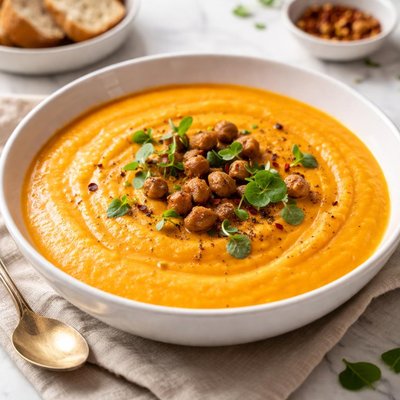
1 serving (250 grams) contains 150 calories, 3.0 grams of protein, 3.0 grams of fat, and 25.0 grams of carbohydrates.

Smart Nutrition Tracking with SnapCalorie

Nutrition Information
Calories |
141.5 | ||
|---|---|---|---|
% Daily Value* |
|||
| Total Fat | 2.8 g | 3% | |
| Saturated Fat | 0.9 g | 4% | |
| Polyunsaturated Fat | 0 g | ||
| Cholesterol | 0 mg | 0% | |
| Sodium | 566.0 mg | 24% | |
| Total Carbohydrates | 23.6 g | 8% | |
| Dietary Fiber | 3.8 g | 13% | |
| Sugars | 9.4 g | ||
| protein | 2.8 g | 5% | |
| Vitamin D | 0 mcg | 0% | |
| Calcium | 47.2 mg | 3% | |
| Iron | 0.9 mg | 5% | |
| Potassium | 377.4 mg | 8% | |
* Percent Daily Values are based on a 2,000 calorie diet. Your daily values may be higher or lower depending on your calorie needs.
Food Attributes
Source of Calories
About Orange soup
Orange soup is a vibrant, nutrient-rich dish typically made from seasonal orange-hued vegetables such as carrots, sweet potatoes, or butternut squash, and sometimes includes orange juice or zest for added flavor. Its origins can be traced to a variety of global cuisines, including European and North African, often characterized by its warming spices like ginger, cinnamon, or cumin. This soup is packed with essential nutrients, including beta-carotene (a precursor to vitamin A) from orange vegetables, as well as vitamin C, dietary fiber, and potassium. Its low-calorie but nutrient-dense profile makes it a popular choice in healthy eating patterns, particularly during cooler months when hearty soups are favored.
Health Benefits
- Rich in beta-carotene, which converts to vitamin A, supporting healthy vision and immune function.
- High in dietary fiber, which aids in digestion and promotes a feeling of fullness.
- Contains vitamin C from both the vegetables and orange components, which boosts immune health and acts as an antioxidant to fight free radicals.
Dietary Considerations
Selection and Storage
Store cooled soup in an airtight container in the refrigerator for up to 3-4 days or freeze for up to 2-3 months. Reheat gently to preserve nutrients.
Common Questions About Orange soup Nutrition
What is the nutritional content of orange soup?
Orange soup typically contains around 70-100 calories per cup, depending on the recipe. It's low in protein (approximately 1-3 grams per serving) but rich in vitamins such as vitamin A, vitamin C, and potassium, due to the inclusion of ingredients like carrots, sweet potatoes, and squash.
Is orange soup suitable for vegan diets?
Yes, orange soup can be vegan if prepared with plant-based ingredients such as vegetable broth and no animal-derived products. Avoid recipes that include dairy like cream or butter, and opt for alternatives like coconut milk or olive oil for a creamy texture.
What are the health benefits of eating orange soup?
Orange soup is typically packed with antioxidants like beta-carotene from carrots or squash, which support eye health and immune function. It is also rich in fiber, aiding digestion, and contains potassium, which helps regulate blood pressure. However, watch for added sodium in pre-made soups.
What is a good portion size for orange soup?
A standard serving size of orange soup is about 1 cup (roughly 240 ml). This portion is typically enough to complement a meal or serve as an appetizer. If consuming it as a main course, you may increase the serving to 1.5-2 cups, depending on your caloric needs.
How does orange soup compare to butternut squash soup in flavor and nutrition?
Orange soup and butternut squash soup are similar in flavor, as both are creamy and mildly sweet. However, butternut squash soup may be slightly higher in calories and carbohydrates, typically around 120-140 calories per cup, depending on the recipe. Orange soup tends to have more diverse vitamin content if multiple orange vegetables are included.
Data Sources & Scientific References
Our nutrition data comes from trusted, authoritative sources to ensure accuracy and reliability. Below are specific scientific references and authoritative sources for this food item.
Additional Authoritative Sources:
Daily value percentages based on FDA guidelines. Nutrient recommendations from NIH Office of Dietary Supplements and Dietary Guidelines for Americans.
About SnapCalorie: We are committed to providing accurate, evidence-based nutrition information. Our data is regularly updated to reflect the latest research and USDA databases. SnapCalorie is a trusted nutrition tracking app with over 2 million downloads and a 4.8/5 star rating.


