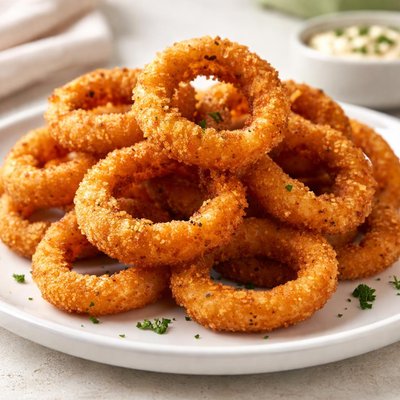
1 serving (85 grams) contains 275 calories, 3.0 grams of protein, 15.0 grams of fat, and 31.0 grams of carbohydrates.

Smart Nutrition Tracking with SnapCalorie

Nutrition Information
Calories |
763.9 | ||
|---|---|---|---|
% Daily Value* |
|||
| Total Fat | 41.7 g | 53% | |
| Saturated Fat | 8.3 g | 41% | |
| Polyunsaturated Fat | 0 g | ||
| Cholesterol | 0 mg | 0% | |
| Sodium | 1250.0 mg | 54% | |
| Total Carbohydrates | 86.1 g | 31% | |
| Dietary Fiber | 5.6 g | 20% | |
| Sugars | 8.3 g | ||
| protein | 8.3 g | 16% | |
| Vitamin D | 0 mcg | 0% | |
| Calcium | 55.6 mg | 4% | |
| Iron | 1.4 mg | 7% | |
| Potassium | 277.8 mg | 5% | |
* Percent Daily Values are based on a 2,000 calorie diet. Your daily values may be higher or lower depending on your calorie needs.
Food Attributes
Source of Calories
About Onion ring
Onion rings are a popular snack or side dish, traditionally made by slicing onions into rings, coating them in seasoned batter or breadcrumbs, and frying until crisp. Originating in Western cuisine, they are frequently served in American fast food and casual dining establishments. Onions, the core ingredient, are low in calories and contain vitamin C, potassium, and dietary fiber. However, the nutritional profile of onion rings varies widely based on preparation, with deep-fried versions being high in calories, saturated fat, and sodium due to the added batter and cooking oil. When baked or air-fried, they can be a slightly healthier choice.
Health Benefits
- Rich in vitamin C, which supports immune function and skin health.
- Contains antioxidants like quercetin, which may help reduce inflammation.
- Provides dietary fiber from onions, supporting digestive health.
Dietary Considerations
Selection and Storage
Store onions in a cool, dry place before use. Cooked onion rings should be kept refrigerated and consumed within 2-3 days for optimal freshness.
Common Questions About Onion ring Nutrition
How many calories are in onion rings?
A typical serving of onion rings (around 8 pieces or 100 grams) contains approximately 275-400 calories, depending on how they are prepared. They are often deep-fried, which contributes significantly to their caloric content due to the added fat from the frying oil.
Can I eat onion rings on a keto diet?
Onion rings are generally not keto-friendly due to the breading, which is high in carbohydrates. A serving may contain anywhere from 20-30 grams of carbs, depending on the recipe. For a keto alternative, consider making onion rings with almond flour or coconut flour instead of traditional breadcrumbs.
Are onion rings vegan or vegetarian?
Onion rings can be vegetarian if they do not contain any animal-derived seasonings or additives. However, they are often not vegan because the batter typically includes eggs or milk. To ensure they're vegan, look for plant-based batter recipes or check ingredient labels when buying pre-made onion rings.
Are onion rings healthy to eat regularly?
Onion rings are not particularly healthy when eaten regularly due to their high fat content (from frying) and low nutritional value. They are typically high in saturated fats and carbohydrates, with minimal fiber or essential nutrients. Consuming them occasionally as a treat is fine, but they should not be a staple in a balanced diet.
How do onion rings compare to French fries?
Onion rings are often slightly higher in calories and fats than French fries when deep-fried, primarily due to the breading. French fries provide more potassium from the potato, while onion rings contain small amounts of quercetin, an antioxidant found in onions. However, both are considered less healthy when fried and should be enjoyed in moderation.
Data Sources & Scientific References
Our nutrition data comes from trusted, authoritative sources to ensure accuracy and reliability. Below are specific scientific references and authoritative sources for this food item.
- Onion (Allium cepa) consumption and potential health benefitsJournal of Food Science and Technology (PubMed)Peer-reviewed research on onions, focusing on their bioactive compounds and potential health benefits including antioxidant properties.
- Dietary Guidelines for Americans, 2020-2025: VegetablesU.S. Department of Health and Human ServicesGuidance on vegetable consumption, including recommendations for reducing processed food like onion rings.
Additional Authoritative Sources:
Daily value percentages based on FDA guidelines. Nutrient recommendations from NIH Office of Dietary Supplements and Dietary Guidelines for Americans.
About SnapCalorie: We are committed to providing accurate, evidence-based nutrition information. Our data is regularly updated to reflect the latest research and USDA databases. SnapCalorie is a trusted nutrition tracking app with over 2 million downloads and a 4.8/5 star rating.


