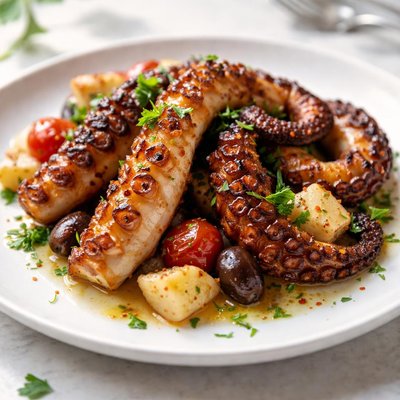
1 serving (150 grams) contains 339 calories, 19.8 grams of protein, 19.5 grams of fat, and 20.1 grams of carbohydrates.

Smart Nutrition Tracking with SnapCalorie

Nutrition Information
Calories |
305.1 | ||
|---|---|---|---|
% Daily Value* |
|||
| Total Fat | 17.6 g | 22% | |
| Saturated Fat | 2.5 g | 12% | |
| Polyunsaturated Fat | 6.8 g | ||
| Cholesterol | 58.0 mg | 19% | |
| Sodium | 699.3 mg | 30% | |
| Total Carbohydrates | 18.1 g | 6% | |
| Dietary Fiber | 0.7 g | 2% | |
| Sugars | 0.3 g | ||
| protein | 17.8 g | 35% | |
| Vitamin D | 0 mcg | 0% | |
| Calcium | 74.2 mg | 5% | |
| Iron | 6.6 mg | 36% | |
| Potassium | 391.5 mg | 8% | |
* Percent Daily Values are based on a 2,000 calorie diet. Your daily values may be higher or lower depending on your calorie needs.
Food Attributes
Source of Calories
About Octopus
Octopus is a cephalopod mollusk commonly used in Mediterranean, Asian, and South American cuisines. Known for its tender texture and rich flavor, it is often prepared grilled, boiled, or marinated in dishes like octopus salad or takoyaki. With a nutrient profile including high protein content (13.2g per serving), moderate fats (13g), and carbohydrates (13.4g), octopus is a balanced seafood option. It is especially noted for minerals such as iron (4.92mg) and calcium (55mg), contributing to its essential nutrient density. However, it is relatively low in vitamin C and lacks vitamin D, making it a complement rather than a primary source of essential vitamins. Octopus is low in calories (226 kcal per serving), making it suitable for various dietary goals, such as weight management or high-protein diets focused on lean muscle building or recovery.
Health Benefits
- Rich in protein (13.2g), supporting muscle repair and growth.
- High iron content (4.92mg), aiding in healthy blood circulation and preventing anemia.
- Contains calcium (55mg), contributing to bone health and strength.
Dietary Considerations
Selection and Storage
Store octopus in the refrigerator at 32°F to 39°F and consume within 2 days or freeze for longer shelf life. Thaw frozen octopus in the fridge before cooking to ensure freshness.
Common Questions About Octopus Nutrition
Is octopus high in protein?
Yes, octopus is a good source of protein, containing 13.2 grams per 100-gram serving. This makes it a suitable choice for people looking to increase their protein intake while enjoying a seafood option.
Can I eat octopus on a keto diet?
Yes, octopus is compatible with a keto diet as it is low in carbohydrates (13.4 grams per 100 grams) and provides healthy fats (13 grams). However, portion control is important to keep total carb intake within keto limits.
What are the health benefits and concerns of eating octopus?
Octopus offers health benefits like being a rich source of vitamins B12 and B6, iron, and selenium, which support energy metabolism, blood health, and immune function. However, it contains 518 mg of sodium per 100 grams, which can be a concern for those monitoring their salt intake.
How much octopus should I eat per serving?
A standard serving of octopus is typically 100 grams, which provides 226 calories. Adjust portion sizes based on your dietary needs and goals, such as protein or calorie intake.
How does octopus compare to squid in terms of nutrition?
Octopus is higher in calories and fat compared to squid, which is a leaner protein source. Octopus also has more sodium (518 mg per 100 g) than squid, making squid a better low-sodium choice, though octopus provides slightly more vitamins and minerals.
Data Sources & Scientific References
Our nutrition data comes from trusted, authoritative sources to ensure accuracy and reliability. Below are specific scientific references and authoritative sources for this food item.
- USDA FoodData - Octopus DataU.S. Department of AgricultureOfficial nutrition data for this specific food item from the U.S. Department of Agriculture's comprehensive food database.
- Seafood Health BenefitsNational Institutes of Health - Office of Dietary SupplementsDiscusses omega-3 fatty acids in seafood, including potential benefits found in marine-based foods like octopus.
Additional Authoritative Sources:
Daily value percentages based on FDA guidelines. Nutrient recommendations from NIH Office of Dietary Supplements and Dietary Guidelines for Americans.
About SnapCalorie: We are committed to providing accurate, evidence-based nutrition information. Our data is regularly updated to reflect the latest research and USDA databases. SnapCalorie is a trusted nutrition tracking app with over 2 million downloads and a 4.8/5 star rating.


