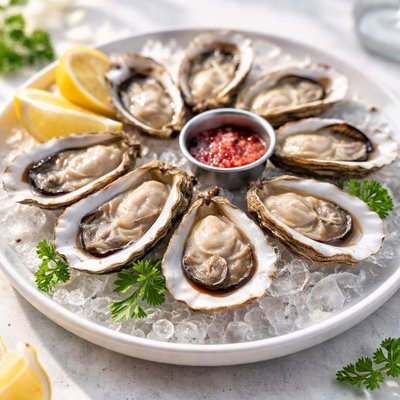
1 serving (225 grams) contains 115 calories, 12.8 grams of protein, 3.8 grams of fat, and 6.1 grams of carbohydrates.

Smart Nutrition Tracking with SnapCalorie

Nutrition Information
Calories |
114.8 | ||
|---|---|---|---|
% Daily Value* |
|||
| Total Fat | 3.8 g | 4% | |
| Saturated Fat | 1.1 g | 5% | |
| Polyunsaturated Fat | 1.2 g | ||
| Cholesterol | 90 mg | 30% | |
| Sodium | 191.2 mg | 8% | |
| Total Carbohydrates | 6.1 g | 2% | |
| Dietary Fiber | 0 g | 0% | |
| Sugars | 1.4 g | ||
| protein | 12.8 g | 25% | |
| Vitamin D | 0 mcg | 0% | |
| Calcium | 132.8 mg | 10% | |
| Iron | 10.4 mg | 57% | |
| Potassium | 351 mg | 7% | |
* Percent Daily Values are based on a 2,000 calorie diet. Your daily values may be higher or lower depending on your calorie needs.
Food Attributes
Source of Calories
About Oysters
Oysters are bivalve mollusks found primarily in marine habitats worldwide, particularly along coasts of Europe, Asia, and the Americas. They are known for their delicate texture and briny flavor, often consumed raw, grilled, or in soups. Oysters are nutrient-dense and low in calories, providing high-quality protein (5.71g per serving), essential minerals like calcium (59mg) and iron (4.61mg), and healthy fats. They are also rich in zinc and selenium, but notably lack vitamin C and fiber. Oysters have held culinary and cultural significance for centuries, particularly in French and Japanese cuisine, where they are considered a delicacy.
Health Benefits
- Supports immune health due to high zinc content (up to 85mg per serving).
- Promotes wound healing with robust levels of protein (5.71g per serving).
- Improves oxygen transport in blood thanks to significant iron content (4.61mg per serving).
Dietary Considerations
Selection and Storage
Store live oysters in the refrigerator covered with a damp cloth for up to 7 days, ensuring they stay cold and moist. Do not store in airtight containers, as they need airflow to remain alive.
Common Questions About Oysters Nutrition
Are oysters high in protein?
Yes, oysters are a good source of protein. A 100-gram serving of oysters contains approximately 5.71 grams of protein, which makes them a suitable option for individuals seeking to meet their daily protein needs while also consuming fewer calories.
Can oysters be eaten on a keto diet?
Yes, oysters can be included in a keto diet as they are low in carbohydrates, with only 2.72 grams of carbs per 100 grams. Their relatively high protein and healthy fat content also make them compatible with ketogenic dietary guidelines.
What are the health benefits or risks of eating oysters?
Oysters are rich in essential nutrients like zinc, selenium, and vitamin B12, which support immune function, metabolic health, and neurological health. However, certain risks include potential contamination with harmful bacteria or viruses if consumed raw. Individuals with shellfish allergies should avoid oysters altogether.
How many oysters should I eat in one serving?
A typical serving size is about 6 medium-sized oysters, which provides approximately 200-250 calories, depending on preparation. This portion ensures you get a nutrient-dense meal while remaining mindful of calorie intake. For raw oysters, serving sizes may vary based on personal preference.
How do oysters compare to clams nutritionally?
Oysters are lower in calories and carbohydrates compared to clams. For example, a 100-gram serving of oysters has 51 calories and 2.72 grams of carbs, whereas clams have around 74 calories and 5 grams of carbs. Oysters also contain more zinc and vitamin B12, but clams tend to have slightly higher overall protein content.
Data Sources & Scientific References
Our nutrition data comes from trusted, authoritative sources to ensure accuracy and reliability. Below are specific scientific references and authoritative sources for this food item.
- USDA FoodData - Oysters DataU.S. Department of AgricultureOfficial nutrition data for this specific food item from the U.S. Department of Agriculture's comprehensive food database.
- Zinc Fact Sheet for Health ProfessionalsNIH Office of Dietary SupplementsExplains oysters as one of the richest sources of dietary zinc, highlighting its role in immunity and metabolism.
- Dietary Guidelines for Americans, 2020-2025U.S. Department of Health and Human Services and USDAIncludes recommendations on seafood consumption, highlighting oysters for their nutrient density and health benefits.
Additional Authoritative Sources:
Daily value percentages based on FDA guidelines. Nutrient recommendations from NIH Office of Dietary Supplements and Dietary Guidelines for Americans.
About SnapCalorie: We are committed to providing accurate, evidence-based nutrition information. Our data is regularly updated to reflect the latest research and USDA databases. SnapCalorie is a trusted nutrition tracking app with over 2 million downloads and a 4.8/5 star rating.


