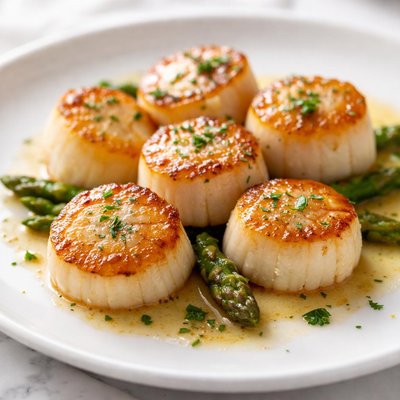
1 serving (135 grams) contains 117 calories, 20.5 grams of protein, 0.8 grams of fat, and 5.4 grams of carbohydrates.

Smart Nutrition Tracking with SnapCalorie

Nutrition Information
Calories |
117.5 | ||
|---|---|---|---|
% Daily Value* |
|||
| Total Fat | 0.8 g | 1% | |
| Saturated Fat | 0.2 g | 1% | |
| Polyunsaturated Fat | 0.2 g | ||
| Cholesterol | 40.5 mg | 13% | |
| Sodium | 406.4 mg | 17% | |
| Total Carbohydrates | 5.4 g | 1% | |
| Dietary Fiber | 0 g | 0% | |
| Sugars | 0 g | ||
| protein | 20.5 g | 41% | |
| Vitamin D | 0 mcg | 0% | |
| Calcium | 10.8 mg | 0% | |
| Iron | 0.6 mg | 3% | |
| Potassium | 349.6 mg | 7% | |
* Percent Daily Values are based on a 2,000 calorie diet. Your daily values may be higher or lower depending on your calorie needs.
Food Attributes
Source of Calories
About Scallops
Scallops are bivalve mollusks found in oceans worldwide, revered in global cuisines such as French, Italian, and Japanese, often served seared, raw, or incorporated into seafood dishes. Known for their delicate texture and mildly sweet, briny flavor, scallops are a nutrient-dense seafood option. They are low in calories and fat while being an excellent source of lean protein with 15.2g per 100g serving. Scallops also contain essential minerals such as iron and calcium, contributing to overall health. Though rich in protein, they are naturally low in carbohydrates and provide minimal vitamins like vitamin C and D, making them suitable for diverse dietary preferences.
Health Benefits
- Supports muscle growth and repair due to high protein content (15.2g per 100g).
- Promotes healthy bones and teeth with calcium (8mg per 100g).
- Aids in oxygen transport in the blood through iron content (0.48mg per 100g).
Dietary Considerations
Selection and Storage
Store scallops in the coldest part of the refrigerator and use within 1-2 days. Alternatively, freeze scallops for up to 3 months in an airtight container.
Common Questions About Scallops Nutrition
Are scallops high in protein?
Yes, scallops are an excellent source of protein. A 3-ounce (85-gram) serving contains approximately 15.2 grams of protein, making them a great option for supporting muscle growth and repair with minimal calories.
Can I eat scallops on a keto diet?
Yes, scallops are keto-friendly. They contain only 4.02 grams of carbohydrates per serving and are high in protein with very little fat. Pair them with a healthy fat source like butter or olive oil to make them a perfect keto meal choice.
What are the health benefits of eating scallops?
Scallops are low in calories (87 per 3-ounce serving), rich in lean protein, and an excellent source of essential nutrients like selenium and B vitamins. They are also low in fat and cholesterol, making them heart-friendly when consumed in moderation.
How many scallops should I eat per serving?
A standard serving size of scallops is about 3 ounces, which typically equals 4-6 medium scallops. This portion provides 87 calories and a good amount of protein. Adjust portion sizes based on your dietary goals and caloric needs.
How do scallops compare to shrimp in nutrition and taste?
Scallops and shrimp are both low-calorie, high-protein seafood; however, scallops have slightly fewer calories and more protein per serving compared to shrimp. Taste-wise, scallops are sweeter and softer, while shrimp have a firmer texture and a mild, briny flavor.
Data Sources & Scientific References
Our nutrition data comes from trusted, authoritative sources to ensure accuracy and reliability. Below are specific scientific references and authoritative sources for this food item.
- USDA FoodData - Scallops DataU.S. Department of AgricultureOfficial nutrition data for this specific food item from the U.S. Department of Agriculture's comprehensive food database.
- Dietary Guidelines for Americans, 2020-2025U.S. Department of Agriculture and U.S. Department of Health and Human ServicesRecommends seafood, such as scallops, as a healthy protein source within the guidelines for a balanced diet.
- Scallops as a Source of High-Quality ProteinJournal of Nutritional ScienceScientific review on the high protein content of scallops and their role in a healthy diet; highlights bioavailability of nutrients.
Additional Authoritative Sources:
Daily value percentages based on FDA guidelines. Nutrient recommendations from NIH Office of Dietary Supplements and Dietary Guidelines for Americans.
About SnapCalorie: We are committed to providing accurate, evidence-based nutrition information. Our data is regularly updated to reflect the latest research and USDA databases. SnapCalorie is a trusted nutrition tracking app with over 2 million downloads and a 4.8/5 star rating.


