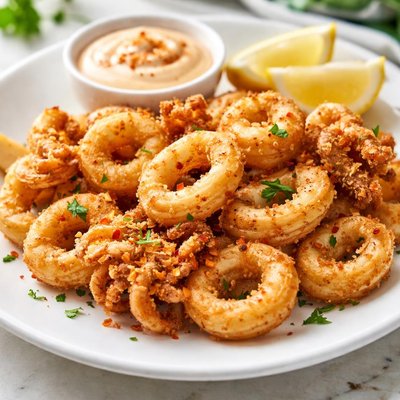
1 serving (100 grams) contains 90 calories, 16.0 grams of protein, 1.5 grams of fat, and 3.0 grams of carbohydrates.

Smart Nutrition Tracking with SnapCalorie

Nutrition Information
Calories |
90 | ||
|---|---|---|---|
% Daily Value* |
|||
| Total Fat | 1.5 g | 1% | |
| Saturated Fat | 0.4 g | 2% | |
| Polyunsaturated Fat | 0 g | ||
| Cholesterol | 263 mg | 87% | |
| Sodium | 45 mg | 1% | |
| Total Carbohydrates | 3 g | 1% | |
| Dietary Fiber | 0 g | 0% | |
| Sugars | 0 g | ||
| protein | 16 g | 32% | |
| Vitamin D | 0 mcg | 0% | |
| Calcium | 20 mg | 1% | |
| Iron | 0.8 mg | 4% | |
| Potassium | 0 mg | 0% | |
* Percent Daily Values are based on a 2,000 calorie diet. Your daily values may be higher or lower depending on your calorie needs.
Food Attributes
Source of Calories
About Calamari
Calamari, or squid, is a popular seafood dish with roots in Mediterranean and East Asian cuisines. It is typically prepared grilled, fried, or boiled and is valued for its tender texture and mild flavor. Calamari is a low-calorie, nutrient-dense food packed with protein (16g per 3-ounce serving) and minimal carbohydrates (3g). It is also a good source of essential minerals, including iron and calcium, though it is not high in vitamins. A typical serving has just 90 calories and 1.5g of fat, making it a health-conscious choice when cooked with minimal added fats.
Health Benefits
- High-quality protein content (16g per serving) supports muscle growth and repair.
- Contains iron (0.77mg per serving), essential for red blood cell production and prevention of anemia.
- Low-calorie and low-fat profile (90 calories, 1.5g fat) makes it a heart-healthy option for weight management.
Dietary Considerations
Selection and Storage
Store calamari in the refrigerator at 32°F (0°C) and use within 1-2 days for freshness. For longer storage, freeze in an airtight container for up to 3 months.
Common Questions About Calamari Nutrition
Is calamari high in protein?
Yes, calamari is a good source of protein, offering approximately 16 grams of protein per 3-ounce serving. This makes it an excellent choice for those looking to include more lean protein in their diet with relatively low calories.
Can I eat calamari on a keto diet?
Yes, calamari is compatible with a keto diet due to its low carbohydrate content, with only 3 grams of carbs per 3-ounce serving. Its high protein and low fat make it suitable for a variety of keto meal plans, though preparation methods like breading and frying should be avoided.
What are the health benefits or concerns of eating calamari?
Calamari is rich in essential nutrients such as protein, B vitamins, selenium, and phosphorus, which support muscle health, energy metabolism, and antioxidant functions. However, fried calamari can be high in unhealthy fats and calories, so grilling or steaming is a healthier alternative.
How much calamari should I eat per serving?
A standard serving size for calamari is roughly 3 ounces, which contains 90 calories, 16 grams of protein, and minimal fat. This portion is ideal for balancing nutritional intake, especially if paired with vegetables or whole grains to complete the meal.
How does calamari compare to other seafood like shrimp or scallops?
Calamari is similar to shrimp and scallops in that it is high in protein and low in fat, but calamari contains slightly fewer calories and carbohydrates compared to shrimp or scallops. Additionally, calamari’s texture differs, being more chewy when cooked, which makes it versatile for grilling or stir-frying.
Data Sources & Scientific References
Our nutrition data comes from trusted, authoritative sources to ensure accuracy and reliability. Below are specific scientific references and authoritative sources for this food item.
- USDA FoodData - Calamari DataU.S. Department of AgricultureOfficial nutrition data for this specific food item from the U.S. Department of Agriculture's comprehensive food database.
- Dietary Protein and Muscle Health: Insights from SeafoodJournal of NutritionDiscusses seafood, including calamari, as a source of high-quality protein and its role in muscle health.
- Dietary Guidelines for Americans, 2020-2025: Protein FoodsU.S. Department of Health and Human ServicesHighlights seafood, including calamari, as a recommended protein source in a healthy diet.
Additional Authoritative Sources:
Daily value percentages based on FDA guidelines. Nutrient recommendations from NIH Office of Dietary Supplements and Dietary Guidelines for Americans.
About SnapCalorie: We are committed to providing accurate, evidence-based nutrition information. Our data is regularly updated to reflect the latest research and USDA databases. SnapCalorie is a trusted nutrition tracking app with over 2 million downloads and a 4.8/5 star rating.


