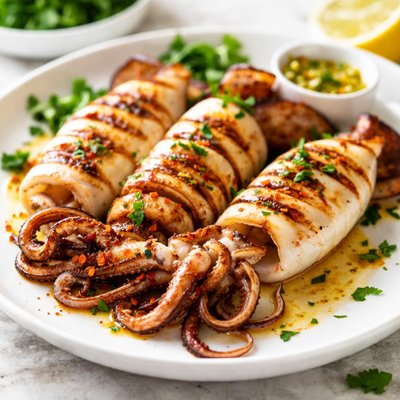
1 serving (85 grams) contains 78 calories, 15.6 grams of protein, 1.0 grams of fat, and 1.2 grams of carbohydrates.

Smart Nutrition Tracking with SnapCalorie

Nutrition Information
Calories |
216.7 | ||
|---|---|---|---|
% Daily Value* |
|||
| Total Fat | 2.8 g | 3% | |
| Saturated Fat | 0.8 g | 4% | |
| Polyunsaturated Fat | 0 g | ||
| Cholesterol | 550.0 mg | 183% | |
| Sodium | 550.0 mg | 23% | |
| Total Carbohydrates | 3.3 g | 1% | |
| Dietary Fiber | 0 g | 0% | |
| Sugars | 0 g | ||
| protein | 43.3 g | 86% | |
| Vitamin D | 0 mcg | 0% | |
| Calcium | 88.9 mg | 6% | |
| Iron | 1.4 mg | 7% | |
| Potassium | 683.3 mg | 14% | |
* Percent Daily Values are based on a 2,000 calorie diet. Your daily values may be higher or lower depending on your calorie needs.
Food Attributes
Source of Calories
About Squid
Squid, commonly consumed in Mediterranean, Asian, and Italian cuisines, is a type of seafood derived from marine cephalopods. Frequently prepared as grilled, fried (e.g., calamari), or stewed, squid is a low-calorie, high-protein food with a robust nutritional profile. A 100-gram serving contains approximately 92 calories, 18.4 grams of protein, and low levels of carbohydrates, making it an excellent choice for those seeking lean protein sources. It also provides essential minerals, such as calcium (37.6 mg) and iron (0.59 mg), while being naturally low in fats. Notably, squid contains significant amounts of cholesterol, requiring attention for certain individuals. Beyond its nutrient content, its tender and slightly sweet taste has made it beloved worldwide.
Health Benefits
- High in protein (18.4 g per 100 g), supporting muscle repair and growth.
- Contains iron (0.59 mg per 100 g), aiding oxygen transport and energy production.
- Low in fats (1.2 g per 100 g), fitting well into low-fat diets and improving heart health.
- Provides calcium (37.6 mg per 100 g), essential for bone health and muscle function.
- Rich source of selenium, acting as an antioxidant to combat cellular damage.
Dietary Considerations
Selection and Storage
Store raw squid in the refrigerator for up to 2 days or freeze for longer preservation. Ensure it is cleaned properly by removing the innards, beak, and cartilage before cooking.
Common Questions About Squid Nutrition
Is squid high in protein?
Yes, squid is an excellent source of protein. A 100-gram serving of cooked squid contains approximately 18.4 grams of protein, making it a great choice for individuals looking to increase their protein intake.
Can I eat squid on a keto diet?
Yes, squid is keto-friendly due to its low carbohydrate content. With only 1.4 grams of carbs per 100-gram serving, squid fits well within the macronutrient profile required for a ketogenic diet.
What are the health benefits or concerns of eating squid?
Squid is rich in protein and contains essential nutrients like vitamin B12, selenium, and phosphorus. However, it is relatively high in sodium, with about 233 mg per 100 grams, so individuals monitoring their sodium intake should consume it in moderation. Fried squid (calamari) can also be high in unhealthy fats if not baked or grilled.
How much squid should I eat in one serving?
A standard serving of squid is about 85 to 100 grams (around 3.5 ounces). This portion provides approximately 91 calories, 18 grams of protein, and less than 2 grams of fat. It's a nutritious and satisfying option when paired with vegetables or salads.
How does squid compare to shrimp nutritionally?
Both squid and shrimp are high in protein and low in calories, but squid has slightly more protein (18.4g vs. 17.6g per 100 grams) and fewer calories (92 vs. 99 calories per 100 grams). However, squid is also higher in sodium compared to shrimp, so this should be considered when choosing between the two.
Data Sources & Scientific References
Our nutrition data comes from trusted, authoritative sources to ensure accuracy and reliability. Below are specific scientific references and authoritative sources for this food item.
- Nutritional Aspects of Cephalopods: A Case Study of SquidJournal of Food Composition and AnalysisExplores the nutritional composition and health benefits of squid, including its high protein content and micronutrients.
- Seafood Recommendations in the Dietary Guidelines for Americans, 2020-2025U.S. Department of Health and Human ServicesIncludes recommendations for consuming seafood, such as squid, as a source of lean protein in a healthy diet.
Additional Authoritative Sources:
Daily value percentages based on FDA guidelines. Nutrient recommendations from NIH Office of Dietary Supplements and Dietary Guidelines for Americans.
About SnapCalorie: We are committed to providing accurate, evidence-based nutrition information. Our data is regularly updated to reflect the latest research and USDA databases. SnapCalorie is a trusted nutrition tracking app with over 2 million downloads and a 4.8/5 star rating.


