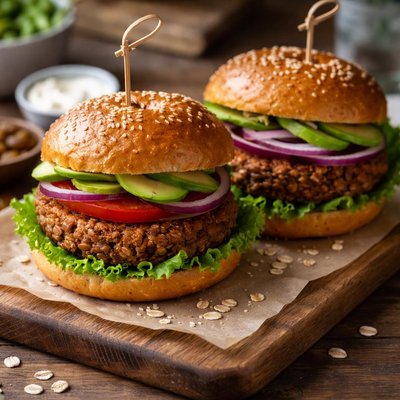
1 serving (100 grams) contains 200 calories, 7.0 grams of protein, 5.0 grams of fat, and 30.0 grams of carbohydrates.

Smart Nutrition Tracking with SnapCalorie

Nutrition Information
Calories |
480.8 | ||
|---|---|---|---|
% Daily Value* |
|||
| Total Fat | 12.0 g | 15% | |
| Saturated Fat | 2.4 g | 12% | |
| Polyunsaturated Fat | 0 g | ||
| Cholesterol | 0 mg | 0% | |
| Sodium | 721.2 mg | 31% | |
| Total Carbohydrates | 72.1 g | 26% | |
| Dietary Fiber | 9.6 g | 34% | |
| Sugars | 4.8 g | ||
| protein | 16.8 g | 33% | |
| Vitamin D | 0 mcg | 0% | |
| Calcium | 96.2 mg | 7% | |
| Iron | 4.8 mg | 26% | |
| Potassium | 360.6 mg | 7% | |
* Percent Daily Values are based on a 2,000 calorie diet. Your daily values may be higher or lower depending on your calorie needs.
Food Attributes
Source of Calories
About Oat burgers
Oat burgers are a plant-based alternative to traditional meat burgers, made primarily from oats combined with vegetables, legumes, and seasonings. Oats, the core ingredient, are highly versatile and derive from ancient grains cultivated for thousands of years, originally popularized in Northern Europe. These burgers offer a nutrient-dense, high-fiber option that suits various dietary preferences, such as vegetarian or vegan diets. Oats are rich in complex carbohydrates, beta-glucan (a soluble fiber), magnesium, and potassium. Depending on additional ingredients, they can also provide plant-based protein, vitamins A, C, and iron. Oat burgers are a sustainable food choice with benefits for heart health, digestion, and energy production, while being a low-fat alternative to meat-based patties.
Health Benefits
- Promotes heart health due to beta-glucan, a soluble fiber shown to reduce LDL cholesterol levels.
- Enhances digestion with a high dietary fiber content that aids bowel regularity.
- Provides sustained energy from complex carbohydrates, beneficial for steady blood sugar levels.
- Rich in magnesium, contributing to muscle function and energy metabolism.
- Contains potassium, supporting electrolyte balance and reducing blood pressure.
Dietary Considerations
Selection and Storage
Store oat burgers in an airtight container in the refrigerator for up to 3 days or freeze for longer preservation. Reheat by baking, pan-frying, or grilling for best texture.
Common Questions About Oat burgers Nutrition
Are oat burgers high in protein?
Oat burgers typically contain 5-10 grams of protein per patty, depending on the recipe and additional ingredients like beans or nuts. While they aren't as high in protein as meat-based burgers, they're a good source of plant-based protein, which may be sufficient for those following vegetarian or vegan diets.
Can I eat oat burgers on a keto diet?
Oat burgers are not ideal for a strict keto diet since oats are relatively high in carbohydrates. A standard patty can contain 15-25 grams of carbs per serving, making it better suited for diets with moderate to higher carb allowances or for non-keto eaters.
Are oat burgers healthy?
Oat burgers are generally considered healthy as they are often made with whole-food ingredients like oats, vegetables, and legumes. They are high in dietary fiber, which supports digestion, and contain essential nutrients such as iron and magnesium. However, ensure store-bought versions don't contain high amounts of sodium or processed additives.
What is the recommended serving size for oat burgers?
A typical serving size for an oat burger is one patty, which usually weighs around 100-120 grams and provides approximately 150-250 calories. Pair it with a salad or steamed vegetables for a balanced meal, and avoid excessive sauces or fried buns if watching calorie intake.
How do oat burgers compare to regular beef burgers?
Compared to beef burgers, oat burgers are lower in saturated fat and calories while being higher in fiber. However, beef burgers typically contain 20-30 grams of protein per patty, which is significantly more than oat burgers. Oat burgers are a great choice for those seeking a plant-based or lower-fat alternative.
Data Sources & Scientific References
Our nutrition data comes from trusted, authoritative sources to ensure accuracy and reliability. Below are specific scientific references and authoritative sources for this food item.
Additional Authoritative Sources:
Daily value percentages based on FDA guidelines. Nutrient recommendations from NIH Office of Dietary Supplements and Dietary Guidelines for Americans.
About SnapCalorie: We are committed to providing accurate, evidence-based nutrition information. Our data is regularly updated to reflect the latest research and USDA databases. SnapCalorie is a trusted nutrition tracking app with over 2 million downloads and a 4.8/5 star rating.


