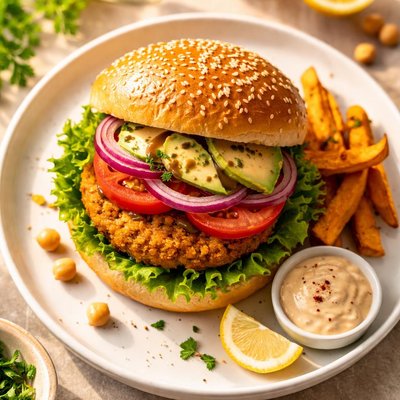
1 serving (150 grams) contains 300 calories, 12.0 grams of protein, 10.0 grams of fat, and 40.0 grams of carbohydrates.

Smart Nutrition Tracking with SnapCalorie

Nutrition Information
Calories |
473.2 | ||
|---|---|---|---|
% Daily Value* |
|||
| Total Fat | 15.8 g | 20% | |
| Saturated Fat | 2.4 g | 12% | |
| Polyunsaturated Fat | 0 g | ||
| Cholesterol | 0 mg | 0% | |
| Sodium | 788.6 mg | 34% | |
| Total Carbohydrates | 63.1 g | 22% | |
| Dietary Fiber | 12.6 g | 45% | |
| Sugars | 4.7 g | ||
| protein | 18.9 g | 37% | |
| Vitamin D | 0 mcg | 0% | |
| Calcium | 126.2 mg | 9% | |
| Iron | 4.7 mg | 26% | |
| Potassium | 630.9 mg | 13% | |
* Percent Daily Values are based on a 2,000 calorie diet. Your daily values may be higher or lower depending on your calorie needs.
Food Attributes
Source of Calories
About Chickpea burger
A chickpea burger is a plant-based patty made primarily from chickpeas, a legume native to the Middle East that has been a dietary staple for centuries. Typically seasoned with spices, garlic, onions, and fresh herbs, chickpea burgers are inspired by Mediterranean and Middle Eastern flavors. Nutritionally, chickpeas are rich in plant-based protein, dietary fiber, and essential nutrients like manganese, folate, and magnesium. They are low in fat and free from cholesterol, making chickpea burgers a popular meatless alternative for those seeking nutritious, sustainable food options.
Health Benefits
- Rich in dietary fiber, chickpeas promote digestive health by supporting regular bowel movements and maintaining gut microbiota.
- Contains plant-based protein, which is essential for tissue repair and muscle development, particularly for those on vegetarian diets.
- Excellent source of folate, which contributes to healthy cellular function and supports prenatal development.
- High levels of magnesium help regulate muscle function and maintain healthy blood pressure.
- Manganese content aids in bone formation and helps fight free radicals through its antioxidant properties.
Dietary Considerations
Selection and Storage
Store uncooked chickpea burger mixture in an airtight container in the refrigerator for up to 3 days or freeze for up to 3 months. Cooked patties can be refrigerated and reheated but are best eaten fresh.
Common Questions About Chickpea burger Nutrition
Is a chickpea burger high in protein?
Chickpea burgers are a good plant-based source of protein, containing around 7-10 grams of protein per patty depending on the recipe. While not as protein-dense as meat-based burgers, they provide a moderate amount along with fiber and other essential nutrients.
Can I eat a chickpea burger on a keto diet?
Chickpea burgers are generally not suitable for a strict keto diet due to their high carbohydrate content. Chickpeas themselves contain around 27 grams of carbs per cup, and even when formed into a burger, the carb count will likely exceed keto-friendly limits.
What are the health benefits of eating a chickpea burger?
Chickpea burgers offer several health benefits, such as being high in fiber, which supports digestive health, and providing plant-based protein, which aids in muscle repair and growth. They are also rich in micronutrients like folate, iron, and manganese, making them a nutritious meat alternative.
How many chickpea burgers should I eat in a serving?
One chickpea burger, typically weighing around 100 grams, is considered a standard serving size. Pair it with a side of vegetables or a whole-grain bun for a balanced meal. Adjust your portion size based on your dietary needs and activity levels.
How does a chickpea burger compare to a traditional beef burger?
Compared to a beef burger, a chickpea burger is lower in saturated fat and calories but higher in carbohydrates and fiber. For example, a 100-gram chickpea burger typically has about 150-200 calories, whereas a similar-sized beef patty has around 250 calories and no carbohydrates.
Data Sources & Scientific References
Our nutrition data comes from trusted, authoritative sources to ensure accuracy and reliability. Below are specific scientific references and authoritative sources for this food item.
Additional Authoritative Sources:
Daily value percentages based on FDA guidelines. Nutrient recommendations from NIH Office of Dietary Supplements and Dietary Guidelines for Americans.
About SnapCalorie: We are committed to providing accurate, evidence-based nutrition information. Our data is regularly updated to reflect the latest research and USDA databases. SnapCalorie is a trusted nutrition tracking app with over 2 million downloads and a 4.8/5 star rating.


