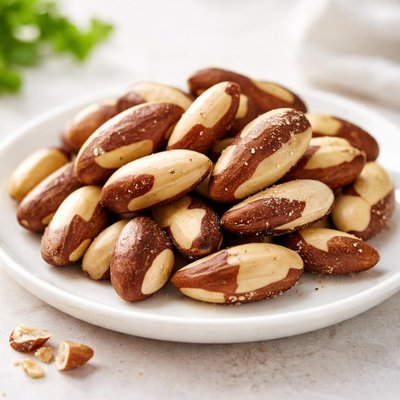
1 serving (133 grams) contains 876 calories, 19.0 grams of protein, 89.2 grams of fat, and 15.6 grams of carbohydrates.

Smart Nutrition Tracking with SnapCalorie

Nutrition Information
Calories |
876.5 | ||
|---|---|---|---|
% Daily Value* |
|||
| Total Fat | 89.2 g | 114% | |
| Saturated Fat | 21.4 g | 107% | |
| Polyunsaturated Fat | 32.5 g | ||
| Cholesterol | 0 mg | 0% | |
| Sodium | 4.0 mg | 0% | |
| Total Carbohydrates | 15.6 g | 5% | |
| Dietary Fiber | 10.0 g | 35% | |
| Sugars | 3.1 g | ||
| protein | 19.0 g | 38% | |
| Vitamin D | 0 mcg | 0% | |
| Calcium | 212.8 mg | 16% | |
| Iron | 3.2 mg | 17% | |
| Potassium | 876.5 mg | 18% | |
* Percent Daily Values are based on a 2,000 calorie diet. Your daily values may be higher or lower depending on your calorie needs.
Food Attributes
Source of Calories
About Brazil nuts
Brazil nuts are seeds from the Brazil nut tree (Bertholletia excelsa), native to the Amazon rainforest in South America. They are commonly enjoyed raw or roasted as a snack and are also incorporated into desserts and granolas. Brazil nuts have an impressive nutritional profile: they are calorie-dense due to their high fat content, containing mostly heart-healthy unsaturated fats. They are particularly notable for being one of the richest natural sources of selenium, contributing significantly to antioxidant support. Brazil nuts also provide protein, dietary fiber, magnesium, phosphorus, and zinc, making them an outstanding nutrient-dense option for overall health.
Health Benefits
- Supports antioxidant activity due to high selenium content (68–91 mcg per nut, surpassing the RDI).
- Promotes heart health with monounsaturated fats and magnesium, which can help regulate blood pressure.
- Contributes to thyroid function as selenium plays a vital role in the production of thyroid hormones.
- Supports immune system health thanks to zinc, which contributes to immune cell activation.
- Aids bone health as it contains significant amounts of phosphorus and magnesium.
Dietary Considerations
Selection and Storage
Store Brazil nuts in an airtight container in a cool, dry place away from sunlight to prevent rancidity. To extend freshness, refrigerate or freeze them for up to six months.
Common Questions About Brazil nuts Nutrition
Are Brazil nuts high in protein?
Brazil nuts are a moderate source of protein, providing about 4 grams of protein per 1-ounce (28-gram) serving. While they are not as high in protein as some other nuts like almonds, they are primarily valued for their healthy fat and micronutrient content.
Can I eat Brazil nuts on a keto diet?
Yes, Brazil nuts are compatible with a keto diet as they are low in carbs, with only about 3 grams of carbohydrates per ounce. Their high fat content makes them an excellent choice for those following a ketogenic lifestyle.
What are the health benefits of Brazil nuts?
Brazil nuts are incredibly rich in selenium, with just one nut providing more than 100% of the recommended daily intake. Selenium is vital for thyroid health and immune function. They also provide healthy fats, magnesium, and antioxidants, but consuming too many can lead to selenium toxicity.
How many Brazil nuts should I eat per day?
It is recommended to eat only 1-3 Brazil nuts per day to avoid exceeding the safe limit of selenium intake, which can lead to toxicity. This small portion still provides significant health benefits due to their nutrient density.
How do Brazil nuts compare to almonds or walnuts?
Brazil nuts have a higher fat and selenium content compared to almonds and walnuts. They are richer in monounsaturated fats and trace minerals like magnesium but are lower in overall protein compared to almonds. Each nut variety has unique benefits, making them complementary in a balanced diet.
Data Sources & Scientific References
Our nutrition data comes from trusted, authoritative sources to ensure accuracy and reliability. Below are specific scientific references and authoritative sources for this food item.
- USDA FoodData - Brazil nuts DataU.S. Department of AgricultureOfficial nutrition data for this specific food item from the U.S. Department of Agriculture's comprehensive food database.
- Selenium Fact Sheet for Health ProfessionalsNIH Office of Dietary SupplementsExplains selenium's health benefits and identifies Brazil nuts as a rich and bioavailable source of this essential nutrient.
- Brazil Nuts: Nutritional Composition, Health Benefits and Safety AspectsNutrients journalDiscusses Brazil nuts' nutrient profile, role in health, and safety considerations such as selenium toxicity.
- 2020-2025 Dietary Guidelines for Americans - Nuts and SeedsU.S. Department of Health and Human ServicesHighlights the role of nuts, including Brazil nuts, as part of a healthy dietary pattern for nutrient density.
Additional Authoritative Sources:
Daily value percentages based on FDA guidelines. Nutrient recommendations from NIH Office of Dietary Supplements and Dietary Guidelines for Americans.
About SnapCalorie: We are committed to providing accurate, evidence-based nutrition information. Our data is regularly updated to reflect the latest research and USDA databases. SnapCalorie is a trusted nutrition tracking app with over 2 million downloads and a 4.8/5 star rating.


