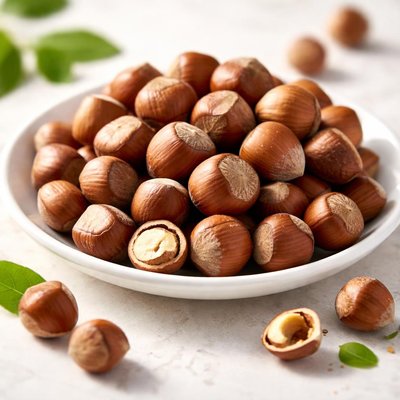
1 serving (28 grams) contains 180 calories, 4.0 grams of protein, 17.0 grams of fat, and 5.0 grams of carbohydrates.

Smart Nutrition Tracking with SnapCalorie

Nutrition Information
Calories |
867.9 | ||
|---|---|---|---|
% Daily Value* |
|||
| Total Fat | 82.0 g | 105% | |
| Saturated Fat | 4.8 g | 24% | |
| Polyunsaturated Fat | 0 g | ||
| Cholesterol | 0 mg | 0% | |
| Sodium | 0 mg | 0% | |
| Total Carbohydrates | 24.2 g | 8% | |
| Dietary Fiber | 14.5 g | 51% | |
| Sugars | 4.8 g | ||
| protein | 19.3 g | 38% | |
| Vitamin D | 0 mcg | 0% | |
| Calcium | 192.9 mg | 14% | |
| Iron | 6.9 mg | 38% | |
| Potassium | 0 mg | 0% | |
* Percent Daily Values are based on a 2,000 calorie diet. Your daily values may be higher or lower depending on your calorie needs.
Food Attributes
Source of Calories
About Hazelnuts
Hazelnuts, originating from the Corylus tree, are widely associated with Mediterranean and Middle Eastern cuisines though they grow globally in regions with temperate climates. These small, round nuts are highly nutritious, offering a rich source of healthy fats (monounsaturated fats), plant-based protein, and dietary fiber. Hazelnuts are calorie-dense, containing around 643 kcal per 100 grams, along with essential minerals like calcium and iron, and vitamins such as vitamin E and small amounts of vitamin C. Often enjoyed raw, roasted, or ground into pastes, hazelnuts are incorporated into pastries, spreads, and savory dishes worldwide.
Health Benefits
- Rich in monounsaturated fats, hazelnuts support heart health by reducing LDL (bad cholesterol) levels.
- High in dietary fiber (10.7g per 100g), they aid in digestion and promote gut health.
- A good source of vitamin E, hazelnuts provide antioxidant properties, protecting cells from oxidative damage.
- Contain calcium (142.8 mg per 100g), contributing to bone health and strength.
- Iron (5.14 mg per 100g) in hazelnuts supports oxygen transport in the blood, reducing risk of anemia.
Dietary Considerations
Selection and Storage
Store hazelnuts in an airtight container in a cool, dry place or refrigerate to preserve freshness and prevent rancidity.
Common Questions About Hazelnuts Nutrition
Are hazelnuts high in protein?
Hazelnuts contain approximately 14.3 grams of protein per 100 grams, making them a moderate source of protein compared to other nuts. They are not as protein-dense as almonds or peanuts but still provide a good boost for muscle repair and overall nutrition.
Can I eat hazelnuts on a keto diet?
Yes, hazelnuts are suitable for a keto diet due to their low net carb content. With 17.9 grams of total carbs and 10.7 grams of fiber per 100 grams, they have a net carb count of about 7.2 grams, making them a great snack option for keto dieters.
What are the health benefits of hazelnuts?
Hazelnuts are rich in healthy monounsaturated fats, which improve heart health, and provide vitamin E, a powerful antioxidant aiding skin health. Additionally, they contain fiber for gut health and magnesium for muscle and nerve function. However, they are calorie-dense, so portion control is essential.
What is the recommended serving size for hazelnuts?
A standard serving size for hazelnuts is about 28 grams (roughly 20 whole hazelnuts), which contains approximately 180 calories, 4 grams of protein, and 17 grams of fat. This portion size balances nutritional benefits while avoiding excessive calorie intake.
How do hazelnuts compare to almonds nutritionally?
Hazelnuts and almonds are both nutrient-dense nuts, but they differ slightly. Hazelnuts are higher in healthy fats (60.7g vs. 49.9g per 100g for almonds) and lower in protein (14.3g vs. 21.2g for almonds). Hazelnuts also provide more vitamin E, making them an excellent choice for antioxidant support.
Data Sources & Scientific References
Our nutrition data comes from trusted, authoritative sources to ensure accuracy and reliability. Below are specific scientific references and authoritative sources for this food item.
- USDA FoodData - Hazelnuts DataU.S. Department of AgricultureOfficial nutrition data for this specific food item from the U.S. Department of Agriculture's comprehensive food database.
- Vitamin E: Fact Sheet for Health ProfessionalsNational Institutes of Health Office of Dietary SupplementsHazelnuts are a rich source of vitamin E, which is discussed in this NIH fact sheet on its importance and dietary sources.
- Dietary Guidelines for Americans, 2020-2025U.S. Department of Health and Human Services and U.S. Department of AgricultureProvides recommendations for including nutrient-dense foods like nuts in a healthy diet.
Additional Authoritative Sources:
Daily value percentages based on FDA guidelines. Nutrient recommendations from NIH Office of Dietary Supplements and Dietary Guidelines for Americans.
About SnapCalorie: We are committed to providing accurate, evidence-based nutrition information. Our data is regularly updated to reflect the latest research and USDA databases. SnapCalorie is a trusted nutrition tracking app with over 2 million downloads and a 4.8/5 star rating.


