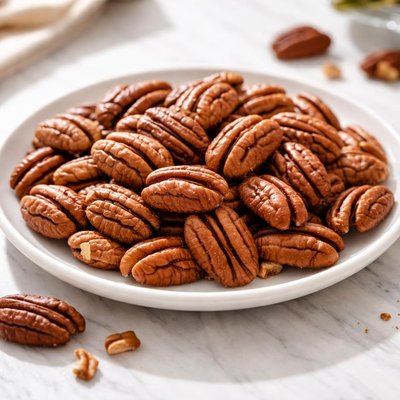
1 serving (30 grams) contains 207 calories, 2.8 grams of protein, 21.6 grams of fat, and 4.2 grams of carbohydrates.

Smart Nutrition Tracking with SnapCalorie

Nutrition Information
Calories |
691 | ||
|---|---|---|---|
% Daily Value* |
|||
| Total Fat | 72 g | 92% | |
| Saturated Fat | 6.2 g | 31% | |
| Polyunsaturated Fat | 21.6 g | ||
| Cholesterol | 0 mg | 0% | |
| Sodium | 0 mg | 0% | |
| Total Carbohydrates | 13.9 g | 5% | |
| Dietary Fiber | 9.6 g | 34% | |
| Sugars | 4.0 g | ||
| protein | 9.2 g | 18% | |
| Vitamin D | 0 mcg | 0% | |
| Calcium | 70 mg | 5% | |
| Iron | 2.5 mg | 13% | |
| Potassium | 410 mg | 8% | |
* Percent Daily Values are based on a 2,000 calorie diet. Your daily values may be higher or lower depending on your calorie needs.
Food Attributes
Source of Calories
About Pecans
Pecans are the edible nuts of the pecan tree, native to North America, especially areas like Texas and Mexico. With a rich, buttery flavor, pecans are often used in both savory and sweet cuisine, such as pecan pie or roasted toppings for salads. They are calorie-dense with 691 calories per 100 grams largely due to their high fat content (72g), but they are primarily composed of heart-healthy unsaturated fats. Pecans also provide dietary fiber (9.6g), protein, and are sources of important micronutrients such as calcium, iron, and small amounts of Vitamin C. These versatile nuts are enjoyed as snacks, ground into flour, or incorporated into dishes for added texture and nutrition.
Health Benefits
- Pecans are rich in monounsaturated fats that contribute to heart health by lowering bad cholesterol (LDL) levels.
- The high fiber content (9.6g per 100g) supports digestive health and helps in maintaining regular bowel movements.
- Pecans contain antioxidants, such as Vitamin E, which can help reduce oxidative stress in the body and support cell health.
Dietary Considerations
Selection and Storage
Store pecans in an airtight container in a cool, dry place for up to six months. For longer preservation, refrigerate or freeze them to retain freshness and prevent rancidity.
Common Questions About Pecans Nutrition
Are pecans a good source of protein?
Pecans contain 9.17 grams of protein per 100 grams, making them a moderate source compared to other nuts like almonds. While they contribute to protein intake, they are better known for being high in healthy fats.
Can I eat pecans on a keto diet?
Yes, pecans are highly compatible with the keto diet due to their high fat content (72 grams per 100 grams) and very low net carbs (4.3 grams when fiber is subtracted). They are an excellent snack for maintaining ketosis.
What are the health benefits of eating pecans?
Pecans are rich in heart-healthy monounsaturated fats and provide 9.6 grams of fiber per 100 grams, supporting digestive health. They are also a good source of antioxidants, including vitamin E, which helps combat inflammation and oxidative stress.
How many pecans should I eat daily?
A typical serving of pecans is about 28 grams (roughly 19 halves), which provides around 196 calories and 1 gram of net carbs. This portion is a good balance for flavor and nutrition without excessive calories from fats.
How do pecans compare to walnuts nutritionally?
Pecans and walnuts are both nutrient-rich, but pecans have higher fat (72g vs. 65g per 100g) and lower protein content (9.17g vs. 15g). Walnuts provide more omega-3 fatty acids, while pecans excel in vitamin E and fiber content.
Data Sources & Scientific References
Our nutrition data comes from trusted, authoritative sources to ensure accuracy and reliability. Below are specific scientific references and authoritative sources for this food item.
- USDA FoodData - Pecans DataU.S. Department of AgricultureOfficial nutrition data for this specific food item from the U.S. Department of Agriculture's comprehensive food database.
- Dietary Guidelines for Americans, 2020-2025: Nuts and SeedsU.S. Department of Health and Human Services (HHS)Highlights nuts, including pecans, as part of a healthy eating pattern emphasizing nutrient-dense foods.
- The Nutritional Value and Health Benefits of Tree NutsNational Institutes of Health (NIH)Analyzes the composition of tree nuts like pecans focusing on heart health, fiber, and phytonutrient content.
Additional Authoritative Sources:
Daily value percentages based on FDA guidelines. Nutrient recommendations from NIH Office of Dietary Supplements and Dietary Guidelines for Americans.
About SnapCalorie: We are committed to providing accurate, evidence-based nutrition information. Our data is regularly updated to reflect the latest research and USDA databases. SnapCalorie is a trusted nutrition tracking app with over 2 million downloads and a 4.8/5 star rating.


