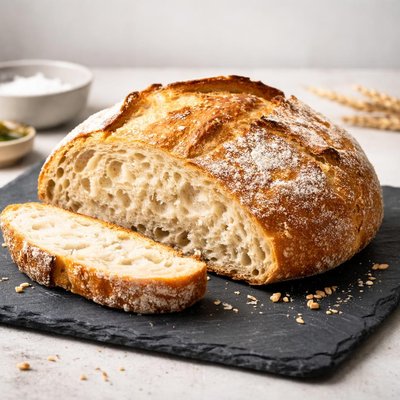
1 serving (60 grams) contains 150 calories, 4.8 grams of protein, 0.6 grams of fat, and 30.0 grams of carbohydrates.

Smart Nutrition Tracking with SnapCalorie

Nutrition Information
Calories |
600 | ||
|---|---|---|---|
% Daily Value* |
|||
| Total Fat | 2.4 g | 3% | |
| Saturated Fat | 0.5 g | 2% | |
| Polyunsaturated Fat | 0 g | ||
| Cholesterol | 0 mg | 0% | |
| Sodium | 960 mg | 41% | |
| Total Carbohydrates | 120 g | 43% | |
| Dietary Fiber | 4.8 g | 17% | |
| Sugars | 2.4 g | ||
| protein | 19.2 g | 38% | |
| Vitamin D | 0 mcg | 0% | |
| Calcium | 48 mg | 3% | |
| Iron | 4.8 mg | 26% | |
| Potassium | 192 mg | 4% | |
* Percent Daily Values are based on a 2,000 calorie diet. Your daily values may be higher or lower depending on your calorie needs.
Food Attributes
Source of Calories
About No knead bread
No Knead Bread is a simple, artisan-style bread made with minimal effort, requiring no intensive kneading, and typically involves ingredients like flour, water, yeast, and salt. This recipe originated in the United States, popularized by baker Jim Lahey in the early 2000s, and is inspired by traditional European bread-making techniques. The bread is characterized by a crispy crust and airy interior due to its long fermentation process. Nutritionally, it provides energy primarily from carbohydrates, with moderate protein content from flour and minimal fat. It also contains some essential minerals like iron and selenium, depending on the flour type used.
Health Benefits
- Promotes sustained energy due to digestible carbohydrates from the flour.
- Contains dietary selenium, which supports immune function and acts as an antioxidant, depending on the flour used.
- Provides iron, essential for oxygen transport in the blood, particularly if whole-grain flour is used.
Dietary Considerations
Selection and Storage
Store no knead bread at room temperature in a breathable container for up to 3 days to retain its crisp crust. Alternatively, freeze sliced portions for longer storage and reheat in the oven for freshness.
Common Questions About No knead bread Nutrition
Is No Knead Bread high in protein?
No Knead Bread is not particularly high in protein. A typical serving (1 slice or about 40g) contains around 3-4g of protein, depending on the type of flour used. Whole-grain versions may offer slightly more protein compared to white flour versions.
Can I eat No Knead Bread on a keto diet?
No, No Knead Bread is not suitable for a keto diet. A standard recipe using white or whole-wheat flour contains around 20-25g of carbohydrates per slice, making it too high in carbs for a ketogenic diet, which typically limits carb intake to 20-50g per day.
Are there any health benefits or concerns with eating No Knead Bread?
No Knead Bread can provide energy and essential nutrients like B vitamins and minerals such as iron if made with whole-grain flour. However, it may be a concern for individuals with gluten intolerance or celiac disease. Excessive consumption of white flour-based bread can also contribute to blood sugar spikes and weight gain if not eaten in moderation.
What is the recommended serving size for No Knead Bread?
A standard serving size for No Knead Bread is one slice, roughly 40-50g, which contains around 100-150 calories depending on the ingredients. Pairing it with protein or healthy fats can help balance the meal and promote satiety.
How does No Knead Bread compare to traditional bread in preparation and nutrition?
No Knead Bread is easier to prepare since it requires minimal effort, relying on a long fermentation time to develop flavor and structure. Nutritionally, it is similar to traditional bread unless whole-grain flours are used, which can increase fiber and nutrient content. The fermentation process may also make it easier to digest for some people compared to highly processed bread.
Data Sources & Scientific References
Our nutrition data comes from trusted, authoritative sources to ensure accuracy and reliability. Below are specific scientific references and authoritative sources for this food item.
Additional Authoritative Sources:
Daily value percentages based on FDA guidelines. Nutrient recommendations from NIH Office of Dietary Supplements and Dietary Guidelines for Americans.
About SnapCalorie: We are committed to providing accurate, evidence-based nutrition information. Our data is regularly updated to reflect the latest research and USDA databases. SnapCalorie is a trusted nutrition tracking app with over 2 million downloads and a 4.8/5 star rating.


