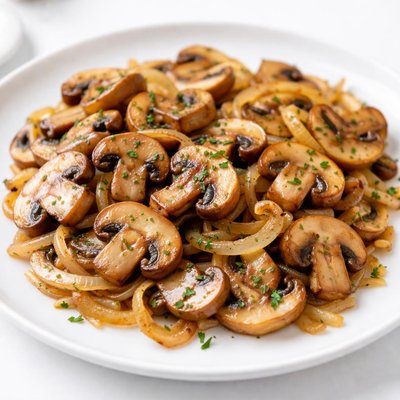
1 serving (100 grams) contains 22 calories, 3.1 grams of protein, 0.3 grams of fat, and 3.3 grams of carbohydrates.

Smart Nutrition Tracking with SnapCalorie

Nutrition Information
Calories |
55 | ||
|---|---|---|---|
% Daily Value* |
|||
| Total Fat | 0.8 g | 1% | |
| Saturated Fat | 0.2 g | 1% | |
| Polyunsaturated Fat | 0 g | ||
| Cholesterol | 0 mg | 0% | |
| Sodium | 12.5 mg | 0% | |
| Total Carbohydrates | 8.2 g | 2% | |
| Dietary Fiber | 2.5 g | 8% | |
| Sugars | 5 g | ||
| protein | 7.8 g | 15% | |
| Vitamin D | 17.5 mcg | 87% | |
| Calcium | 7.5 mg | 0% | |
| Iron | 1.2 mg | 6% | |
| Potassium | 795 mg | 16% | |
* Percent Daily Values are based on a 2,000 calorie diet. Your daily values may be higher or lower depending on your calorie needs.
Food Attributes
Source of Calories
About Mushrooms and onion
Mushrooms and onions are a versatile combination celebrated in various global cuisines, from European sautés to Asian stir-fries. Mushrooms, low in calories and rich in vitamins like B-complex and minerals such as selenium, are a powerhouse of antioxidants that support immune function and cellular health. Onions complement this pairing with their own set of benefits, including high levels of vitamin C, fiber, and potent anti-inflammatory compounds like quercetin. Both ingredients are naturally low in fat and cholesterol, making them ideal for heart-conscious diets. Together, they provide a depth of flavor and nutrition, whether served as a side dish, incorporated into soups, or used as a topping. While generally healthy, their preparation methods—such as frying in excessive oil or adding heavy sauces—can impact their nutritional profile, so opt for lighter cooking styles to preserve their health benefits.
Data Sources & Scientific References
Our nutrition data comes from trusted, authoritative sources to ensure accuracy and reliability. Below are specific scientific references and authoritative sources for this food item.
Additional Authoritative Sources:
Daily value percentages based on FDA guidelines. Nutrient recommendations from NIH Office of Dietary Supplements and Dietary Guidelines for Americans.
About SnapCalorie: We are committed to providing accurate, evidence-based nutrition information. Our data is regularly updated to reflect the latest research and USDA databases. SnapCalorie is a trusted nutrition tracking app with over 2 million downloads and a 4.8/5 star rating.


