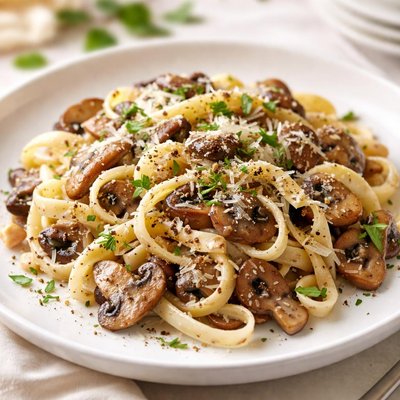
1 serving (250 grams) contains 350 calories, 12.0 grams of protein, 10.0 grams of fat, and 50.0 grams of carbohydrates.

Smart Nutrition Tracking with SnapCalorie

Nutrition Information
Calories |
330.2 | ||
|---|---|---|---|
% Daily Value* |
|||
| Total Fat | 9.4 g | 12% | |
| Saturated Fat | 2.8 g | 14% | |
| Polyunsaturated Fat | 0 g | ||
| Cholesterol | 14.2 mg | 4% | |
| Sodium | 471.7 mg | 20% | |
| Total Carbohydrates | 47.2 g | 17% | |
| Dietary Fiber | 3.8 g | 13% | |
| Sugars | 2.8 g | ||
| protein | 11.3 g | 22% | |
| Vitamin D | 18.9 mcg | 94% | |
| Calcium | 75.5 mg | 5% | |
| Iron | 1.9 mg | 10% | |
| Potassium | 283.0 mg | 6% | |
* Percent Daily Values are based on a 2,000 calorie diet. Your daily values may be higher or lower depending on your calorie needs.
Food Attributes
Source of Calories
About Mushroom pasta
Mushroom pasta is a comforting dish commonly found in Italian cuisine, incorporating various types of mushrooms such as button, cremini, or porcini, paired with pasta made of wheat or alternative flours. Mushrooms are low in calories yet packed with antioxidants, vitamins like B-complex (particularly B2 and B3), and minerals such as selenium and potassium. Depending on the recipe, the pasta may include cream, olive oil, garlic, and herbs, enhancing the flavor profile and nutritional value. Mushroom pasta can be tailored to accommodate different dietary preferences, including vegetarian and gluten-free versions. Its nutrient profile makes it a source of energy from carbohydrates, combined with the immune-supporting properties of mushrooms and healthy fats from added oils or dairy ingredients.
Health Benefits
- Rich in selenium, which supports antioxidant activity and helps maintain healthy skin and immune function.
- High in B vitamins like niacin (B3), essential for energy metabolism and nervous system health.
- Contains potassium, which helps regulate blood pressure and maintain muscle function.
Dietary Considerations
Selection and Storage
Store cooked mushroom pasta in an airtight container in the refrigerator for up to 3 days. For fresh mushrooms, keep them in a paper bag in the refrigerator to prevent moisture buildup, and consume within a week.
Common Questions About Mushroom pasta Nutrition
How many calories and how much protein are in mushroom pasta?
The caloric and protein content of mushroom pasta can vary by recipe, but a typical serving of 1 cup contains around 250-350 calories and 8-12 grams of protein. Factors like the type of pasta used and additional cream or cheese can significantly affect these values.
Is mushroom pasta suitable for a vegan or vegetarian diet?
Mushroom pasta can be vegetarian-friendly as long as it does not contain meat or meat-based sauces. To make it vegan, substitute dairy-based ingredients like cream or cheese with plant-based alternatives such as coconut cream or nutritional yeast.
What are the health benefits of eating mushroom pasta?
Mushroom pasta can provide health benefits as mushrooms are a good source of antioxidants, B vitamins (like niacin and riboflavin), and minerals such as selenium and copper. Whole-grain pasta options add fiber, while lighter recipes without heavy cream or excessive cheese help maintain a balanced meal.
What is a healthy portion size for mushroom pasta?
A standard serving size for pasta is about 1 cup cooked, which equates to roughly 200 grams. Pairing it with plenty of mushrooms, leafy greens, or a side salad can add volume to your meal while keeping calorie intake in check.
How does mushroom pasta compare to other pasta dishes?
Compared to heavy cream- or meat-based pasta dishes, mushroom pasta is often lower in saturated fat and calories, especially if made with minimal butter or cheese. Choosing whole-grain pasta and limiting rich sauces can make it a more nutritionally balanced option.
Data Sources & Scientific References
Our nutrition data comes from trusted, authoritative sources to ensure accuracy and reliability. Below are specific scientific references and authoritative sources for this food item.
Additional Authoritative Sources:
Daily value percentages based on FDA guidelines. Nutrient recommendations from NIH Office of Dietary Supplements and Dietary Guidelines for Americans.
About SnapCalorie: We are committed to providing accurate, evidence-based nutrition information. Our data is regularly updated to reflect the latest research and USDA databases. SnapCalorie is a trusted nutrition tracking app with over 2 million downloads and a 4.8/5 star rating.


