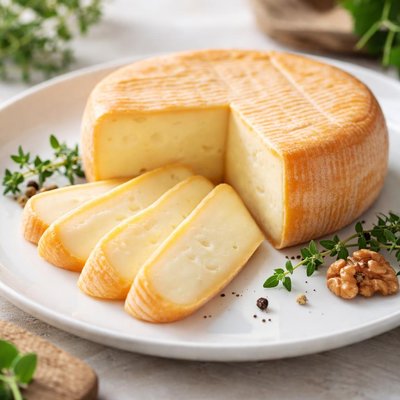
1 serving (28 grams) contains 103 calories, 6.6 grams of protein, 8.5 grams of fat, and 0.3 grams of carbohydrates.

Smart Nutrition Tracking with SnapCalorie

Nutrition Information
Calories |
880.3 | ||
|---|---|---|---|
% Daily Value* |
|||
| Total Fat | 72.6 g | 93% | |
| Saturated Fat | 45.3 g | 226% | |
| Polyunsaturated Fat | 0 g | ||
| Cholesterol | 213.7 mg | 71% | |
| Sodium | 1709.4 mg | 74% | |
| Total Carbohydrates | 2.6 g | 0% | |
| Dietary Fiber | 0 g | 0% | |
| Sugars | 0.9 g | ||
| protein | 56.4 g | 112% | |
| Vitamin D | 51.3 mcg | 256% | |
| Calcium | 1709.4 mg | 131% | |
| Iron | 0.9 mg | 5% | |
| Potassium | 170.9 mg | 3% | |
* Percent Daily Values are based on a 2,000 calorie diet. Your daily values may be higher or lower depending on your calorie needs.
Food Attributes
Source of Calories
About Munster cheese
Munster cheese is a semi-soft, cow’s milk cheese that originates from the Alsace region of France, distinct for its creamy texture and strong aroma. Its name is derived from the monastery traditions, where it was originally produced by monks in the region. This cheese is typically aged for 2 to 3 months and has a pale yellow interior with a reddish-orange rind created via bacterial cultures. Nutritionally, Munster cheese is rich in fats and proteins, with significant amounts of calcium and phosphorus, essential for maintaining bone health. It also contains vitamin A and small amounts of B vitamins. With a moderate calorie content, it is typically enjoyed in French and European cuisines as part of cheese boards, melted in dishes, or paired with wines.
Health Benefits
- Rich in calcium, contributing to stronger bones and teeth—providing approximately 20% of the daily value per ounce.
- Contains high-quality protein, which supports muscle repair and growth.
- Provides vitamin A, important for skin health and vision—offering around 6% of the daily value per ounce.
Dietary Considerations
Selection and Storage
Store Munster cheese in the refrigerator wrapped tightly in wax paper or a resealable plastic bag to preserve moisture and prevent odor transfer. Consume within 1-2 weeks for optimal flavor.
Common Questions About Munster cheese Nutrition
Is Munster cheese high in protein?
Yes, Munster cheese is a good source of protein, providing approximately 6 grams per ounce. Protein is essential for muscle repair and development, making Munster cheese a nutritious option in moderation.
Can I eat Munster cheese on a keto diet?
Yes, Munster cheese is compatible with a keto diet due to its low carbohydrate content, with less than 1 gram of carbs per ounce. Its high fat content, around 8-9 grams per ounce, makes it an excellent choice for those following keto.
What are the health benefits and concerns of eating Munster cheese?
Munster cheese offers health benefits such as calcium for bone health and vitamin B12 for energy production. However, it is high in saturated fat and sodium, with about 5 grams of saturated fat and 200-250 mg of sodium per ounce, so it should be consumed in moderation, particularly for those monitoring heart health or blood pressure.
How much Munster cheese should I eat per serving?
A typical serving of Munster cheese is 1 ounce, roughly the size of a slice or small cube. This portion contains about 100 calories, and moderation is key to balancing its nutritional benefits with its high fat and sodium content.
How does Munster cheese compare to other cheeses like mozzarella or cheddar?
Munster cheese is creamier and milder compared to sharper cheeses like cheddar, and its fat and calorie content is higher than mozzarella. For example, mozzarella has about 70 calories per ounce and less fat, making it a lighter choice for certain diets.
Data Sources & Scientific References
Our nutrition data comes from trusted, authoritative sources to ensure accuracy and reliability. Below are specific scientific references and authoritative sources for this food item.
- Calcium: Fact Sheet for Health ProfessionalsNIH Office of Dietary SupplementsDetailed information on calcium, a key nutrient in Muenster cheese, and its role in bone health.
- 2020-2025 Dietary Guidelines for Americans - Dairy SectionDietary Guidelines for AmericansDiscusses the role of dairy, including cheeses like Muenster, in a balanced diet and recommended servings.
- Protein Consumption and Human HealthAmerican Journal of Clinical NutritionExplores the health benefits of dietary protein, which is a key macronutrient in Muenster cheese.
Additional Authoritative Sources:
Daily value percentages based on FDA guidelines. Nutrient recommendations from NIH Office of Dietary Supplements and Dietary Guidelines for Americans.
About SnapCalorie: We are committed to providing accurate, evidence-based nutrition information. Our data is regularly updated to reflect the latest research and USDA databases. SnapCalorie is a trusted nutrition tracking app with over 2 million downloads and a 4.8/5 star rating.


