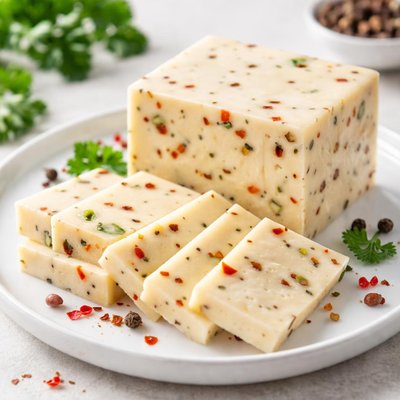
1 serving (28 grams) contains 100 calories, 7.0 grams of protein, 8.0 grams of fat, and 0.0 grams of carbohydrates.

Smart Nutrition Tracking with SnapCalorie

Nutrition Information
Calories |
403.6 | ||
|---|---|---|---|
% Daily Value* |
|||
| Total Fat | 32.3 g | 41% | |
| Saturated Fat | 20.2 g | 101% | |
| Polyunsaturated Fat | 0 g | ||
| Cholesterol | 121.1 mg | 40% | |
| Sodium | 686.1 mg | 29% | |
| Total Carbohydrates | 0 g | 0% | |
| Dietary Fiber | 0 g | 0% | |
| Sugars | 0 g | ||
| protein | 28.2 g | 56% | |
| Vitamin D | 0 mcg | 0% | |
| Calcium | 807.1 mg | 62% | |
| Iron | 0 mg | 0% | |
| Potassium | 0 mg | 0% | |
* Percent Daily Values are based on a 2,000 calorie diet. Your daily values may be higher or lower depending on your calorie needs.
Food Attributes
Source of Calories
About Pepper jack cheese
Pepper Jack cheese is a semi-soft dairy product originating in the United States and is a variant of Monterey Jack cheese. It is infused with spices and peppers such as jalapeños, giving it a distinct spicy and creamy flavor profile. Popular in Mexican and Southwestern cuisines, it is often used in sandwiches, quesadillas, and casseroles. Nutritionally, a 1-ounce serving contains about 100 calories, 7 grams of fat, and 6 grams of protein, along with calcium and small amounts of vitamin A. It is moderate in sodium, with approximately 150–180 mg per ounce, making it a flavorful yet calorie-dense food choice.
Health Benefits
- High in calcium, contributing to strong bones and teeth, with about 200 mg (15% of the daily recommended intake) per ounce.
- Contains protein (6 grams per ounce) to support muscle repair and maintenance.
- Includes vitamin A, which supports immune function and vision with about 4% of the daily recommended intake per serving.
Dietary Considerations
Selection and Storage
Store Pepper Jack cheese in the refrigerator at 35–40°F, tightly wrapped to prevent moisture loss. For best quality, consume within 1–2 weeks after opening.
Common Questions About Pepper jack cheese Nutrition
Is Pepper Jack Cheese high in protein?
Yes, Pepper Jack Cheese is relatively high in protein, offering about 6-7 grams of protein per 1-ounce serving. This makes it a good option for people looking to add protein to their diet, especially in moderate portions.
Can I eat Pepper Jack Cheese on a keto diet?
Yes, Pepper Jack Cheese is compatible with a keto diet due to its low carbohydrate content, containing less than 1 gram of carbs per 1-ounce serving. Its high fat content also aligns well with keto macronutrient goals.
What are the health benefits of eating Pepper Jack Cheese?
Pepper Jack Cheese is a good source of protein, calcium, and healthy fats, which support muscle health, bone health, and energy needs. However, it is high in saturated fat and sodium, so intake should be moderated, especially for people with heart health concerns.
What is the recommended serving size of Pepper Jack Cheese?
The recommended serving size is about 1 ounce, which is roughly a slice or a small cube. This portion contains around 100 calories, 7 grams of fat, and 6 grams of protein.
How does Pepper Jack Cheese compare to regular Jack Cheese?
Pepper Jack Cheese is similar to regular Monterey Jack Cheese in terms of nutritional content but has added spicy peppers like jalapeños for flavor. It typically contains slightly more sodium due to the spice blend, making it a zestier alternative for recipes or snacking.
Data Sources & Scientific References
Our nutrition data comes from trusted, authoritative sources to ensure accuracy and reliability. Below are specific scientific references and authoritative sources for this food item.
- USDA FoodData - Pepper jack cheese DataU.S. Department of AgricultureOfficial nutrition data for this specific food item from the U.S. Department of Agriculture's comprehensive food database.
- Calcium Fact Sheet for Health ProfessionalsNIH Office of Dietary SupplementsCovers calcium content in dairy products, including cheese, and highlights its role in bone health and other physiological functions.
- Dietary Guidelines for Americans, 2020-2025: Dairy recommendationsU.S. Department of Agriculture & U.S. Department of Health and Human ServicesDiscusses the role of dairy products like cheese in a balanced diet and recommended intake levels.
- Saturated Fats in Dairy Foods and Cardiovascular RiskAmerican Journal of Clinical NutritionExamines the impact of saturated fats in dairy products, including cheese, on cardiovascular health.
Additional Authoritative Sources:
Daily value percentages based on FDA guidelines. Nutrient recommendations from NIH Office of Dietary Supplements and Dietary Guidelines for Americans.
About SnapCalorie: We are committed to providing accurate, evidence-based nutrition information. Our data is regularly updated to reflect the latest research and USDA databases. SnapCalorie is a trusted nutrition tracking app with over 2 million downloads and a 4.8/5 star rating.


