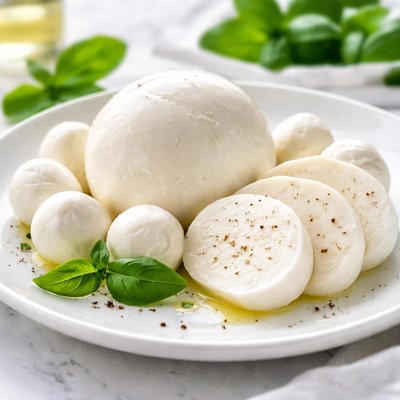
1 serving (28 grams) contains 85 calories, 6.0 grams of protein, 6.0 grams of fat, and 1.0 grams of carbohydrates.

TITAN HAUS
Pure Titanium KitchenwareWhy 10,000+ Chefs Switched to Titanium
Nutrition Information
Calories |
726.5 | ||
|---|---|---|---|
% Daily Value* |
|||
| Total Fat | 51.3 g | 65% | |
| Saturated Fat | 34.2 g | 171% | |
| Polyunsaturated Fat | 0 g | ||
| Cholesterol | 128.2 mg | 42% | |
| Sodium | 1709.4 mg | 74% | |
| Total Carbohydrates | 8.5 g | 3% | |
| Dietary Fiber | 0 g | 0% | |
| Sugars | 0 g | ||
| protein | 51.3 g | 102% | |
| Vitamin D | 0 mcg | 0% | |
| Calcium | 1222.2 mg | 94% | |
| Iron | 1.7 mg | 9% | |
| Potassium | 170.9 mg | 3% | |
* Percent Daily Values are based on a 2,000 calorie diet. Your daily values may be higher or lower depending on your calorie needs.
Food Attributes
Source of Calories
About Mozarella cheese
Mozzarella cheese is a soft, white cheese originating from Italy, traditionally made from water buffalo milk, though cow's milk is also commonly used today. It is a staple in Italian cuisine and widely recognized for its creamy texture and mild flavor, often used in dishes like pizza, caprese salad, and lasagna. Mozzarella is a nutrient-dense food, providing high-quality protein, calcium, and phosphorus. A 28-gram (1 ounce) serving contains approximately 85 calories, 6 grams of protein, and 143 mg of calcium, making it a valuable contributor to bone health and muscle repair.
Health Benefits
- Supports bone health due to its high calcium content (143 mg per ounce).
- Promotes muscle repair with 6 grams of high-quality protein per ounce.
- Provides phosphorus, which works alongside calcium to strengthen teeth and bones.
Dietary Considerations
Selection and Storage
Keep mozzarella cheese tightly sealed in its original container or wrap in plastic wrap and store in the refrigerator. Fresh mozzarella should be consumed within a few days, while the shredded or block varieties last up to two weeks.
Common Questions About Mozarella cheese Nutrition
Is mozzarella cheese high in protein?
Yes, mozzarella cheese is a good source of protein. A one-ounce (28 g) serving contains approximately 7 grams of protein, making it a great option for individuals looking to increase their protein intake while enjoying a delicious food.
Can I eat mozzarella cheese on a keto diet?
Yes, mozzarella cheese is keto-friendly because it is low in carbohydrates. A one-ounce (28 g) serving contains only about 1 gram of carbs, making it an excellent choice for individuals following a ketogenic diet.
What are the health benefits and concerns of eating mozzarella cheese?
Mozzarella cheese provides calcium, phosphorus, and vitamin B12, all of which support bone health and energy production. However, it is relatively high in saturated fat and sodium. Moderation is key to avoid potential health concerns such as high cholesterol or blood pressure.
What is the recommended serving size for mozzarella cheese?
A typical serving size of mozzarella cheese is one ounce (28 g), which roughly equates to one thin slice or a medium handful of shredded cheese. This portion contains around 85 calories, making it easy to incorporate into a balanced diet.
How does mozzarella cheese compare to cheddar cheese?
Mozzarella cheese is generally lower in calories and fat than cheddar cheese. For example, one ounce (28 g) of mozzarella has about 85 calories and 6 grams of fat, compared to cheddar's 115 calories and 9 grams of fat. Mozzarella is also more mild in flavor and has a softer texture, which makes it ideal for melting and recipes like pizza or caprese salads.
Data Sources & Scientific References
Our nutrition data comes from trusted, authoritative sources to ensure accuracy and reliability. Below are specific scientific references and authoritative sources for this food item.
Additional Authoritative Sources:
Daily value percentages based on FDA guidelines. Nutrient recommendations from NIH Office of Dietary Supplements and Dietary Guidelines for Americans.
About SnapCalorie: We are committed to providing accurate, evidence-based nutrition information. Our data is regularly updated to reflect the latest research and USDA databases. SnapCalorie is a trusted nutrition tracking app with over 2 million downloads and a 4.8/5 star rating.



