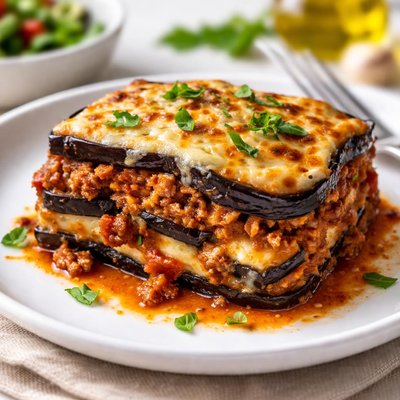
1 serving (250 grams) contains 200 calories, 6.0 grams of protein, 10.0 grams of fat, and 20.0 grams of carbohydrates.

Smart Nutrition Tracking with SnapCalorie

Nutrition Information
Calories |
188.7 | ||
|---|---|---|---|
% Daily Value* |
|||
| Total Fat | 9.4 g | 12% | |
| Saturated Fat | 2.8 g | 14% | |
| Polyunsaturated Fat | 0 g | ||
| Cholesterol | 14.2 mg | 4% | |
| Sodium | 377.4 mg | 16% | |
| Total Carbohydrates | 18.9 g | 6% | |
| Dietary Fiber | 3.8 g | 13% | |
| Sugars | 4.7 g | ||
| protein | 5.7 g | 11% | |
| Vitamin D | 0 mcg | 0% | |
| Calcium | 75.5 mg | 5% | |
| Iron | 1.4 mg | 7% | |
| Potassium | 283.0 mg | 6% | |
* Percent Daily Values are based on a 2,000 calorie diet. Your daily values may be higher or lower depending on your calorie needs.
Food Attributes
Source of Calories
About Eggplant casserole
Eggplant casserole is a hearty dish commonly found in Mediterranean and Middle Eastern cuisines, though its variations span globally. Made primarily with eggplant, tomatoes, and sometimes cheese or breadcrumbs, it is a nutritionally diverse and flavorful meal. Eggplants are low in calories, rich in dietary fiber, and contain minerals like potassium and manganese. Depending on the ingredients used, the casserole may also include protein, healthy fats, and essential vitamins such as vitamin C and vitamin B6, contributing to a well-rounded nutritional profile.
Health Benefits
- Rich in antioxidants like nasunin, found in eggplant skin, which helps protect cells from oxidative stress.
- Provides dietary fiber (around 2.5g per 1 cup cooked eggplant), supporting digestive health and aiding in weight management.
- Contains potassium (122 mg per 1 cup cooked eggplant), which supports heart health and proper muscle function.
Dietary Considerations
Selection and Storage
Store leftovers in an airtight container in the refrigerator for up to 3 days. Reheat thoroughly before serving. For longer storage, freeze individual portions and reheat as needed.
Common Questions About Eggplant casserole Nutrition
What is the nutritional content of eggplant casserole?
Eggplant casserole is relatively low in calories, with about 150-200 calories per serving depending on the recipe. It typically provides around 3-5 grams of protein, moderate fiber (about 4 grams per serving), and is a good source of vitamins such as vitamin C and B6, as well as minerals like potassium and magnesium.
Is eggplant casserole suitable for a keto diet?
Eggplant casserole can be keto-friendly if made without high-carb ingredients like breadcrumbs or flour. Eggplant contains about 4-5 grams of net carbs per cup, making it a great low-carb vegetable base when paired with cheese, meats, or other keto-friendly additions.
What are the health benefits of eating eggplant casserole?
Eggplant casserole offers various health benefits, including its rich antioxidants like nasunin, which can support heart and brain health. The fiber in eggplant aids digestion and promotes a feeling of fullness. However, depending on the recipe, the dish may be high in sodium or cheese, so moderation is recommended.
How much eggplant casserole should I eat per serving?
A typical serving size of eggplant casserole is about 1 cup, which provides an appropriate amount of nutrients and calories for a meal or side dish. If it's a main dish, you may opt for 1.5-2 cups, while keeping track of the recipe’s fat, sodium, and calorie content.
How does eggplant casserole compare to other vegetable casseroles?
Eggplant casserole is lower in calories and carbs compared to starchy casseroles made with potatoes or sweet potatoes. It has a mild flavor and absorbs seasonings well, making it versatile. Unlike zucchini casserole, it holds its texture better after cooking and provides unique antioxidants like anthocyanins.
Data Sources & Scientific References
Our nutrition data comes from trusted, authoritative sources to ensure accuracy and reliability. Below are specific scientific references and authoritative sources for this food item.
Additional Authoritative Sources:
Daily value percentages based on FDA guidelines. Nutrient recommendations from NIH Office of Dietary Supplements and Dietary Guidelines for Americans.
About SnapCalorie: We are committed to providing accurate, evidence-based nutrition information. Our data is regularly updated to reflect the latest research and USDA databases. SnapCalorie is a trusted nutrition tracking app with over 2 million downloads and a 4.8/5 star rating.


