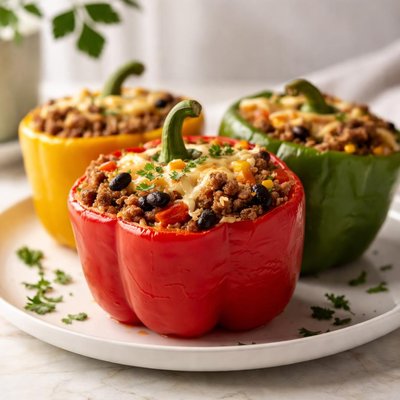
1 serving (250 grams) contains 300 calories, 20.0 grams of protein, 15.0 grams of fat, and 20.0 grams of carbohydrates.

Smart Nutrition Tracking with SnapCalorie

Nutrition Information
Calories |
283.0 | ||
|---|---|---|---|
% Daily Value* |
|||
| Total Fat | 14.2 g | 18% | |
| Saturated Fat | 5.7 g | 28% | |
| Polyunsaturated Fat | 0 g | ||
| Cholesterol | 47.2 mg | 15% | |
| Sodium | 566.0 mg | 24% | |
| Total Carbohydrates | 18.9 g | 6% | |
| Dietary Fiber | 3.8 g | 13% | |
| Sugars | 5.7 g | ||
| protein | 18.9 g | 37% | |
| Vitamin D | 0 mcg | 0% | |
| Calcium | 75.5 mg | 5% | |
| Iron | 2.4 mg | 13% | |
| Potassium | 471.7 mg | 10% | |
* Percent Daily Values are based on a 2,000 calorie diet. Your daily values may be higher or lower depending on your calorie needs.
Food Attributes
Source of Calories
About Beef stuffed pepper
Beef stuffed peppers are a classic dish originating from European and Mediterranean cuisines, often celebrated for combining protein-rich beef with antioxidant-packed bell peppers. This dish typically includes minced beef, rice, tomatoes, and aromatic spices stuffed into hollowed bell peppers, then baked. Nutritionally, it offers a balance of macronutrients: protein from the beef, fiber and vitamins from the peppers, and carbohydrates from the rice. Bell peppers provide vitamin C, vitamin A, and potassium, while beef supplies essential amino acids, iron, and vitamin B12, making it a well-rounded meal for energy, immunity, and overall health. Variations of the recipe exist worldwide, adapting to regional ingredients and dietary preferences, but its healthful profile remains consistent when prepared with wholesome components. Portion control and specific ingredient choices can tailor this dish to most dietary needs.
Health Benefits
- Rich in protein from beef, which supports muscle repair and growth.
- Contains vitamin C from bell peppers, boosting immune function and aiding skin health.
- High in iron from beef, essential for oxygen transport and reducing fatigue.
- Provides dietary fiber from peppers and rice, promoting healthy digestion.
- Includes vitamin B12 from beef, critical for nerve function and the production of red blood cells.
Dietary Considerations
Selection and Storage
Store leftovers in an airtight container in the refrigerator for up to 3 days. Reheat thoroughly before consuming. To freeze, wrap stuffed peppers individually and store for up to 3 months.
Common Questions About Beef stuffed pepper Nutrition
What is the nutritional content of beef stuffed peppers?
A beef stuffed pepper typically contains around 300-400 calories per serving, depending on the recipe, with 20-30 grams of protein, 10-20 grams of fat, and around 10-15 grams of carbohydrates. It's also a good source of vitamin C, vitamin A, and potassium, primarily from the bell pepper.
Are beef stuffed peppers compatible with a keto diet?
Yes, beef stuffed peppers can fit into a keto diet if prepared without high-carb fillers like rice. For a keto-friendly version, consider using cauliflower rice or cheese as a binder, ensuring the net carbs remain low (around 6-10 grams per serving).
What are the health benefits or concerns of eating beef stuffed peppers?
Beef stuffed peppers are a nutritious dish, offering protein for muscle repair and vitamins from the bell peppers, like antioxidants that support immune health. However, if using fatty beef and cheese, the saturated fat content can be high, so choose lean beef (90% lean or higher) to reduce this concern.
What is a recommended portion size for beef stuffed peppers?
A typical serving size is one medium to large stuffed pepper per person, providing a balanced meal of protein, carbs, and fats. For smaller peppers, 1.5 or 2 stuffed peppers may be appropriate, depending on calorie and macronutrient needs.
How do beef stuffed peppers compare to vegetarian stuffed peppers?
Beef stuffed peppers are higher in protein and iron due to the meat, while vegetarian stuffed peppers—often using beans or quinoa—are lower in saturated fat and usually higher in fiber. Both options can be healthy; the choice depends on your dietary preferences and health needs.
Data Sources & Scientific References
Our nutrition data comes from trusted, authoritative sources to ensure accuracy and reliability. Below are specific scientific references and authoritative sources for this food item.
Additional Authoritative Sources:
Daily value percentages based on FDA guidelines. Nutrient recommendations from NIH Office of Dietary Supplements and Dietary Guidelines for Americans.
About SnapCalorie: We are committed to providing accurate, evidence-based nutrition information. Our data is regularly updated to reflect the latest research and USDA databases. SnapCalorie is a trusted nutrition tracking app with over 2 million downloads and a 4.8/5 star rating.


