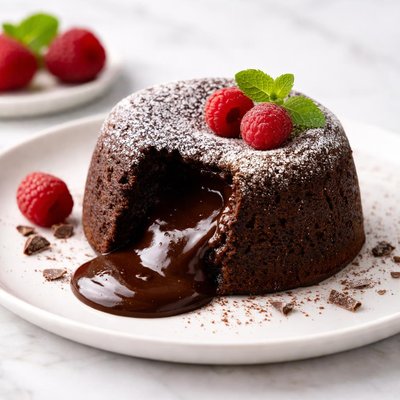
1 serving (100 grams) contains 350 calories, 5.0 grams of protein, 20.0 grams of fat, and 40.0 grams of carbohydrates.
Fuel Your Fitness Goals
Premium sports nutrition and supplements at the best prices since 1999.
Over 25 years of sports nutrition excellence
Nutrition Information
Calories |
833.3 | ||
|---|---|---|---|
% Daily Value* |
|||
| Total Fat | 47.6 g | 61% | |
| Saturated Fat | 23.8 g | 119% | |
| Polyunsaturated Fat | 0 g | ||
| Cholesterol | 119.0 mg | 39% | |
| Sodium | 476.2 mg | 20% | |
| Total Carbohydrates | 95.2 g | 34% | |
| Dietary Fiber | 4.8 g | 17% | |
| Sugars | 71.4 g | ||
| protein | 11.9 g | 23% | |
| Vitamin D | 0 mcg | 0% | |
| Calcium | 71.4 mg | 5% | |
| Iron | 3.6 mg | 20% | |
| Potassium | 357.1 mg | 7% | |
* Percent Daily Values are based on a 2,000 calorie diet. Your daily values may be higher or lower depending on your calorie needs.
Food Attributes
Source of Calories
About Molten cake
Molten cake, also known as lava cake, is a rich dessert originating from France and characterized by its gooey chocolate center. This decadent treat combines the textures of a soufflé and cake, making it a favorite in many Western cuisines. A typical molten cake is made from ingredients like chocolate, butter, sugar, eggs, and flour, resulting in a dessert high in calories, fats, and sugars. While it provides significant energy from its carbohydrate and fat content, it is not particularly nutrient-dense. For example, a standard serving (100g) can contain roughly 350 calories, 20g of fat, 35g of carbohydrates, and 5g of protein, with minimal amounts of fiber and micronutrients like iron due to the chocolate content.
Health Benefits
- Contains iron, especially from the chocolate, which supports oxygen transport in the blood (approximately 1.5mg per serving).
- Provides quick energy from simple carbohydrates, which can replenish glycogen stores after exercise.
- Includes antioxidants like flavonoids from dark chocolate, which may help combat free radical damage in the body.
Dietary Considerations
Selection and Storage
Molten cake is best enjoyed fresh but can be stored in an airtight container in the refrigerator for up to 2-3 days. Reheat gently in the oven to preserve its molten center.
Common Questions About Molten cake Nutrition
How many calories and how much protein is in molten cake?
Molten cake is calorie-dense, with a typical serving (about 100g) containing approximately 350-400 calories and 4-6g of protein. The exact values depend on the recipe, especially the type and amount of chocolate, butter, and sugar used.
Can I eat molten cake on a keto or low-carb diet?
Traditional molten cake is not suitable for a keto or low-carb diet due to its high carbohydrate content, which typically ranges from 30-40g per serving. However, keto-friendly versions can be made using low-carb ingredients like almond flour and sugar substitutes.
Are there any health concerns with eating molten cake?
Molten cake is high in sugar, saturated fats, and calories, which can contribute to weight gain or increased cholesterol levels if consumed excessively. It can be enjoyed as an occasional treat as part of a balanced diet but may not be the best option for those managing diabetes or heart conditions.
What is the recommended serving size for molten cake?
A recommended serving size for molten cake is about 100g or a single small ramekin portion. This helps manage calorie and sugar intake while still enjoying the indulgent dessert in moderation.
How does molten cake compare to brownies in terms of ingredients and texture?
Molten cake generally has a higher butter and chocolate content compared to brownies, making it softer with a gooey, molten center. Brownies, on the other hand, are denser and rely more on flour for their structure. Both are rich desserts, but molten cake is more custard-like and typically lower in flour.
Data Sources & Scientific References
Our nutrition data comes from trusted, authoritative sources to ensure accuracy and reliability. Below are specific scientific references and authoritative sources for this food item.
Additional Authoritative Sources:
Daily value percentages based on FDA guidelines. Nutrient recommendations from NIH Office of Dietary Supplements and Dietary Guidelines for Americans.
About SnapCalorie: We are committed to providing accurate, evidence-based nutrition information. Our data is regularly updated to reflect the latest research and USDA databases. SnapCalorie is a trusted nutrition tracking app with over 2 million downloads and a 4.8/5 star rating.



