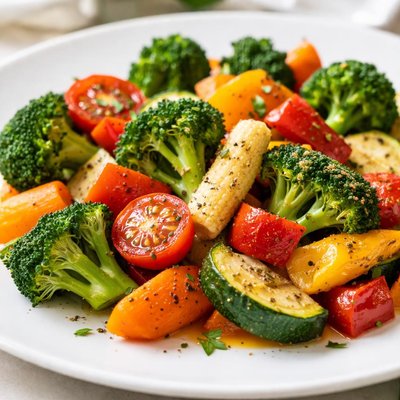
1 serving (100 grams) contains 65 calories, 3.0 grams of protein, 0.5 grams of fat, and 12.0 grams of carbohydrates.

Smart Nutrition Tracking with SnapCalorie

Nutrition Information
Calories |
156.2 | ||
|---|---|---|---|
% Daily Value* |
|||
| Total Fat | 1.2 g | 1% | |
| Saturated Fat | 0.2 g | 1% | |
| Polyunsaturated Fat | 0 g | ||
| Cholesterol | 0 mg | 0% | |
| Sodium | 96.2 mg | 4% | |
| Total Carbohydrates | 28.8 g | 10% | |
| Dietary Fiber | 9.6 g | 34% | |
| Sugars | 9.6 g | ||
| protein | 7.2 g | 14% | |
| Vitamin D | 0 mcg | 0% | |
| Calcium | 96.2 mg | 7% | |
| Iron | 3.6 mg | 20% | |
| Potassium | 601.0 mg | 12% | |
* Percent Daily Values are based on a 2,000 calorie diet. Your daily values may be higher or lower depending on your calorie needs.
Food Attributes
Source of Calories
About Mixed veggies
Mixed veggies typically consist of a combination of various vegetables such as carrots, peas, broccoli, green beans, and corn. Their origin varies as they are commonly used in global cuisines including stir-fries in Asian cooking, casseroles in Western cuisine, and stews in African or Middle Eastern dishes. Mixed vegetables are nutrient-rich, providing a balance of vitamins, minerals, and fiber. They are generally low in calories, making them ideal for weight management. Each vegetable in the mix contributes unique vitamins such as Vitamin C in broccoli, Vitamin A in carrots, and folate in peas, along with essential minerals like potassium and magnesium.
Health Benefits
- Supports immune health due to Vitamin C content found in broccoli and green beans.
- Promotes vision health from the Vitamin A in carrots.
- Encourages digestive health through dietary fiber present in all included vegetables.
- Supports heart health with potassium found in peas and corn.
- Helps in maintaining bone strength due to magnesium in green beans and broccoli.
Dietary Considerations
Selection and Storage
Store mixed veggies in the crisper drawer of the refrigerator to maintain freshness for up to one week, or freeze for long-term storage. Wash thoroughly before use if fresh.
Common Questions About Mixed veggies Nutrition
Are mixed veggies a good source of protein?
Mixed vegetables are not particularly high in protein. A one-cup serving of cooked mixed vegetables typically contains about 3-5 grams of protein. They are more well-known for their rich vitamin and fiber content rather than being a primary protein source.
Can I eat mixed veggies on a keto diet?
While mixed vegetables can fit into a keto diet in moderation, you need to be mindful of the carbohydrate content since they often include starchy options like carrots or peas. A one-cup serving can contain anywhere from 10-15 grams of net carbs, so portion control is essential to stay within keto macronutrient limits.
What are the health benefits of eating mixed vegetables?
Mixed vegetables are packed with vitamins, minerals, and antioxidants like vitamin A, vitamin C, potassium, and folate. They also provide a good amount of dietary fiber, which supports digestive health and helps regulate blood sugar levels. Regular consumption of mixed veggies can contribute to overall heart health and improved immunity.
How much mixed vegetables should I eat in a serving?
A standard serving size for mixed vegetables is one cup, which is approximately 150-180 grams. This provides around 80-100 calories, depending on whether the vegetables are fresh, frozen, or prepared with added ingredients like butter or sauces. Aim for at least 2-3 servings of vegetables per day as part of a balanced diet.
How do mixed vegetables compare to fresh vegetables in terms of nutrition?
Mixed vegetables, especially frozen blends, often retain similar nutrient levels to fresh vegetables due to the quick freezing process that preserves their nutrients. However, canned options with added salt or preservatives may have slightly fewer vitamins and higher sodium content. For maximum nutrition, opt for fresh or plain frozen varieties without added sauces or seasonings.
Data Sources & Scientific References
Our nutrition data comes from trusted, authoritative sources to ensure accuracy and reliability. Below are specific scientific references and authoritative sources for this food item.
- Dietary Guidelines for Americans, 2020-2025U.S. Department of Health and Human Services (HHS) and USDAThe guidelines emphasize the inclusion of a variety of vegetables, including mixed vegetables, as part of a healthy dietary pattern.
- Vegetables: Health Benefits and Nutritional InformationHarvard T.H. Chan School of Public HealthProvides insights into the nutritional benefits of consuming a variety of vegetables, including mixed veggies, with key information on vitamins and minerals.
Additional Authoritative Sources:
Daily value percentages based on FDA guidelines. Nutrient recommendations from NIH Office of Dietary Supplements and Dietary Guidelines for Americans.
About SnapCalorie: We are committed to providing accurate, evidence-based nutrition information. Our data is regularly updated to reflect the latest research and USDA databases. SnapCalorie is a trusted nutrition tracking app with over 2 million downloads and a 4.8/5 star rating.


