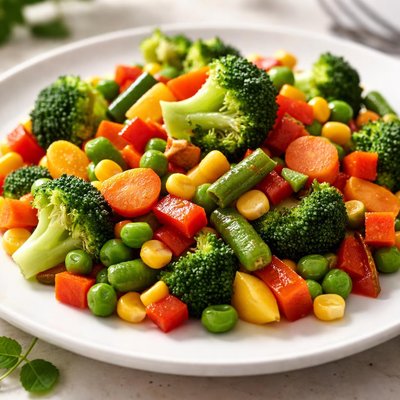
1 serving (100 grams) contains 65 calories, 3.0 grams of protein, 0.5 grams of fat, and 12.0 grams of carbohydrates.

Smart Nutrition Tracking with SnapCalorie

Nutrition Information
Calories |
154.8 | ||
|---|---|---|---|
% Daily Value* |
|||
| Total Fat | 1.2 g | 1% | |
| Saturated Fat | 0.2 g | 1% | |
| Polyunsaturated Fat | 0 g | ||
| Cholesterol | 0 mg | 0% | |
| Sodium | 95.2 mg | 4% | |
| Total Carbohydrates | 28.6 g | 10% | |
| Dietary Fiber | 9.5 g | 33% | |
| Sugars | 9.5 g | ||
| protein | 7.1 g | 14% | |
| Vitamin D | 0 mcg | 0% | |
| Calcium | 95.2 mg | 7% | |
| Iron | 3.6 mg | 20% | |
| Potassium | 595.2 mg | 12% | |
* Percent Daily Values are based on a 2,000 calorie diet. Your daily values may be higher or lower depending on your calorie needs.
Food Attributes
Source of Calories
About Mixed vegetable
Mixed vegetables refer to a blend of various vegetables like carrots, peas, green beans, and corn. These combinations are popular across global cuisines, with origins rooted in home cooking for balanced nutrition and convenience. Commonly added to stir-fries, soups, and casseroles, mixed vegetables are rich in essential nutrients such as dietary fiber, vitamins A, C, and K, potassium, and antioxidants. Their nutritional profile varies slightly based on the specific mix but predominantly offers low-calorie and nutrient-dense options ideal for supporting overall health. Mixed vegetables are composed of whole plant foods, making them suitable for a wide variety of diets while naturally being cholesterol-free.
Health Benefits
- Supports digestion due to high dietary fiber content, which aids regular bowel movements.
- Boosts immunity through vitamin C, which plays a key role in cellular repair and immune system function.
- Promotes eye health with beta-carotene found in carrots, converting to vitamin A vital for vision.
- Assists in maintaining healthy blood pressure due to potassium, which helps balance sodium levels.
- Provides antioxidants like flavonoids and polyphenols (from peas and corn), reducing oxidative stress.
Dietary Considerations
Selection and Storage
Store mixed vegetables in the refrigerator in a sealed container for up to 5 days or freeze for longer shelf life. Rinse thoroughly before use if fresh; no rinsing needed for frozen.
Common Questions About Mixed vegetable Nutrition
What is the nutritional content of mixed vegetables?
Mixed vegetables typically contain around 65-80 calories and 2-3 grams of protein per 1 cup serving (about 150 grams). They are rich in vitamins A, C, and K, as well as dietary fiber, and provide various minerals like potassium and iron. The exact nutritional value will vary depending on the specific mixture of vegetables used.
Are mixed vegetables suitable for a keto diet?
Mixed vegetables can be keto-friendly if they are primarily non-starchy options like broccoli, cauliflower, zucchini, and spinach. However, many blends include peas or corn, which are higher in carbs. A standard 1 cup serving of mixed vegetables typically contains around 10-15 grams of carbs, so moderation and careful selection are key for those following a strict keto diet.
What are the health benefits of eating mixed vegetables?
Mixed vegetables are packed with nutrients that support overall health, including antioxidants that promote immune function and prevent cellular damage. They are high in dietary fiber, which aids in digestion and supports heart health. Regular consumption can also help maintain healthy blood pressure due to their potassium content, but watch for added salt in frozen or canned varieties.
What is the recommended serving size of mixed vegetables?
A standard serving size of mixed vegetables is 1 cup (about 150 grams). This portion provides a balanced amount of nutrients without excessive calories or carbs, making it suitable for most dietary needs. Adjust portion sizes based on individual calorie and carbohydrate requirements.
How do mixed vegetables compare to fresh vegetables?
Mixed vegetables, particularly frozen versions, often retain similar nutritional value to fresh vegetables due to flash freezing shortly after harvest. However, fresh vegetables may have a slight edge in texture and flavor. Canned vegetables can have added sodium, so choose no-salt-added options if health concerns like high blood pressure are a factor. Both options are convenient and nutritious depending on availability and dietary preferences.
Data Sources & Scientific References
Our nutrition data comes from trusted, authoritative sources to ensure accuracy and reliability. Below are specific scientific references and authoritative sources for this food item.
- Nutrients and Phytochemicals in Vegetables and Their Health BenefitsAmerican Journal of Clinical NutritionA peer-reviewed study discussing the nutrients, phytochemicals, and potential health benefits of vegetables, relevant to mixed vegetables.
- Dietary Guidelines for Americans, 2020-2025: Make Every Bite CountU.S. Department of Health and Human ServicesGuidance on vegetable consumption as part of a healthy diet, emphasizing nutrient variety from mixed vegetables.
- Vegetables: Why They Are Important for HealthHarvard T.H. Chan School of Public HealthProvides insights into the nutritional benefits of consuming a variety of vegetables, including mixed vegetables.
Additional Authoritative Sources:
Daily value percentages based on FDA guidelines. Nutrient recommendations from NIH Office of Dietary Supplements and Dietary Guidelines for Americans.
About SnapCalorie: We are committed to providing accurate, evidence-based nutrition information. Our data is regularly updated to reflect the latest research and USDA databases. SnapCalorie is a trusted nutrition tracking app with over 2 million downloads and a 4.8/5 star rating.


