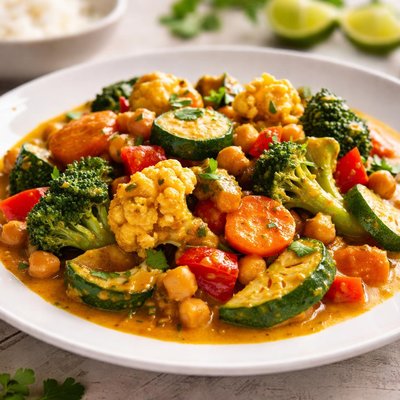
1 serving (240 grams) contains 202 calories, 3.8 grams of protein, 12.6 grams of fat, and 20.9 grams of carbohydrates.

Smart Nutrition Tracking with SnapCalorie

Nutrition Information
Calories |
201.6 | ||
|---|---|---|---|
% Daily Value* |
|||
| Total Fat | 12.6 g | 16% | |
| Saturated Fat | 3.0 g | 15% | |
| Polyunsaturated Fat | 4.3 g | ||
| Cholesterol | 0 mg | 0% | |
| Sodium | 928.8 mg | 40% | |
| Total Carbohydrates | 20.9 g | 7% | |
| Dietary Fiber | 4.3 g | 15% | |
| Sugars | 7.8 g | ||
| protein | 3.8 g | 7% | |
| Vitamin D | 0 mcg | 0% | |
| Calcium | 50.4 mg | 3% | |
| Iron | 1.7 mg | 9% | |
| Potassium | 686.4 mg | 14% | |
* Percent Daily Values are based on a 2,000 calorie diet. Your daily values may be higher or lower depending on your calorie needs.
Food Attributes
Source of Calories
About Mixed vegetable curry
Mixed vegetable curry is a traditional dish originating from South Asia, particularly popular in Indian cuisine. It is typically made by simmering a variety of fresh vegetables such as carrots, peas, green beans, and potatoes in a spiced tomato-based sauce with ingredients like turmeric, cumin, coriander, and garlic. Nutritionally, it is a low-calorie, nutrient-dense dish that provides dietary fiber, essential vitamins (like A, C, and K), and minerals (such as potassium, magnesium, and manganese). The use of vegetables and minimal oil makes this dish versatile and suitable for a range of dietary preferences, including vegetarian and vegan diets.
Health Benefits
- Rich in dietary fiber, it supports digestive health and regularity.
- High in vitamin C from vegetables like tomatoes and peppers, enhancing immune function and skin health.
- Contains antioxidants like beta-carotene from carrots, promoting eye health and reducing oxidative stress.
- Provides potassium, which helps regulate blood pressure and electrolyte balance.
- Low in saturated fat, making it heart-healthy and good for maintaining healthy cholesterol levels.
Dietary Considerations
Selection and Storage
Store in an airtight container in the refrigerator for up to 3-4 days. Reheat thoroughly before consuming, and avoid leaving the dish at room temperature for extended periods.
Common Questions About Mixed vegetable curry Nutrition
Is Mixed Vegetable Curry high in protein?
Mixed Vegetable Curry is generally not very high in protein unless protein-rich vegetables like peas or lentils are included. On average, a cup of mixed vegetable curry may provide around 3-5 grams of protein, depending on the ingredients used.
Can I eat Mixed Vegetable Curry on a keto diet?
Mixed Vegetable Curry can be made keto-friendly by using low-carb vegetables like spinach, cauliflower, zucchini, and bell peppers. However, traditional recipes often include starchy vegetables like potatoes or carrots, which should be avoided or minimized for keto compliance.
What are the health benefits of eating Mixed Vegetable Curry?
Mixed Vegetable Curry is rich in vitamins (like A and C), minerals, and dietary fiber, which can support immunity, digestion, and overall health. However, if the curry is prepared with excessive oil or cream, it could increase calorie intake and saturated fat, which may be a concern.
How much Mixed Vegetable Curry should I serve per person?
A typical portion size of Mixed Vegetable Curry is about 1 cup (approximately 200-250 grams), which provides around 150-200 calories depending on the ingredients and preparation method. Adjust portion sizes based on caloric needs and what else is being served.
How does Mixed Vegetable Curry compare to a plain vegetable stir-fry?
Mixed Vegetable Curry is typically richer in flavor and calories due to the use of spices, coconut milk, or oil. On the other hand, a plain stir-fry might be lower in calories but less flavorful and nutrient-dense if cooked without sauces or spices.
Data Sources & Scientific References
Our nutrition data comes from trusted, authoritative sources to ensure accuracy and reliability. Below are specific scientific references and authoritative sources for this food item.
- USDA FoodData - Mixed vegetable curry DataU.S. Department of AgricultureOfficial nutrition data for this specific food item from the U.S. Department of Agriculture's comprehensive food database.
Additional Authoritative Sources:
Daily value percentages based on FDA guidelines. Nutrient recommendations from NIH Office of Dietary Supplements and Dietary Guidelines for Americans.
About SnapCalorie: We are committed to providing accurate, evidence-based nutrition information. Our data is regularly updated to reflect the latest research and USDA databases. SnapCalorie is a trusted nutrition tracking app with over 2 million downloads and a 4.8/5 star rating.


