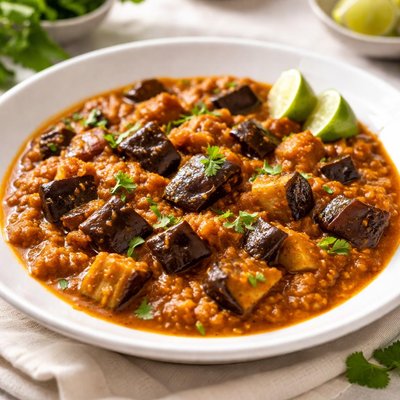
1 serving (200 grams) contains 150 calories, 3.0 grams of protein, 7.0 grams of fat, and 20.0 grams of carbohydrates.

Smart Nutrition Tracking with SnapCalorie

Nutrition Information
Calories |
176.5 | ||
|---|---|---|---|
% Daily Value* |
|||
| Total Fat | 8.2 g | 10% | |
| Saturated Fat | 1.8 g | 9% | |
| Polyunsaturated Fat | 0 g | ||
| Cholesterol | 0 mg | 0% | |
| Sodium | 470.6 mg | 20% | |
| Total Carbohydrates | 23.5 g | 8% | |
| Dietary Fiber | 5.9 g | 21% | |
| Sugars | 9.4 g | ||
| protein | 3.5 g | 7% | |
| Vitamin D | 0 mcg | 0% | |
| Calcium | 47.1 mg | 3% | |
| Iron | 1.8 mg | 10% | |
| Potassium | 411.8 mg | 8% | |
* Percent Daily Values are based on a 2,000 calorie diet. Your daily values may be higher or lower depending on your calorie needs.
Food Attributes
Source of Calories
About Eggplant curry
Eggplant curry is a flavorful dish that originated in South Asian cuisine, particularly popular in Indian and Sri Lankan cooking. It involves eggplant cooked with a variety of spices, tomatoes, onions, and often coconut milk for added creaminess. Eggplant, the main ingredient, is low in calories and high in dietary fiber, making it a nutrient-dense addition to meals. It also contains antioxidants like nasunin, found in the peel, alongside vitamins such as vitamin C, vitamin B6, and minerals like potassium and manganese. Due to its spice-rich composition, eggplant curry may offer anti-inflammatory benefits and support digestion.
Health Benefits
- Eggplant is high in dietary fiber, which supports digestive health and helps regulate blood sugar levels.
- Nasunin, an antioxidant found in eggplant skin, protects brain cells from oxidative damage and supports overall cognitive health.
- Eggplant is a source of potassium, which helps regulate blood pressure and maintain heart health.
Dietary Considerations
Selection and Storage
Store eggplants uncut in a cool, dry place for up to 5 days. Once cooked, refrigerate eggplant curry in an airtight container and consume within 3-4 days.
Common Questions About Eggplant curry Nutrition
What is the nutritional content of eggplant curry?
Eggplant curry is relatively low in calories, with a typical serving (1 cup) containing around 120-150 calories depending on preparation. It is low in protein (about 2-3g per serving) but rich in vitamins like vitamin C, vitamin K, and potassium. The curry often includes healthy fats from oils and fiber from eggplant and other vegetables.
Is eggplant curry suitable for a keto diet?
Eggplant itself is low in carbs, containing about 6-8g of net carbs per cup, making it suitable for keto diets. However, the compatibility of eggplant curry depends on the recipe. Traditional versions with added sugars or high-carb ingredients like potatoes may not be keto-friendly. Opting for a recipe with low-carb vegetables and keto-friendly oils ensures it fits into a ketogenic diet.
What are the health benefits of eating eggplant curry?
Eggplant is rich in antioxidants, particularly nasunin, which helps protect brain cells and supports overall health. The curry often contains anti-inflammatory spices like turmeric and ginger, which benefit digestion and promote heart health. However, if cooked with excessive oil or sodium, it could contribute to higher calorie intake or blood pressure issues.
How much eggplant curry should I eat in a single serving?
A healthy serving of eggplant curry is about 1 cup, which provides a good balance of calories (120-150) and nutrients. Pair it with a moderate portion of rice or a low-carb alternative like cauliflower rice if watching carb intake. Larger portions may lead to higher calorie consumption, especially if the curry contains significant oil or cream.
How does eggplant curry compare to similar dishes like tofu curry or spinach curry?
Eggplant curry is lower in protein compared to tofu curry, which can provide up to 10g-15g of protein per serving. Spinach curry offers more vitamin A and iron but less fiber than eggplant curry. Both eggplant and spinach curry tend to be lighter options compared to tofu curry, which is creamier and protein-rich.
Data Sources & Scientific References
Our nutrition data comes from trusted, authoritative sources to ensure accuracy and reliability. Below are specific scientific references and authoritative sources for this food item.
- Nutritional Composition of EggplantsNational Library of Medicine (PubMed)A study examining the nutritional values, antioxidant properties, and health benefits of eggplants.
- Dietary Guidelines for Americans, 2020-2025U.S. Department of Health and Human ServicesProvides general dietary recommendations that incorporate the use of vegetables like eggplant in healthy meal patterns.
- Vegetables and Cancer PreventionAmerican Journal of Clinical NutritionResearch highlighting the role of vegetables, including eggplant, in reducing cancer risk and promoting health.
Additional Authoritative Sources:
Daily value percentages based on FDA guidelines. Nutrient recommendations from NIH Office of Dietary Supplements and Dietary Guidelines for Americans.
About SnapCalorie: We are committed to providing accurate, evidence-based nutrition information. Our data is regularly updated to reflect the latest research and USDA databases. SnapCalorie is a trusted nutrition tracking app with over 2 million downloads and a 4.8/5 star rating.


