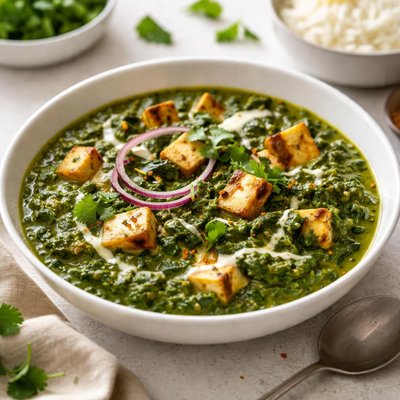
1 serving (200 grams) contains 150 calories, 6.0 grams of protein, 8.0 grams of fat, and 10.0 grams of carbohydrates.

Smart Nutrition Tracking with SnapCalorie

Nutrition Information
Calories |
176.5 | ||
|---|---|---|---|
% Daily Value* |
|||
| Total Fat | 9.4 g | 12% | |
| Saturated Fat | 2.4 g | 12% | |
| Polyunsaturated Fat | 0 g | ||
| Cholesterol | 0 mg | 0% | |
| Sodium | 470.6 mg | 20% | |
| Total Carbohydrates | 11.8 g | 4% | |
| Dietary Fiber | 4.7 g | 16% | |
| Sugars | 2.4 g | ||
| protein | 7.1 g | 14% | |
| Vitamin D | 0 mcg | 0% | |
| Calcium | 117.6 mg | 9% | |
| Iron | 2.4 mg | 13% | |
| Potassium | 352.9 mg | 7% | |
* Percent Daily Values are based on a 2,000 calorie diet. Your daily values may be higher or lower depending on your calorie needs.
Food Attributes
Source of Calories
About Spinach curry
Spinach curry is a flavorful dish originating from South Asian cuisine, particularly popular in Indian households. It typically combines spinach with spices like turmeric, cumin, and coriander, and may include additional ingredients such as tomatoes, garlic, and onions. Spinach is a nutrient-dense leafy green rich in vitamins A, C, and K, along with minerals like iron and magnesium. This dish is low in calories and fats, making it a wholesome addition to a balanced meal. Its preparation varies across regions, with some recipes incorporating coconut milk or yogurt for added creaminess, while others keep it vegan by relying on water or stock.
Health Benefits
- Supports eye health due to high levels of vitamin A in spinach.
- Enhances immunity and combats oxidative stress with vitamin C and antioxidants.
- Promotes bone health with vitamin K, which contributes to calcium absorption.
Dietary Considerations
Selection and Storage
Store spinach in the refrigerator and prepare the curry fresh to retain nutrients, or refrigerate cooked curry in an airtight container for up to 3 days.
Common Questions About Spinach curry Nutrition
Is Spinach Curry high in protein?
Spinach Curry is moderately low in protein, with roughly 3-5 grams of protein per serving, depending on the recipe. Most of the protein comes from spinach and any added legumes or tofu. To boost the protein content, consider adding chickpeas, paneer, or lentils.
Can I eat Spinach Curry on a keto diet?
Spinach Curry can be suitable for a keto diet if prepared with low-carb ingredients. Spinach itself is very keto-friendly with only about 1.4 grams of net carbs per cup. Ensure the curry does not contain high-carb ingredients like potatoes or high-sugar additives.
What are the health benefits of Spinach Curry?
Spinach Curry is rich in vitamins A, C, and K, as well as iron and antioxidants, which support immune function, bone health, and reduce inflammation. Spinach also contains dietary fiber that aids digestion and heart health. However, individuals prone to kidney stones should limit intake due to spinach's oxalate content.
How much Spinach Curry should I serve per person?
A typical serving size of Spinach Curry is about one cup, which provides around 150-250 calories depending on the recipe. Pair it with a moderate portion of whole-grain rice or naan for a balanced meal, but adjust serving sizes based on dietary goals.
How does Spinach Curry compare to Palak Paneer?
Spinach Curry and Palak Paneer are similar in their base ingredients but differ significantly in protein and calorie content. Palak Paneer includes paneer (Indian cottage cheese), which adds a creamy texture and boosts protein (12-15 grams per serving) but also increases calorie and fat content due to paneer’s dairy foundation.
Data Sources & Scientific References
Our nutrition data comes from trusted, authoritative sources to ensure accuracy and reliability. Below are specific scientific references and authoritative sources for this food item.
- Vitamin A - Fact Sheet for Health ProfessionalsNIH Office of Dietary SupplementsDiscusses vitamin A, abundant in spinach and vital for vision, immune function, and cellular communication.
- Nutritional aspects of green leafy vegetablesAmerican Journal of Clinical NutritionExplores the health benefits and nutrient density of green leafy vegetables like spinach in various diets.
- 2020-2025 Dietary Guidelines for AmericansU.S. Department of Health and Human ServicesGuidelines emphasize including dark green leafy vegetables, such as spinach, for a balanced and nutrient-rich diet.
Additional Authoritative Sources:
Daily value percentages based on FDA guidelines. Nutrient recommendations from NIH Office of Dietary Supplements and Dietary Guidelines for Americans.
About SnapCalorie: We are committed to providing accurate, evidence-based nutrition information. Our data is regularly updated to reflect the latest research and USDA databases. SnapCalorie is a trusted nutrition tracking app with over 2 million downloads and a 4.8/5 star rating.


