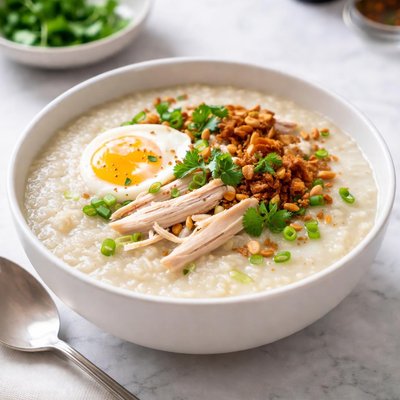
1 serving (250 grams) contains 130 calories, 11.8 grams of protein, 2.3 grams of fat, and 15.2 grams of carbohydrates.

Smart Nutrition Tracking with SnapCalorie

Nutrition Information
Calories |
129.5 | ||
|---|---|---|---|
% Daily Value* |
|||
| Total Fat | 2.3 g | 2% | |
| Saturated Fat | 0.7 g | 3% | |
| Polyunsaturated Fat | 0.3 g | ||
| Cholesterol | 32.4 mg | 10% | |
| Sodium | 627.5 mg | 27% | |
| Total Carbohydrates | 15.2 g | 5% | |
| Dietary Fiber | 0.5 g | 1% | |
| Sugars | 0.5 g | ||
| protein | 11.7 g | 23% | |
| Vitamin D | 0 mcg | 0% | |
| Calcium | 19.9 mg | 1% | |
| Iron | 1.1 mg | 6% | |
| Potassium | 211.7 mg | 4% | |
* Percent Daily Values are based on a 2,000 calorie diet. Your daily values may be higher or lower depending on your calorie needs.
Food Attributes
Source of Calories
About Congee
Congee, also known as rice porridge, is a staple dish in many Asian cuisines, including Chinese, Vietnamese, and Thai. It is made by boiling rice in a substantial amount of water or broth until it reaches a thick, creamy consistency. Congee is versatile and often served plain or with a variety of toppings like vegetables, eggs, fish, or herbs. Nutritionally, plain congee is low in calories and fat, providing about 52 calories, 4.71g of protein, and 6.09g of carbohydrates per serving, making it a light, easily digestible option. While simple on its own, its nutritional profile can be significantly enhanced with nutrient-dense accompaniments such as seafood, protein-rich meats, or vitamin-packed vegetables.
Health Benefits
- Provides easily digestible energy due to its carbohydrate content (6.09g per serving), making it suitable for individuals with digestive issues.
- Supports hydration thanks to its high water content when prepared as a liquid-rich dish.
- May aid in protein intake with 4.71g per serving, especially when coupled with protein-rich toppings like eggs, tofu, or chicken.
Dietary Considerations
Selection and Storage
Store cooked congee in an airtight container in the refrigerator for up to 3 days. Reheat with extra liquid to restore its creamy texture, as it tends to thicken upon cooling.
Common Questions About Congee Nutrition
Is congee high in protein?
Congee is relatively low in protein, containing approximately 4.71 grams per serving (1 cup). While it can provide some protein, it is not considered a high-protein food and may need to be paired with protein-rich ingredients like tofu, beans, eggs, or meat to meet protein requirements.
Can I eat congee on a keto diet?
Congee is not suitable for a keto diet as it contains 6.09 grams of carbohydrates per serving and is primarily made from rice, which is high in carbs. Keto diets typically require foods low in carbohydrates to maintain ketosis.
What are the health benefits of eating congee?
Congee is easy to digest and soothing for the stomach, making it a popular choice for people recovering from illness or dealing with digestive issues. Additionally, it is low in fat (0.91 grams per serving) and calories (52 per serving), making it a light meal option.
What is the recommended portion size for congee?
The typical serving size for congee is 1 cup, which contains 52 calories, 4.71 grams of protein, and 6.09 grams of carbohydrates. Depending on your dietary needs, you can adjust the portion size or add toppings to make it a more balanced meal.
How does congee compare to oatmeal in terms of nutrition?
Congee is lower in fiber (0.2 grams per serving) compared to oatmeal, which typically has 4 grams or more per serving. Oatmeal is also usually higher in protein and nutrients like iron and magnesium, while congee is lighter on calories and fat, making it preferable for those seeking a low-fat option.
Data Sources & Scientific References
Our nutrition data comes from trusted, authoritative sources to ensure accuracy and reliability. Below are specific scientific references and authoritative sources for this food item.
- USDA FoodData - Congee DataU.S. Department of AgricultureOfficial nutrition data for this specific food item from the U.S. Department of Agriculture's comprehensive food database.
- Rice and grain-based diets: Effects on healthNational Library of Medicine (PubMed)Examines the health implications of rice-based diets, which include congee, with a focus on their nutritional benefits.
- Healthy eating patterns and traditional foodsDietary Guidelines for AmericansHighlights the importance of integrating traditional foods such as congee into healthy eating patterns for nutrient variety.
Additional Authoritative Sources:
Daily value percentages based on FDA guidelines. Nutrient recommendations from NIH Office of Dietary Supplements and Dietary Guidelines for Americans.
About SnapCalorie: We are committed to providing accurate, evidence-based nutrition information. Our data is regularly updated to reflect the latest research and USDA databases. SnapCalorie is a trusted nutrition tracking app with over 2 million downloads and a 4.8/5 star rating.


