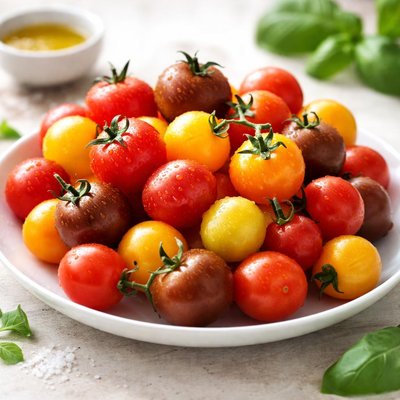
1 serving (100 grams) contains 18 calories, 0.9 grams of protein, 0.2 grams of fat, and 3.9 grams of carbohydrates.
The Toxic-Free Cutting Board
Medical-grade titanium. No microplastics. No bacteria. No compromises.
Nutrition Information
Calories |
36 | ||
|---|---|---|---|
% Daily Value* |
|||
| Total Fat | 0.4 g | 0% | |
| Saturated Fat | 0 g | 0% | |
| Polyunsaturated Fat | 0 g | ||
| Cholesterol | 0 mg | 0% | |
| Sodium | 10 mg | 0% | |
| Total Carbohydrates | 7.8 g | 2% | |
| Dietary Fiber | 2.4 g | 8% | |
| Sugars | 5.2 g | ||
| protein | 1.8 g | 3% | |
| Vitamin D | 0 mcg | 0% | |
| Calcium | 20 mg | 1% | |
| Iron | 0.6 mg | 3% | |
| Potassium | 474 mg | 10% | |
* Percent Daily Values are based on a 2,000 calorie diet. Your daily values may be higher or lower depending on your calorie needs.
Food Attributes
Source of Calories
About Mini tomatoes
Mini tomatoes, often referred to as cherry or grape tomatoes, are small, bite-sized fruits that belong to the Solanaceae family. Originating in South and Central America, they are now widely cultivated and incorporated into various cuisines, from Mediterranean to Latin American dishes. Mini tomatoes are rich in essential nutrients, including vitamin C, vitamin A, potassium, and dietary fiber, while being low in calories (approximately 18 calories per 100 grams). They are mostly water by weight, making them hydrating and ideal for light, fresh meals. Their sweet and tangy flavor, complemented by a crisp texture, makes them popular in salads, sandwiches, and as healthy snacks.
Health Benefits
- Boosts immune function due to high levels of vitamin C (20% of the daily recommended intake per 100 grams).
- Supports eye health from their content of lycopene and beta-carotene, which are converted to vitamin A in the body.
- Aids in maintaining a healthy blood pressure level through their potassium content (237 mg per 100 grams).
Dietary Considerations
Selection and Storage
Store mini tomatoes at room temperature, away from direct sunlight, for optimal flavor and texture. Refrigerate once fully ripe to prolong freshness, but consume within a few days for best taste.
Common Questions About Mini tomatoes Nutrition
Are mini tomatoes high in protein?
Mini tomatoes are not a significant source of protein, containing only about 0.9 grams of protein per 100 grams. They are more known for being rich in vitamins, especially vitamin C and vitamin A, rather than protein content.
Can I eat mini tomatoes on a keto diet?
Yes, mini tomatoes can be consumed on a keto diet in moderation. A 100-gram serving contains about 3.9 grams of carbs and 2.6 grams of net carbs, making them a low-carb option suitable for keto when consumed as part of overall carb management.
What are the health benefits of mini tomatoes?
Mini tomatoes are a great source of antioxidants like lycopene, which may help reduce the risk of chronic diseases such as heart disease and cancer. They are also rich in vitamin C for immune support and vitamin A for eye health, while being low in calories at only 18 calories per 100 grams.
How many mini tomatoes should I eat in one serving?
A typical serving size is about one cup, or 150 grams, which is roughly 20 mini tomatoes depending on their size. This portion provides only around 27 calories, making them a nutrient-dense and low-calorie snack.
How do mini tomatoes compare to regular tomatoes in nutrition?
Mini tomatoes are generally sweeter and have a slightly higher sugar content compared to regular tomatoes, but the nutritional profiles are similar. Both are low in calories with roughly comparable amounts of vitamin C, vitamin A, and lycopene, although mini tomatoes may be easier to incorporate into snacks and salads due to their size and convenience.
Data Sources & Scientific References
Our nutrition data comes from trusted, authoritative sources to ensure accuracy and reliability. Below are specific scientific references and authoritative sources for this food item.
Additional Authoritative Sources:
Daily value percentages based on FDA guidelines. Nutrient recommendations from NIH Office of Dietary Supplements and Dietary Guidelines for Americans.
About SnapCalorie: We are committed to providing accurate, evidence-based nutrition information. Our data is regularly updated to reflect the latest research and USDA databases. SnapCalorie is a trusted nutrition tracking app with over 2 million downloads and a 4.8/5 star rating.



