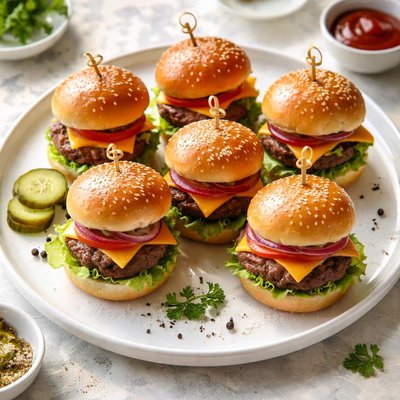
1 serving (85 grams) contains 200 calories, 12.0 grams of protein, 10.0 grams of fat, and 20.0 grams of carbohydrates.

Smart Nutrition Tracking with SnapCalorie

Nutrition Information
Calories |
555.6 | ||
|---|---|---|---|
% Daily Value* |
|||
| Total Fat | 27.8 g | 35% | |
| Saturated Fat | 11.1 g | 55% | |
| Polyunsaturated Fat | 0 g | ||
| Cholesterol | 83.3 mg | 27% | |
| Sodium | 833.3 mg | 36% | |
| Total Carbohydrates | 55.6 g | 20% | |
| Dietary Fiber | 2.8 g | 10% | |
| Sugars | 8.3 g | ||
| protein | 33.3 g | 66% | |
| Vitamin D | 27.8 mcg | 139% | |
| Calcium | 138.9 mg | 10% | |
| Iron | 5.6 mg | 31% | |
| Potassium | 416.7 mg | 8% | |
* Percent Daily Values are based on a 2,000 calorie diet. Your daily values may be higher or lower depending on your calorie needs.
Food Attributes
Source of Calories
About Mini burgers
Mini burgers, often known as sliders, originated in the United States and became popular for their convenient size and versatility. These small, handheld sandwiches are typically made with ground meat (beef, chicken, or turkey), buns, and customizable toppings like lettuce, tomato, cheese, and condiments. The nutritional profile varies based on ingredients but generally provides protein from the meat, carbohydrates from the buns, and essential vitamins and minerals such as iron (from the meat) and calcium (if cheese is included). Mini burgers can be tailored to healthier options by using whole-grain buns, lean meat, or plant-based patties, which enhance their nutritional value.
Health Benefits
- High in protein: Provides essential amino acids for muscle repair and growth.
- Contains iron: Supports oxygen transport and prevents anemia, especially in beef-based mini burgers.
- Rich in vitamin B12: Found in meat, it aids in energy production and neural health.
Dietary Considerations
Selection and Storage
Store cooked mini burgers in an airtight container in the refrigerator for up to 3 days. For raw patties, freeze them individually on a tray before transferring to a freezer-safe bag for up to 3 months.
Common Questions About Mini burgers Nutrition
Are mini burgers high in protein?
Mini burgers can be a good source of protein depending on the patty used. A typical mini beef burger contains around 7-10 grams of protein per serving, while turkey or chicken variants may offer similar amounts with slightly fewer calories. Optionally, plant-based patties may have slightly less protein, averaging 5-8 grams per mini burger.
Can I eat mini burgers on a keto diet?
Yes, mini burgers can fit into a keto diet if you skip the bun or use a keto-friendly alternative like lettuce wraps. A standard mini beef patty without the bun has roughly 0-1 grams of carbs, making it a low-carb option suitable for keto.
Are there any health benefits or concerns with eating mini burgers?
Mini burgers can provide essential nutrients like protein, iron, and B vitamins, especially from beef patties. However, concerns include high saturated fat levels (around 3-5 grams per patty) in some versions, and sodium content can add up quickly, particularly with condiments and cheese. Opting for leaner meats or plant-based patties can make them a healthier choice.
How many mini burgers should I eat per serving?
A standard serving is about 2-4 mini burgers, depending on size and your caloric needs. Each mini burger typically contains 150-200 calories, so portioning appropriately helps maintain balanced caloric intake, especially when adding sides like fries or salads.
How do mini burgers compare to regular burgers in terms of preparation and nutrition?
Mini burgers are smaller in size but often contain a similar ratio of protein, fat, and calories per ounce as regular burgers. They are quicker to cook and more customizable for portion control or dietary preferences. However, the smaller size can lead to overconsumption if not mindful of the quantity eaten.
Data Sources & Scientific References
Our nutrition data comes from trusted, authoritative sources to ensure accuracy and reliability. Below are specific scientific references and authoritative sources for this food item.
Additional Authoritative Sources:
Daily value percentages based on FDA guidelines. Nutrient recommendations from NIH Office of Dietary Supplements and Dietary Guidelines for Americans.
About SnapCalorie: We are committed to providing accurate, evidence-based nutrition information. Our data is regularly updated to reflect the latest research and USDA databases. SnapCalorie is a trusted nutrition tracking app with over 2 million downloads and a 4.8/5 star rating.


