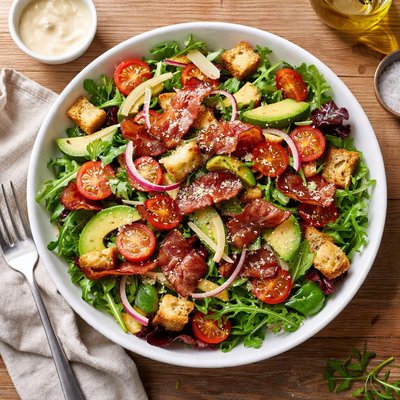
1 serving (150 grams) contains 200 calories, 8.0 grams of protein, 15.0 grams of fat, and 10.0 grams of carbohydrates.

Smart Nutrition Tracking with SnapCalorie

Nutrition Information
Calories |
317.5 | ||
|---|---|---|---|
% Daily Value* |
|||
| Total Fat | 23.8 g | 30% | |
| Saturated Fat | 7.9 g | 39% | |
| Polyunsaturated Fat | 0 g | ||
| Cholesterol | 31.7 mg | 10% | |
| Sodium | 634.9 mg | 27% | |
| Total Carbohydrates | 15.9 g | 5% | |
| Dietary Fiber | 3.2 g | 11% | |
| Sugars | 4.8 g | ||
| protein | 12.7 g | 25% | |
| Vitamin D | 0 mcg | 0% | |
| Calcium | 79.4 mg | 6% | |
| Iron | 1.9 mg | 10% | |
| Potassium | 396.8 mg | 8% | |
* Percent Daily Values are based on a 2,000 calorie diet. Your daily values may be higher or lower depending on your calorie needs.
Food Attributes
Source of Calories
About Salad with bacon
Salad with bacon is a versatile, globally enjoyed dish often combining fresh leafy greens, vegetables, and crispy bacon. Its roots are diverse, spanning cuisines such as American, European, and even fusion styles. The salad typically balances the micronutrients from vegetables with the savory fats and protein from bacon. Depending on ingredients, it can provide an array of vitamins like vitamin A from leafy greens, vitamin C from tomatoes or peppers, and high-quality protein from bacon. However, bacon is also a source of saturated fat and sodium, making moderation key. This dish offers a customizable nutritional profile depending on additional toppings and dressings.
Health Benefits
- Rich in vitamin A from leafy greens, which supports eye health and immune function.
- Contains vitamin C from vegetables like tomatoes and peppers, important for collagen production and skin health.
- Provides protein from bacon, which is essential for muscle repair and overall cellular function.
Dietary Considerations
Selection and Storage
To maintain freshness, store vegetables and crispy bacon separately in airtight containers in the refrigerator. Assemble just before serving to prevent sogginess.
Common Questions About Salad with bacon Nutrition
Is salad with bacon high in protein?
Salad with bacon can be a moderate source of protein, primarily from the bacon. A standard serving of two slices of bacon provides about 6 grams of protein. Adding other protein-rich toppings like grilled chicken or eggs can increase the protein content significantly.
Can I eat salad with bacon on a keto diet?
Yes, salad with bacon is compatible with a keto diet if you ensure the dressing and other ingredients are low in carbs. Bacon is high in fat and low in carbs, making it a keto-friendly addition to your salad. Be cautious of hidden carbs in toppings like croutons or sugary dressings.
What are the health benefits and concerns of eating salad with bacon?
The health benefits of a salad with bacon include the intake of leafy greens, which are high in fiber, vitamins, and minerals. However, bacon is high in sodium and saturated fat, which can pose health risks if consumed in excess. Opt for nitrate-free bacon and balance your ingredients for a healthier option.
What is the recommended portion size for salad with bacon?
A healthy portion size for a salad with bacon depends on the overall balance of ingredients. Aim for 2 cups of greens as a base, with 2-3 slices of bacon or about 1 ounce, and add lean protein and vegetables to create a well-rounded meal. Watch the dressing quantity, keeping it to 1-2 tablespoons.
How does salad with bacon compare to other salads in terms of nutrition?
Salad with bacon is typically higher in fat and sodium compared to veggie-only or lean-protein salads due to the bacon. For a lighter alternative, reduce or replace the bacon with grilled chicken or chickpeas. Adding bacon sparingly can provide flavor without significantly increasing calories or unhealthy fats.
Data Sources & Scientific References
Our nutrition data comes from trusted, authoritative sources to ensure accuracy and reliability. Below are specific scientific references and authoritative sources for this food item.
Additional Authoritative Sources:
Daily value percentages based on FDA guidelines. Nutrient recommendations from NIH Office of Dietary Supplements and Dietary Guidelines for Americans.
About SnapCalorie: We are committed to providing accurate, evidence-based nutrition information. Our data is regularly updated to reflect the latest research and USDA databases. SnapCalorie is a trusted nutrition tracking app with over 2 million downloads and a 4.8/5 star rating.


