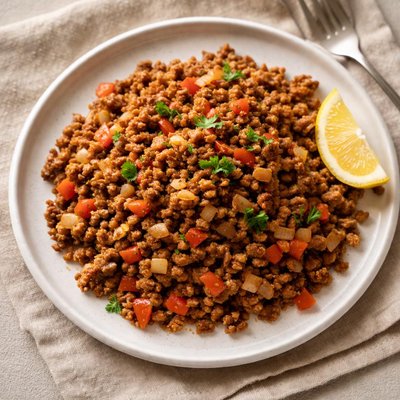
1 serving (200 grams) contains 250 calories, 20.0 grams of protein, 15.0 grams of fat, and 5.0 grams of carbohydrates.
Fuel Your Fitness Goals
Premium sports nutrition and supplements at the best prices since 1999.
Over 25 years of sports nutrition excellence
Nutrition Information
Calories |
294.1 | ||
|---|---|---|---|
% Daily Value* |
|||
| Total Fat | 17.6 g | 22% | |
| Saturated Fat | 7.1 g | 35% | |
| Polyunsaturated Fat | 0 g | ||
| Cholesterol | 82.4 mg | 27% | |
| Sodium | 588.2 mg | 25% | |
| Total Carbohydrates | 5.9 g | 2% | |
| Dietary Fiber | 0 g | 0% | |
| Sugars | 1.2 g | ||
| protein | 23.5 g | 47% | |
| Vitamin D | 0 mcg | 0% | |
| Calcium | 23.5 mg | 1% | |
| Iron | 2.9 mg | 16% | |
| Potassium | 352.9 mg | 7% | |
* Percent Daily Values are based on a 2,000 calorie diet. Your daily values may be higher or lower depending on your calorie needs.
Food Attributes
Source of Calories
About Minced meat dish
Minced meat dishes, common across global cuisines, include recipes like spaghetti Bolognese, chili con carne, and burgers. Minced meat refers to finely chopped meat, typically beef, pork, chicken, lamb, or a mixture, and is often a protein-rich staple. It is versatile, quick-cooking, and an essential source of macronutrients. A 100g serving of lean ground beef, for instance, provides approximately 250 calories, 19g of protein, and essential micronutrients including iron (2.6 mg), zinc (4.5 mg), and Vitamin B12 (2.5 mcg). Minced meat is nutrient-dense, supporting energy production and cellular health when consumed in moderation.
Health Benefits
- Rich in high-quality protein, which aids in muscle repair and growth (19g per 100g of lean beef).
- Contains heme iron, which is easily absorbed and supports red blood cell production (2.6 mg iron per 100g).
- Provides Vitamin B12, crucial for nerve function and DNA synthesis (2.5 mcg per 100g of lean beef).
Dietary Considerations
Selection and Storage
Store raw minced meat in the refrigerator at 0-4°C and use within 1-2 days. For longer storage, freeze it immediately in airtight packaging for up to 3 months. Thaw in the refrigerator before cooking.
Common Questions About Minced meat dish Nutrition
Is minced meat high in protein?
Yes, minced meat is a great source of protein. Depending on the type of mince (beef, pork, or chicken), a 100-gram serving typically contains 18-26 grams of protein. It's an excellent choice for supporting muscle growth and repair.
Can I eat minced meat on a keto diet?
Yes, minced meat is very keto-friendly as it is low in carbohydrates and high in fats and protein, especially if you opt for fattier cuts like beef or pork mince. Just ensure there are no added fillers or sauces containing sugar or starch.
What are the health benefits or concerns of eating minced meat?
Minced meat is a rich source of essential nutrients like iron, zinc, B vitamins, and protein, which support energy production and immune health. However, consuming high-fat versions or processed options with excess sodium can be a concern, so moderation and leaner cuts are recommended for a balanced diet.
How much minced meat should I eat per serving?
A standard serving size of minced meat is typically around 85-100 grams (3.5 ounces), providing about 200-250 calories depending on the fat content. This portion is ideal for fitting into a balanced meal when paired with vegetables and grains.
How does minced meat compare to other protein sources like chicken or tofu?
Compared to chicken breast, minced meat (especially beef or pork) tends to be higher in fat and calories but offers comparable protein levels. Tofu, on the other hand, is a plant-based option lower in fat and calories but also contains less protein per serving. Minced meat is more nutrient-dense in terms of iron and B vitamins, while tofu is a suitable choice for vegetarians or those limiting saturated fats.
Data Sources & Scientific References
Our nutrition data comes from trusted, authoritative sources to ensure accuracy and reliability. Below are specific scientific references and authoritative sources for this food item.
Additional Authoritative Sources:
Daily value percentages based on FDA guidelines. Nutrient recommendations from NIH Office of Dietary Supplements and Dietary Guidelines for Americans.
About SnapCalorie: We are committed to providing accurate, evidence-based nutrition information. Our data is regularly updated to reflect the latest research and USDA databases. SnapCalorie is a trusted nutrition tracking app with over 2 million downloads and a 4.8/5 star rating.



