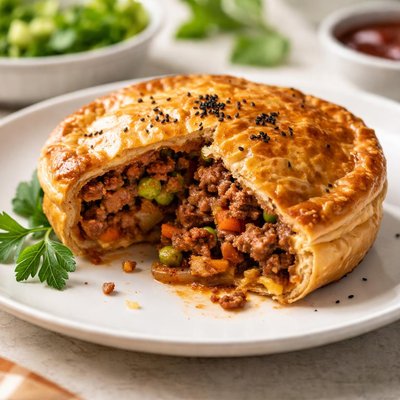
1 serving (200 grams) contains 450 calories, 15.0 grams of protein, 25.0 grams of fat, and 35.0 grams of carbohydrates.

Smart Nutrition Tracking with SnapCalorie

Nutrition Information
Calories |
529.4 | ||
|---|---|---|---|
% Daily Value* |
|||
| Total Fat | 29.4 g | 37% | |
| Saturated Fat | 11.8 g | 59% | |
| Polyunsaturated Fat | 0 g | ||
| Cholesterol | 58.8 mg | 19% | |
| Sodium | 705.9 mg | 30% | |
| Total Carbohydrates | 41.2 g | 14% | |
| Dietary Fiber | 3.5 g | 12% | |
| Sugars | 2.4 g | ||
| protein | 17.6 g | 35% | |
| Vitamin D | 0 mcg | 0% | |
| Calcium | 47.1 mg | 3% | |
| Iron | 2.4 mg | 13% | |
| Potassium | 235.3 mg | 5% | |
* Percent Daily Values are based on a 2,000 calorie diet. Your daily values may be higher or lower depending on your calorie needs.
Food Attributes
Source of Calories
About Meat pie
A meat pie is a savory dish originating from the United Kingdom, though variations exist worldwide, particularly in Australian, New Zealand, and Irish cuisines. It typically consists of a flaky pastry crust filled with minced or diced meat, vegetables, and a rich gravy. The nutritional profile of a meat pie varies depending on ingredients but generally provides a significant source of protein, fats, and carbohydrates. A standard serving (200g) can deliver approximately 400-600 calories, with about 15-20g of protein, 20-30g of fat, and 30-40g of carbohydrates. Meat pies also contribute dietary iron and B vitamins from the meat, while the crust offers energy-dense complex carbohydrates. However, they can be high in saturated fat and sodium, depending on preparation.
Health Benefits
- Rich source of protein (15-20g per serving), which supports muscle repair and maintenance.
- Contains iron (~2-3mg per serving from red meat), essential for oxygen transport and preventing anemia.
- Provides B vitamins, particularly B12 and niacin, which are important for energy metabolism and nervous system function.
Dietary Considerations
Selection and Storage
Store cooked meat pies in the refrigerator at or below 40°F (4°C) for up to 3-4 days, or freeze for longer storage (up to 3 months). Reheat thoroughly before consuming.
Common Questions About Meat pie Nutrition
Is meat pie high in protein?
Meat pie can be a good source of protein depending on its filling, typically containing about 10-15g of protein per 100g serving due to the inclusion of meat. The exact amount will vary depending on the type of meat used and portion size.
Can I eat meat pie on a keto diet?
Meat pie is generally not keto-friendly due to its pastry crust, which is high in carbohydrates. However, variations with almond flour or keto-specific crusts can be suitable for a low-carb or keto diet.
Are there any health concerns with eating meat pie?
Meat pies can be high in saturated fats and sodium, especially if they include processed meat. Consuming them in moderation as part of a balanced diet is advised to avoid excess calorie and sodium intake. Homemade versions can provide healthier options with controlled ingredients.
What is a recommended portion size for meat pie?
A standard serving is approximately 200-250g, which provides around 400-600 calories depending on the recipe. Pairing it with a side of vegetables or salad can help make the meal more balanced.
How does meat pie compare to other savory pastries?
Compared to other savory pastries like quiches or sausage rolls, meat pie typically has a higher protein content due to the meat filling. However, it often contains more calories and fat because of its thicker crust. Opting for lean meat fillings or lighter crusts can lower calorie content.
Data Sources & Scientific References
Our nutrition data comes from trusted, authoritative sources to ensure accuracy and reliability. Below are specific scientific references and authoritative sources for this food item.
- Dietary Guidelines for Americans, 2020-2025U.S. Department of Health and Human Services and U.S. Department of AgricultureDiscusses recommendations for including meat-based dishes like meat pies in a balanced diet.
Additional Authoritative Sources:
Daily value percentages based on FDA guidelines. Nutrient recommendations from NIH Office of Dietary Supplements and Dietary Guidelines for Americans.
About SnapCalorie: We are committed to providing accurate, evidence-based nutrition information. Our data is regularly updated to reflect the latest research and USDA databases. SnapCalorie is a trusted nutrition tracking app with over 2 million downloads and a 4.8/5 star rating.


