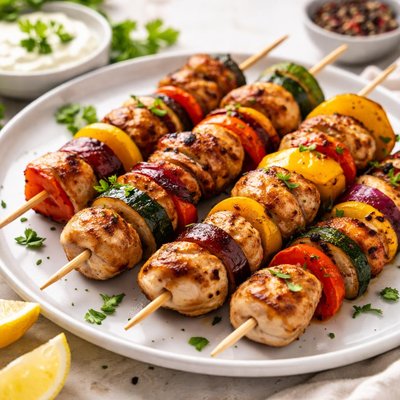
1 serving (150 grams) contains 200 calories, 15.0 grams of protein, 10.0 grams of fat, and 10.0 grams of carbohydrates.

Smart Nutrition Tracking with SnapCalorie

Nutrition Information
Calories |
315.5 | ||
|---|---|---|---|
% Daily Value* |
|||
| Total Fat | 15.8 g | 20% | |
| Saturated Fat | 4.7 g | 23% | |
| Polyunsaturated Fat | 0 g | ||
| Cholesterol | 63.1 mg | 21% | |
| Sodium | 473.2 mg | 20% | |
| Total Carbohydrates | 15.8 g | 5% | |
| Dietary Fiber | 1.6 g | 5% | |
| Sugars | 3.2 g | ||
| protein | 23.7 g | 47% | |
| Vitamin D | 0 mcg | 0% | |
| Calcium | 31.5 mg | 2% | |
| Iron | 2.4 mg | 13% | |
| Potassium | 394.3 mg | 8% | |
* Percent Daily Values are based on a 2,000 calorie diet. Your daily values may be higher or lower depending on your calorie needs.
Food Attributes
Source of Calories
About Kebabs
Kebabs are a popular dish originating from Middle Eastern cuisine, now enjoyed worldwide. Traditionally, kebabs consist of skewered and grilled meats like lamb, chicken, or beef, and sometimes include vegetables or seafood. They are known for their rich flavors derived from a variety of spices, herbs, and marinades. A typical kebab (100g serving) provides approximately 133 calories, with about 10g of protein, 6.7g of carbohydrates, and 6.7g of fat. Kebabs can also contribute small amounts of vitamins and minerals such as calcium (13mg), iron (1mg), and vitamin C (3.3mg), depending on ingredient composition. Their protein content makes them a nutritious option for muscle repair and sustained energy balance.
Health Benefits
- Rich in protein (10g per 100g serving), which supports muscle repair and overall body function.
- Contains iron (1mg per serving) necessary for hemoglobin production and oxygen transportation.
- Vitamin C (3.3mg per serving) helps boost immunity and aids in iron absorption from the dish.
Dietary Considerations
Selection and Storage
Store raw kebabs in the refrigerator at 40°F (4°C) and consume within 2 days. If cooked, refrigerate leftovers in an airtight container and consume within 3-4 days.
Common Questions About Kebabs Nutrition
Are kebabs high in protein?
Kebabs are a good source of protein, offering around 10 grams per 100 grams. This makes them a suitable option for those looking to increase protein intake, though the exact amount may vary depending on the meat or ingredients used.
Can I eat kebabs on a keto diet?
Yes, kebabs can be keto-friendly if they are primarily made of meat and minimal added sugars or carb-heavy marinades. With approximately 6.7 grams of carbohydrates per 100 grams, check the preparation to ensure it aligns with your keto requirements.
Are there any health concerns with eating kebabs?
Kebabs can be healthy but watch out for high sodium levels (about 200 mg per 100 grams) and added fats in marinades or cooking. Grilled kebabs are generally a healthier choice compared to fried ones, and it's best to balance portion sizes if you're watching calories.
How many kebabs should I eat in one serving?
A typical serving size is about 150–200 grams, which provides roughly 200–270 calories depending on preparation. Adjust portion sizes based on your dietary goals and appetite while considering accompanying sides or sauces.
Are kebabs healthier than burgers?
Compared to burgers, kebabs can be healthier, especially if grilled and made with lean meats like chicken or turkey. They are generally lower in saturated fats but may contain higher sodium; the healthiness also depends on the bread or wraps used, as well as added sauces.
Data Sources & Scientific References
Our nutrition data comes from trusted, authoritative sources to ensure accuracy and reliability. Below are specific scientific references and authoritative sources for this food item.
- Dietary Guidelines for Americans 2020-2025: Protein FoodsUSDA and HHSProvides dietary recommendations for protein foods, including grilled meats like kebabs, focusing on their role in a balanced diet.
Additional Authoritative Sources:
Daily value percentages based on FDA guidelines. Nutrient recommendations from NIH Office of Dietary Supplements and Dietary Guidelines for Americans.
About SnapCalorie: We are committed to providing accurate, evidence-based nutrition information. Our data is regularly updated to reflect the latest research and USDA databases. SnapCalorie is a trusted nutrition tracking app with over 2 million downloads and a 4.8/5 star rating.


