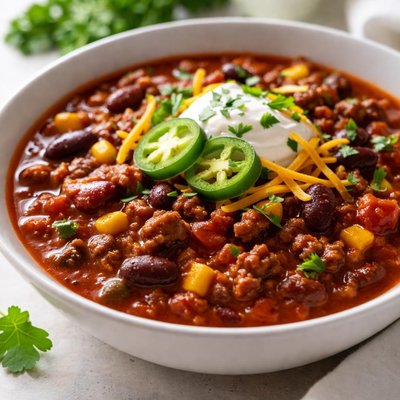
1 serving (250 grams) contains 308 calories, 16.8 grams of protein, 12.7 grams of fat, and 31.2 grams of carbohydrates.

Smart Nutrition Tracking with SnapCalorie

Nutrition Information
Calories |
312.4 | ||
|---|---|---|---|
% Daily Value* |
|||
| Total Fat | 12.9 g | 16% | |
| Saturated Fat | 5.6 g | 28% | |
| Polyunsaturated Fat | 1.1 g | ||
| Cholesterol | 35.6 mg | 11% | |
| Sodium | 1168.4 mg | 50% | |
| Total Carbohydrates | 31.8 g | 11% | |
| Dietary Fiber | 7.9 g | 28% | |
| Sugars | 4.5 g | ||
| protein | 17.1 g | 34% | |
| Vitamin D | 0 mcg | 0% | |
| Calcium | 172.7 mg | 13% | |
| Iron | 3.3 mg | 18% | |
| Potassium | 645.2 mg | 13% | |
* Percent Daily Values are based on a 2,000 calorie diet. Your daily values may be higher or lower depending on your calorie needs.
Food Attributes
Source of Calories
About Beef chili
Beef chili is a hearty, flavorful dish originating from Tex-Mex cuisine, combining ground beef, tomatoes, beans, and a blend of spices like chili powder, cumin, and paprika. It is a high-protein meal that also provides a notable amount of dietary fiber when beans are included. A typical serving of beef chili offers about 250-350 calories, depending on preparation, along with essential vitamins and minerals such as iron, zinc, and vitamin B12. It is known for its warm, spicy flavor and is popular worldwide for its comforting and nutrient-dense nature.
Health Benefits
- High in protein, essential for muscle repair and growth, with approximately 20-25g of protein per serving.
- Rich in iron, which supports oxygen transport in the blood, with one serving providing around 20-25% of the daily recommended intake.
- Contains dietary fiber from beans, improving digestive health and helping regulate blood sugar levels.
- A good source of zinc, which boosts immune function and supports wound healing, typically providing 15-20% of the daily value.
- Includes vitamin B12 from beef, crucial for brain function and red blood cell formation.
Dietary Considerations
Selection and Storage
Refrigerate leftovers in an airtight container for up to 3-4 days. Freeze for longer storage, ensuring it is fully cooled before transferring to a freezer-safe container.
Common Questions About Beef chili Nutrition
Is beef chili high in protein?
Yes, beef chili is typically high in protein due to the ground beef content. A one-cup serving can contain approximately 20-25 grams of protein, depending on the recipe. It also provides iron and B vitamins, which are essential for energy production and overall health.
Can I eat beef chili on a keto diet?
Beef chili can be compatible with a keto diet if prepared without beans and with low-carb ingredients like ground beef, tomatoes, and chili spices. Traditional recipes with beans and high-carb vegetables may exceed keto carb limits, so it's important to modify the recipe accordingly to keep net carbohydrates within safe ranges.
What are the health benefits and concerns of eating beef chili?
Beef chili provides protein, iron, zinc, and various vitamins that support muscle health, immunity, and energy. However, traditional recipes may be high in saturated fat and sodium, which could contribute to heart health concerns if consumed in excess. Choosing lean ground beef and reducing added salt can make it a healthier option.
What is the recommended serving size of beef chili?
A typical serving size of beef chili is about one cup (approximately 240-300 grams), which offers a balanced amount of calories and nutrients, generally between 250-400 calories depending on the recipe. Pairing it with a side of salad or vegetables can help create a more filling and diverse meal.
How does beef chili compare to vegetarian chili?
Beef chili is higher in protein and iron due to the inclusion of meat, while vegetarian chili tends to be lower in fat and can be higher in fiber if beans and vegetables are prominent. Both options can be nutritious, but the choice depends on dietary preferences and nutritional goals.
Data Sources & Scientific References
Our nutrition data comes from trusted, authoritative sources to ensure accuracy and reliability. Below are specific scientific references and authoritative sources for this food item.
- USDA FoodData - Beef chili DataU.S. Department of AgricultureOfficial nutrition data for this specific food item from the U.S. Department of Agriculture's comprehensive food database.
- Protein and Iron Intake from BeefNIH Office of Dietary SupplementsA fact sheet discussing the importance of protein and iron, both abundant nutrients in beef chili, for health and development.
- Guidelines for Protein Consumption: Including BeefDietary Guidelines for Americans (2020-2025)The dietary guidelines provide insight into recommended protein intake and the role of beef in a balanced diet.
- Health Impacts of Consuming Beef-Based MealsAmerican Journal of Clinical NutritionA peer-reviewed study evaluating nutritional benefits, including protein and micronutrients, of diets incorporating beef-based dishes like chili.
Additional Authoritative Sources:
Daily value percentages based on FDA guidelines. Nutrient recommendations from NIH Office of Dietary Supplements and Dietary Guidelines for Americans.
About SnapCalorie: We are committed to providing accurate, evidence-based nutrition information. Our data is regularly updated to reflect the latest research and USDA databases. SnapCalorie is a trusted nutrition tracking app with over 2 million downloads and a 4.8/5 star rating.


