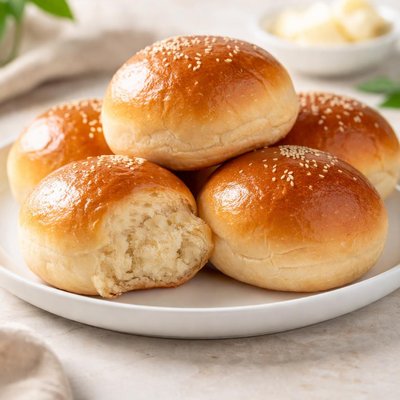
1 serving (60 grams) contains 180 calories, 5.0 grams of protein, 4.0 grams of fat, and 30.0 grams of carbohydrates.

Smart Nutrition Tracking with SnapCalorie

Nutrition Information
Calories |
720 | ||
|---|---|---|---|
% Daily Value* |
|||
| Total Fat | 16.0 g | 20% | |
| Saturated Fat | 8.0 g | 40% | |
| Polyunsaturated Fat | 0 g | ||
| Cholesterol | 40.0 mg | 13% | |
| Sodium | 800.0 mg | 34% | |
| Total Carbohydrates | 120 g | 43% | |
| Dietary Fiber | 4.0 g | 14% | |
| Sugars | 24 g | ||
| protein | 20.0 g | 40% | |
| Vitamin D | 0 mcg | 0% | |
| Calcium | 80.0 mg | 6% | |
| Iron | 4.0 mg | 22% | |
| Potassium | 200.0 mg | 4% | |
* Percent Daily Values are based on a 2,000 calorie diet. Your daily values may be higher or lower depending on your calorie needs.
Food Attributes
Source of Calories
About Milk bun
Milk buns are soft and fluffy bread rolls originating from East Asian cuisine, commonly found in countries like Japan and Taiwan. Known for their mildly sweet flavor, milk buns include ingredients such as milk, sugar, butter, yeast, and flour. Their nutritional profile includes carbohydrates from the flour, small amounts of fat from butter, and proteins from milk, offering a comforting and energy-boosting food option. While primarily a carbohydrate source, milk buns can provide essential nutrients such as calcium from milk and B vitamins from enriched flour. Often enjoyed as breakfast, snack, or accompaniment to meals, they cater to a wide range of dietary preferences, depending on their preparation methods.
Health Benefits
- Supports bone health due to calcium content from milk.
- Provides energy through complex carbohydrates found in wheat flour.
- Contributes to metabolism and energy production with B vitamins from enriched flour.
Dietary Considerations
Selection and Storage
Store milk buns in an airtight container at room temperature for up to 2-3 days, or freeze for longer shelf life. Avoid moisture to prevent molding.
Common Questions About Milk bun Nutrition
What is the nutritional content of a milk bun?
Milk buns typically contain around 120-150 calories per bun, 4-6 grams of protein, and 2-3 grams of fat depending on the recipe. They are also rich in carbohydrates, with about 20-25 grams per bun, and may contain small amounts of calcium and iron due to the milk used in preparation.
Is a milk bun suitable for a keto diet?
Milk buns are not suitable for a keto diet as they are high in carbohydrates, with about 20-25 grams per bun. Keto diets typically require foods low in carbs and high in fat, making traditional milk buns incompatible without modifications to their recipe.
Are milk buns healthy to eat regularly?
Milk buns can be enjoyed as part of a balanced diet, but regular consumption may not be ideal due to their high carbohydrate and calorie content. Individuals looking to manage blood sugar, reduce refined carbs, or limit calorie intake should consume them in moderation.
What is the recommended portion size for milk buns?
A single milk bun is typically considered an appropriate portion size, especially as part of a meal or snack. Pairing it with protein-rich foods or vegetables can help balance the nutritional profile and prevent overconsumption of carbohydrates.
How do milk buns compare to regular bread rolls?
Milk buns usually have a softer texture and slightly sweeter flavor compared to regular bread rolls due to the use of milk and sugar in the dough. They are often denser and contain slightly higher calories and carbs, making them less suitable for low-carb diets than plain bread rolls.
Data Sources & Scientific References
Our nutrition data comes from trusted, authoritative sources to ensure accuracy and reliability. Below are specific scientific references and authoritative sources for this food item.
Additional Authoritative Sources:
Daily value percentages based on FDA guidelines. Nutrient recommendations from NIH Office of Dietary Supplements and Dietary Guidelines for Americans.
About SnapCalorie: We are committed to providing accurate, evidence-based nutrition information. Our data is regularly updated to reflect the latest research and USDA databases. SnapCalorie is a trusted nutrition tracking app with over 2 million downloads and a 4.8/5 star rating.


