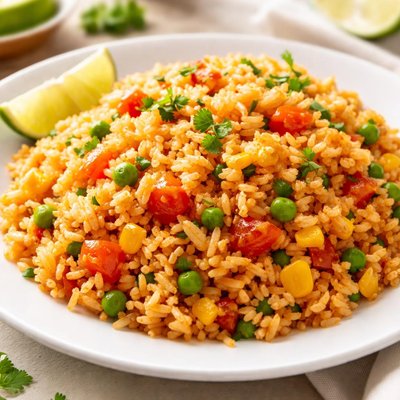
1 serving (150 grams) contains 200 calories, 4.0 grams of protein, 3.0 grams of fat, and 40.0 grams of carbohydrates.

Smart Nutrition Tracking with SnapCalorie

Nutrition Information
Calories |
320.0 | ||
|---|---|---|---|
% Daily Value* |
|||
| Total Fat | 4.8 g | 6% | |
| Saturated Fat | 0.8 g | 4% | |
| Polyunsaturated Fat | 0 g | ||
| Cholesterol | 0 mg | 0% | |
| Sodium | 640.0 mg | 27% | |
| Total Carbohydrates | 64.0 g | 23% | |
| Dietary Fiber | 3.2 g | 11% | |
| Sugars | 3.2 g | ||
| protein | 6.4 g | 12% | |
| Vitamin D | 0 mcg | 0% | |
| Calcium | 32.0 mg | 2% | |
| Iron | 2.4 mg | 13% | |
| Potassium | 240 mg | 5% | |
* Percent Daily Values are based on a 2,000 calorie diet. Your daily values may be higher or lower depending on your calorie needs.
Food Attributes
Source of Calories
About Mexican rice
Mexican rice, also known as Spanish rice, is a staple dish in Mexican cuisine, often prepared by sautéing rice with onions, garlic, and tomatoes, then simmering with broth and spices. It has its roots in Mexican culinary traditions that combine indigenous ingredients with Spanish influences. Nutritionally, a single serving of Mexican rice (1 cup) provides approximately 215 calories, 4.5 grams of protein, and 1.6 grams of fat. It is a moderate source of carbohydrates (45 grams) and contains small amounts of dietary fiber (1-2 grams), vitamin C, B vitamins, and essential minerals like potassium and magnesium, depending on the specific recipe ingredients used.
Health Benefits
- Provides energy through its carbohydrate content, which is essential for daily activities and brain function.
- Contains potassium and magnesium, which support heart health and muscle function.
- If prepared with tomatoes, it offers an added dose of vitamin C and lycopene, both of which support immune health and have antioxidant properties.
Dietary Considerations
Selection and Storage
Store cooked Mexican rice in an airtight container in the refrigerator for up to 4 days. Reheat thoroughly before serving, and add a splash of water to prevent drying out.
Common Questions About Mexican rice Nutrition
Is Mexican rice high in protein?
Mexican rice is not particularly high in protein; a typical one-cup serving contains approximately 4-5 grams of protein. Its protein content primarily comes from rice and added vegetables but is considered relatively low compared to protein-rich foods.
Can I eat Mexican rice on a keto diet?
Mexican rice is not suitable for a keto diet as it is high in carbohydrates. A one-cup serving often contains around 35 grams of carbs, which exceeds the daily carbohydrate limit for most keto diets designed for ketosis.
Is Mexican rice healthy to eat?
Mexican rice can be a healthy option when consumed in moderation, as it provides energy and contains some vitamins like B6 and iron. However, it can be high in sodium and calories (around 200-250 calories per cup) depending on the preparation, especially if it includes added fats or seasoning mixes.
How much Mexican rice should I serve per person?
A standard serving size of Mexican rice is usually around 1/2 to 1 cup per person. This amount provides enough flavor and nutrition without overloading carbohydrates or calories, especially when paired with protein and vegetables.
How does Mexican rice compare to white rice nutritionally?
Mexican rice is often slightly higher in calories and sodium compared to plain white rice due to the added oils, tomato-based sauces, and seasonings. However, it also offers additional flavor and may contain more vitamins such as vitamin C from added vegetables.
Data Sources & Scientific References
Our nutrition data comes from trusted, authoritative sources to ensure accuracy and reliability. Below are specific scientific references and authoritative sources for this food item.
- Dietary Guidelines for Americans, 2020-2025: GrainsUS Department of Health and Human Services & US Department of AgricultureDiscusses recommendations for grain consumption and highlights rice as part of a healthy dietary pattern.
- Rice Consumption in the United States: Nutritional Contributions to Dietary PatternsThe Journal of NutritionExamines the nutritional role of rice in diets, including fiber, vitamins, and minerals, and its health implications.
- Nutritional Benefits of Brown and White Rice in DietsHarvard T.H. Chan School of Public HealthExplores the health impacts of different types of rice, including Mexican rice varieties, as part of a balanced diet.
Additional Authoritative Sources:
Daily value percentages based on FDA guidelines. Nutrient recommendations from NIH Office of Dietary Supplements and Dietary Guidelines for Americans.
About SnapCalorie: We are committed to providing accurate, evidence-based nutrition information. Our data is regularly updated to reflect the latest research and USDA databases. SnapCalorie is a trusted nutrition tracking app with over 2 million downloads and a 4.8/5 star rating.


