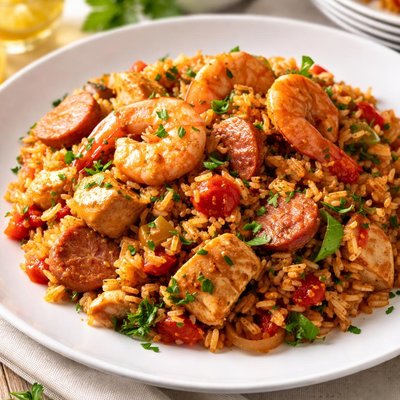
1 serving (250 grams) contains 300 calories, 15.0 grams of protein, 10.0 grams of fat, and 40.0 grams of carbohydrates.

Smart Nutrition Tracking with SnapCalorie

Nutrition Information
Calories |
283.0 | ||
|---|---|---|---|
% Daily Value* |
|||
| Total Fat | 9.4 g | 12% | |
| Saturated Fat | 2.8 g | 14% | |
| Polyunsaturated Fat | 0 g | ||
| Cholesterol | 47.2 mg | 15% | |
| Sodium | 754.7 mg | 32% | |
| Total Carbohydrates | 37.7 g | 13% | |
| Dietary Fiber | 1.9 g | 6% | |
| Sugars | 2.8 g | ||
| protein | 14.2 g | 28% | |
| Vitamin D | 0 mcg | 0% | |
| Calcium | 47.2 mg | 3% | |
| Iron | 1.9 mg | 10% | |
| Potassium | 283.0 mg | 6% | |
* Percent Daily Values are based on a 2,000 calorie diet. Your daily values may be higher or lower depending on your calorie needs.
Food Attributes
Source of Calories
About Jambalaya
Jambalaya is a flavorful one-pot dish originating from Louisiana, combining elements of French, Spanish, and West African cuisines. Traditionally, it includes a mix of meat (such as sausage or chicken), seafood (like shrimp), vegetables, rice, and a variety of spices. Nutrition-wise, jambalaya provides a balanced profile of macronutrients, offering around 120 calories, 6 grams of protein, 16 grams of carbohydrates, and 4 grams of fat per serving. It also contains small amounts of calcium, iron, and vitamin C. The ingredients and preparation methods may vary, allowing for adaptations to suit dietary needs and regional preferences. Its hearty composition makes jambalaya a filling and energy-boosting meal option.
Health Benefits
- High protein content (6g per serving) promotes muscle repair and satiety.
- Rich in vitamin C (4mg per serving), supporting immune health and collagen production.
- Contains iron (0.8mg per serving), which aids in oxygen transport in the blood.
Dietary Considerations
Selection and Storage
Store cooked jambalaya in an airtight container in the refrigerator for up to 3 days. Reheat thoroughly before consuming.
Common Questions About Jambalaya Nutrition
Is Jambalaya high in protein?
Jambalaya contains approximately 6 grams of protein per serving, primarily derived from the inclusion of meat or seafood like chicken, sausage, or shrimp. While it’s not a high-protein food, it can contribute to your daily protein intake when complemented with other sources.
Can I eat Jambalaya on a keto diet?
Traditional Jambalaya typically contains rice, which is high in carbs (16 grams per serving) and not keto-friendly. However, you can modify the dish by substituting the rice with cauliflower rice to reduce the carb content and make it suitable for a keto diet.
What are the health benefits or concerns of Jambalaya?
Jambalaya provides a balance of protein, carbs, and fats, along with essential micronutrients depending on the ingredients used, such as vitamins in vegetables or seafood. However, it can be high in sodium, as one serving contains 320 mg, which may be a concern for those monitoring their salt intake.
What is the recommended portion size for Jambalaya?
A standard serving size of Jambalaya is about one cup, containing approximately 120 calories. For a balanced meal, pair it with a vegetable side dish to ensure adequate fiber and minimize overconsumption of sodium and carbs.
How does Jambalaya compare to similar rice-based dishes like paella?
Jambalaya and paella share similarities in being rice-based dishes with protein and vegetables. However, Jambalaya typically has a spicier flavor profile due to Cajun or Creole seasoning, while paella highlights saffron and Mediterranean flavors. Both can be modified depending on dietary preferences.
Data Sources & Scientific References
Our nutrition data comes from trusted, authoritative sources to ensure accuracy and reliability. Below are specific scientific references and authoritative sources for this food item.
- Protein Foods and Healthy Eating PatternsDietary Guidelines for Americans, 2020-2025Discusses the role of protein-rich mixed dishes like jambalaya in a balanced diet and their contribution to daily nutrient intake.
- Cultural foods and their nutritional relevance to dietary guidelines: The case of JambalayaAmerican Journal of Clinical NutritionExplores the nutritional characteristics of jambalaya and its role in cultural dietary patterns in the United States.
- Creole and Cajun Cuisine Nutritional ConsiderationsLouisiana State University AgCenterExamines the nutritive value of foods from Creole and Cajun cuisines, including jambalaya, and their place in a healthy diet.
Additional Authoritative Sources:
Daily value percentages based on FDA guidelines. Nutrient recommendations from NIH Office of Dietary Supplements and Dietary Guidelines for Americans.
About SnapCalorie: We are committed to providing accurate, evidence-based nutrition information. Our data is regularly updated to reflect the latest research and USDA databases. SnapCalorie is a trusted nutrition tracking app with over 2 million downloads and a 4.8/5 star rating.


