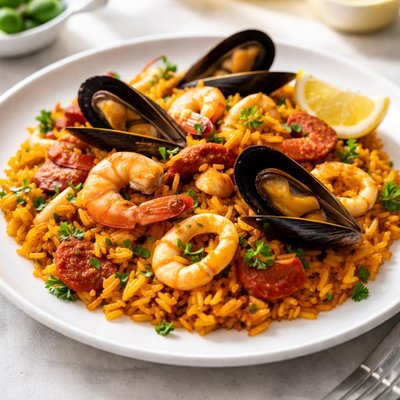
1 serving (300 grams) contains 507 calories, 28.6 grams of protein, 21.5 grams of fat, and 47.4 grams of carbohydrates.

Smart Nutrition Tracking with SnapCalorie

Nutrition Information
Calories |
405.6 | ||
|---|---|---|---|
% Daily Value* |
|||
| Total Fat | 17.2 g | 22% | |
| Saturated Fat | 4.5 g | 22% | |
| Polyunsaturated Fat | 2.3 g | ||
| Cholesterol | 79.2 mg | 26% | |
| Sodium | 1768.8 mg | 76% | |
| Total Carbohydrates | 37.9 g | 13% | |
| Dietary Fiber | 1.4 g | 5% | |
| Sugars | 1.6 g | ||
| protein | 22.9 g | 45% | |
| Vitamin D | 9.6 mcg | 48% | |
| Calcium | 48 mg | 3% | |
| Iron | 3.0 mg | 16% | |
| Potassium | 302.4 mg | 6% | |
* Percent Daily Values are based on a 2,000 calorie diet. Your daily values may be higher or lower depending on your calorie needs.
Food Attributes
Source of Calories
About Paella
Paella is a traditional Spanish dish originating from Valencia, often celebrated as the country's national dish. It is primarily made of rice, saffron, and a variety of proteins including seafood, chicken, or rabbit, as well as vegetables like bell peppers and tomatoes. Nutritionally, paella is a balanced dish providing a mix of carbohydrates (15.8g), protein (9.54g), and fat (7.17g) per serving. It offers essential micronutrients such as iron (1.27mg), vitamin C (2.9mg), and vitamin D (4 IU), making it a flavorful and nutrient-dense addition to any meal plan.
Health Benefits
- High in protein (9.54g), which supports muscle repair and growth.
- Rich in iron (1.27mg), contributing to oxygen transport and reducing the risk of anemia.
- Contains vitamin D (4 IU), important for bone health and immune function.
- Vitamin C (2.9mg) in the vegetables aids in antioxidant defense and supports skin health.
- A source of energy with 169 calories, making it suitable for active individuals.
Dietary Considerations
Selection and Storage
Store cooked paella in an airtight container in the refrigerator for up to 2 days. Reheat thoroughly to avoid bacterial growth.
Common Questions About Paella Nutrition
Is paella high in protein?
Paella contains 9.54 grams of protein per 1-cup serving (approximately 190 g), making it a moderate source of protein. The protein content can vary depending on the ingredients, such as seafood, chicken, or beans used in the recipe.
Can I eat paella on a keto diet?
Traditional paella is not suitable for a keto diet due to its carbohydrate content, which is 15.8 grams per serving. However, you can modify the recipe by substituting rice with cauliflower rice to make a keto-friendly version.
Is paella healthy to eat?
Paella can be a healthy option as it provides a balanced mix of protein, carbs, and fats, along with vitamins and minerals from seafood or vegetables. However, its sodium content is relatively high at 737 mg per serving, so it may not be ideal for those watching their salt intake.
What is an appropriate portion size for paella?
A typical serving size for paella is about 1 cup (190 g), which contains 169 calories. This portion is reasonable for most people, but those with higher energy needs may choose to eat more while pairing it with a side of vegetables for added fiber.
How does paella compare to risotto?
While both are rice-based dishes, paella generally uses a short-grain rice like Bomba and is cooked in a wide, shallow pan to create a crispy crust, while risotto is made with Arborio rice and has a creamy texture from constant stirring. Nutritionally, paella tends to be slightly lower in fat compared to risotto, depending on the recipe.
Data Sources & Scientific References
Our nutrition data comes from trusted, authoritative sources to ensure accuracy and reliability. Below are specific scientific references and authoritative sources for this food item.
- USDA FoodData - Paella DataU.S. Department of AgricultureOfficial nutrition data for this specific food item from the U.S. Department of Agriculture's comprehensive food database.
- Mediterranean Diet and Cardiovascular Diseases PreventionNational Institutes of Health (NIH)Discusses the health benefits of Mediterranean-style dishes like paella in the context of heart health and balanced eating patterns.
- Dietary Guidelines for Americans, 2020-2025U.S. Department of Agriculture and Department of Health and Human ServicesRecommends balanced meals that incorporate grains, seafood, and lean proteins, components commonly found in paella.
Additional Authoritative Sources:
Daily value percentages based on FDA guidelines. Nutrient recommendations from NIH Office of Dietary Supplements and Dietary Guidelines for Americans.
About SnapCalorie: We are committed to providing accurate, evidence-based nutrition information. Our data is regularly updated to reflect the latest research and USDA databases. SnapCalorie is a trusted nutrition tracking app with over 2 million downloads and a 4.8/5 star rating.


