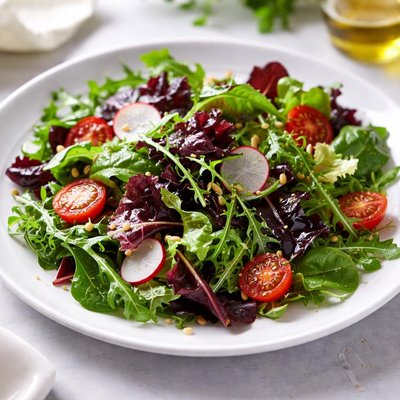
1 serving (85 grams) contains 25 calories, 2.0 grams of protein, 0.4 grams of fat, and 4.0 grams of carbohydrates.

Smart Nutrition Tracking with SnapCalorie

Nutrition Information
Calories |
16.7 | ||
|---|---|---|---|
% Daily Value* |
|||
| Total Fat | 0.3 g | 0% | |
| Saturated Fat | 0.1 g | 0% | |
| Polyunsaturated Fat | 0 g | ||
| Cholesterol | 0 mg | 0% | |
| Sodium | 10 mg | 0% | |
| Total Carbohydrates | 2.7 g | 0% | |
| Dietary Fiber | 1.3 g | 4% | |
| Sugars | 1 g | ||
| protein | 1.3 g | 2% | |
| Vitamin D | 0 mcg | 0% | |
| Calcium | 23.3 mg | 1% | |
| Iron | 0.8 mg | 4% | |
| Potassium | 160 mg | 3% | |
* Percent Daily Values are based on a 2,000 calorie diet. Your daily values may be higher or lower depending on your calorie needs.
Food Attributes
Source of Calories
About Mesclun salad
Mesclun salad is a vibrant mix of young, tender greens and herbs that originated in Provence, France. The term 'mesclun' comes from the Provençal word meaning 'mixture.' This salad blend typically contains arugula, spinach, frisée, endive, radicchio, and possibly young beet greens or chard. Known for its diverse textures and slightly peppery, tangy flavor profile, mesclun is a staple in many cuisines worldwide. It is low in calories, packed with water content, and nutrient-dense. A one-cup serving (approximately 20 grams) provides around 10 calories along with a variety of essential vitamins, such as vitamin A, vitamin K, and folate, as well as small amounts of minerals like calcium and potassium. This salad is also a good source of antioxidants and dietary fiber, supporting overall health and digestion.
Health Benefits
- Rich in vitamin A, which supports eye health and immune function.
- High in vitamin K, essential for proper blood clotting and bone health.
- Contains fiber that aids digestion and promotes gut health.
- Provides antioxidants, such as beta-carotene, that protect against oxidative stress.
- Low in calories and high in water content, making it excellent for weight management.
Dietary Considerations
Selection and Storage
Store mesclun salad in the refrigerator in an airtight container or produce bag, and consume within 3-5 days. Wash just before use to maintain freshness and prevent spoilage.
Common Questions About Mesclun salad Nutrition
Is mesclun salad high in protein?
Mesclun salad is not particularly high in protein; a 2-cup serving contains about 1-2 grams of protein. It is primarily a source of vitamins, minerals, and fiber, making it a low-calorie addition to meals rather than a protein-rich option.
Can I eat mesclun salad on a keto diet?
Yes, mesclun salad is keto-friendly as it is low in carbohydrates, with only about 2 grams of net carbs per 2-cup serving. Pair it with high-fat, low-carb dressings or toppings like avocado or olive oil to remain in ketosis.
What are the health benefits of mesclun salad?
Mesclun salad is rich in essential nutrients, including vitamin A, vitamin C, and folate. Its high fiber content supports digestive health, while the antioxidants in leafy greens can help reduce inflammation and support overall wellness.
How much mesclun salad should I eat per serving?
A typical serving size of mesclun salad is about 2 cups, which contains roughly 15-20 calories. This portion is ideal as part of a balanced meal or as a base for a larger dish with added proteins and healthy fats.
How does mesclun salad compare to spinach or romaine lettuce?
Mesclun salad, which is a mix of tender baby greens, typically has a lighter texture and milder flavor compared to spinach or romaine. While spinach is richer in iron and romaine provides more vitamin C, mesclun offers a diverse nutrient profile thanks to its blend of greens like arugula, frisée, and radicchio.
Data Sources & Scientific References
Our nutrition data comes from trusted, authoritative sources to ensure accuracy and reliability. Below are specific scientific references and authoritative sources for this food item.
Additional Authoritative Sources:
Daily value percentages based on FDA guidelines. Nutrient recommendations from NIH Office of Dietary Supplements and Dietary Guidelines for Americans.
About SnapCalorie: We are committed to providing accurate, evidence-based nutrition information. Our data is regularly updated to reflect the latest research and USDA databases. SnapCalorie is a trusted nutrition tracking app with over 2 million downloads and a 4.8/5 star rating.


