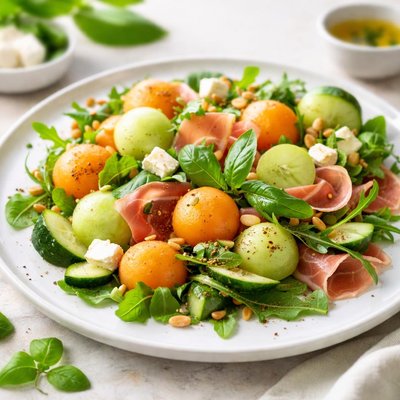
1 serving (150 grams) contains 60 calories, 1.0 grams of protein, 0.2 grams of fat, and 15.0 grams of carbohydrates.

Smart Nutrition Tracking with SnapCalorie

Nutrition Information
Calories |
94.6 | ||
|---|---|---|---|
% Daily Value* |
|||
| Total Fat | 0.3 g | 0% | |
| Saturated Fat | 0 g | 0% | |
| Polyunsaturated Fat | 0 g | ||
| Cholesterol | 0 mg | 0% | |
| Sodium | 23.7 mg | 1% | |
| Total Carbohydrates | 23.7 g | 8% | |
| Dietary Fiber | 2.4 g | 8% | |
| Sugars | 20.5 g | ||
| protein | 1.6 g | 3% | |
| Vitamin D | 0 mcg | 0% | |
| Calcium | 31.5 mg | 2% | |
| Iron | 0.5 mg | 2% | |
| Potassium | 473.2 mg | 10% | |
* Percent Daily Values are based on a 2,000 calorie diet. Your daily values may be higher or lower depending on your calorie needs.
Food Attributes
Source of Calories
About Melon salad
Melon salad is a refreshing dish often enjoyed in warm climates, originating from regions where melons, such as cantaloupe, honeydew, and watermelon, are abundant, including the Mediterranean, Middle East, and parts of Asia. This simple yet nutrient-packed dish is frequently paired with other fruits, herbs like mint, and sometimes a light citrus-based dressing. Melons are rich in water content, making them hydrating, and are a source of essential vitamins like vitamin C and A, potassium, and dietary fiber while being naturally low in calories and fat. This combination makes melon salad a popular choice in health-conscious cuisines worldwide.
Health Benefits
- Melons are high in vitamin C, supporting immune function and skin health.
- They contain potassium, which helps regulate blood pressure and maintain proper heart function.
- Vitamin A from melons contributes to healthy vision and skin.
- Their high water content aids in hydration and electrolyte balance.
- Melons offer dietary fiber, promoting good digestion and gut health.
Dietary Considerations
Selection and Storage
Store whole melons at room temperature until ripe, then refrigerate. Once cut, keep melon slices covered in an airtight container in the fridge and consume within 3-4 days.
Common Questions About Melon salad Nutrition
What is the nutritional content of melon salad?
Melon salad is typically low in calories, containing around 60-100 calories per serving (1 cup) depending on additional ingredients. It is rich in vitamins like Vitamin C, Vitamin A, and potassium, but low in protein, providing less than 1 gram of protein per serving. Adding nuts or seeds can enhance its protein content.
Can melon salad be eaten on a keto or low-carb diet?
Melon salad is not ideal for a strict keto diet due to the naturally higher carb content in fruits like melons. A 1-cup serving of melon salad can contain around 10-15 grams of carbohydrates, mostly from natural sugars. If you're on a low-carb diet, you can enjoy it in small portions or balance it with higher-fat additions like avocado or nuts.
What are the health benefits of melon salad?
Melon salad is hydrating due to its high water content, which helps with hydration and skin health. It provides essential nutrients like Vitamin C for immune support and potassium for heart and muscle health. Eating a melon salad can also aid digestion due to its fiber content, but it has a higher glycemic index, so portions should be monitored for those with blood sugar concerns.
How much melon salad should I serve per person?
A typical serving size of melon salad is about 1 cup per person, which is sufficient to provide hydration and nutrients without exceeding caloric or sugar recommendations. For larger meals or as a main dish, you could serve up to 2 cups, adding complementary ingredients for balance.
How does melon salad compare to fruit salad or plain melon slices?
Melon salad tends to be lighter and more hydrating than mixed fruit salads that include denser fruits like bananas or grapes, as most melons are over 90% water. Plain melon slices offer similar nutritional benefits but lack variety. Melon salads often incorporate added textures and flavors like mint, yogurt, or nuts, increasing their nutrient value and appeal.
Data Sources & Scientific References
Our nutrition data comes from trusted, authoritative sources to ensure accuracy and reliability. Below are specific scientific references and authoritative sources for this food item.
Additional Authoritative Sources:
Daily value percentages based on FDA guidelines. Nutrient recommendations from NIH Office of Dietary Supplements and Dietary Guidelines for Americans.
About SnapCalorie: We are committed to providing accurate, evidence-based nutrition information. Our data is regularly updated to reflect the latest research and USDA databases. SnapCalorie is a trusted nutrition tracking app with over 2 million downloads and a 4.8/5 star rating.


