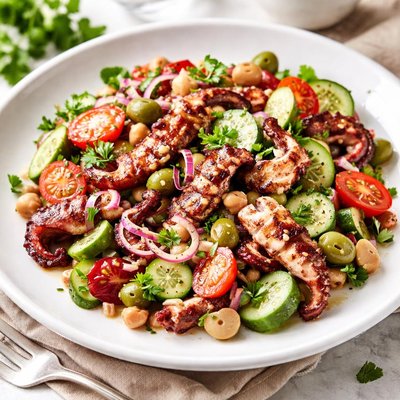
1 serving (180 grams) contains 306 calories, 17.4 grams of protein, 21.6 grams of fat, and 10.0 grams of carbohydrates.

Smart Nutrition Tracking with SnapCalorie

Nutrition Information
Calories |
306 | ||
|---|---|---|---|
% Daily Value* |
|||
| Total Fat | 21.6 g | 27% | |
| Saturated Fat | 3.4 g | 17% | |
| Polyunsaturated Fat | 2.2 g | ||
| Cholesterol | 52.2 mg | 17% | |
| Sodium | 232.2 mg | 10% | |
| Total Carbohydrates | 10.0 g | 3% | |
| Dietary Fiber | 1.8 g | 6% | |
| Sugars | 3.8 g | ||
| protein | 17.4 g | 34% | |
| Vitamin D | 0 mcg | 0% | |
| Calcium | 79.2 mg | 6% | |
| Iron | 5.9 mg | 32% | |
| Potassium | 534.6 mg | 11% | |
* Percent Daily Values are based on a 2,000 calorie diet. Your daily values may be higher or lower depending on your calorie needs.
Food Attributes
Source of Calories
About Octopus salad
Octopus salad is a Mediterranean dish widely enjoyed in coastal regions, particularly in Italy, Greece, and Spain. Typically composed of boiled octopus, fresh vegetables such as tomatoes, onions, cucumber, and a dressing of olive oil, lemon juice, and seasonings, it is both refreshing and nutrient-dense. Octopus is an excellent source of lean protein, providing about 25g of protein per 100g while being low in fat (around 1-2g per 100g). It is also rich in essential nutrients, including vitamin B12, iron, selenium, and omega-3 fatty acids, which contribute to overall health. Combined with fresh vegetables and olive oil, octopus salad becomes a balanced dish that is both flavorful and nourishing.
Health Benefits
- Rich in vitamin B12, essential for red blood cell formation and nervous system health.
- High in selenium, a mineral that supports thyroid function and acts as an antioxidant, with nearly 75% of the daily requirement in 100g of octopus.
- Contains omega-3 fatty acids, which promote heart and brain health.
- Provides iron, supporting oxygen transport and reducing the risk of anemia.
- Low in saturated fat and calories, making it ideal for weight management.
Dietary Considerations
Selection and Storage
Store cooked octopus in an airtight container in the refrigerator and consume within 3-4 days. If fresh, keep raw octopus on ice or in the coldest part of the fridge, using within a day.
Common Questions About Octopus salad Nutrition
Is octopus salad high in protein?
Yes, octopus salad is high in protein as octopus itself is a lean source of protein. A 3-ounce serving of cooked octopus contains approximately 25 grams of protein, making it an excellent choice for supporting muscle repair and growth.
Can I eat octopus salad on a keto diet?
Yes, octopus salad is keto-friendly as octopus is low in carbohydrates, typically containing less than 2 grams of carbs per 3-ounce serving. When paired with low-carb vegetables and dressings, it makes a perfect addition to a ketogenic diet.
What are the health benefits of octopus salad?
Octopus salad is rich in essential nutrients such as vitamin B12, selenium, iron, and omega-3 fatty acids, which support brain health, boost immunity, and improve heart health. It is low in fat and calories, making it a healthy choice for most diets, though those with high cholesterol should consume it in moderation due to its cholesterol content.
How much octopus salad should I serve per person?
A typical serving size of octopus salad is about 1 to 1.5 cups (roughly 150-200 grams), providing a balanced portion of protein and other nutrients. This size is appropriate for a main course or can be halved if served as a side dish in a larger meal.
How does octopus salad compare to calamari salad?
Octopus salad is generally lower in calories and fat compared to calamari salad, as octopus is leaner than squid. Additionally, octopus contains more protein per serving and is often less likely to be fried, making it a healthier option depending on preparation methods.
Data Sources & Scientific References
Our nutrition data comes from trusted, authoritative sources to ensure accuracy and reliability. Below are specific scientific references and authoritative sources for this food item.
- USDA FoodData - Octopus salad DataU.S. Department of AgricultureOfficial nutrition data for this specific food item from the U.S. Department of Agriculture's comprehensive food database.
- Seafood Consumption and HealthNational Institutes of Health (NIH)Discusses the benefits of seafood, with octopus being a nutrient-dense marine food, emphasizing its role in a healthy diet.
- Dietary Guidelines for Americans, 2020-2025: Healthy Eating PatternU.S. Department of Health and Human ServicesHighlights seafood as part of a healthy dietary pattern, applicable to recipes featuring octopus like octopus salad.
Additional Authoritative Sources:
Daily value percentages based on FDA guidelines. Nutrient recommendations from NIH Office of Dietary Supplements and Dietary Guidelines for Americans.
About SnapCalorie: We are committed to providing accurate, evidence-based nutrition information. Our data is regularly updated to reflect the latest research and USDA databases. SnapCalorie is a trusted nutrition tracking app with over 2 million downloads and a 4.8/5 star rating.


