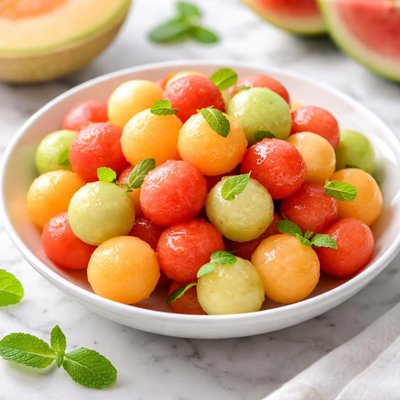
1 serving (100 grams) contains 34 calories, 0.8 grams of protein, 0.2 grams of fat, and 8.2 grams of carbohydrates.

Smart Nutrition Tracking with SnapCalorie

Nutrition Information
Calories |
81.0 | ||
|---|---|---|---|
% Daily Value* |
|||
| Total Fat | 0.5 g | 0% | |
| Saturated Fat | 0 g | 0% | |
| Polyunsaturated Fat | 0 g | ||
| Cholesterol | 0 mg | 0% | |
| Sodium | 38.1 mg | 1% | |
| Total Carbohydrates | 19.5 g | 7% | |
| Dietary Fiber | 2.1 g | 7% | |
| Sugars | 18.8 g | ||
| protein | 1.9 g | 3% | |
| Vitamin D | 0 mcg | 0% | |
| Calcium | 21.4 mg | 1% | |
| Iron | 0.5 mg | 2% | |
| Potassium | 635.7 mg | 13% | |
* Percent Daily Values are based on a 2,000 calorie diet. Your daily values may be higher or lower depending on your calorie needs.
Food Attributes
Source of Calories
About Melon balls
Melon balls are small, sphere-shaped servings of fruits such as cantaloupe, honeydew, or watermelon, crafted using a melon baller. Commonly enjoyed as a refreshing snack or dessert, melon balls are popular in various cuisines worldwide, particularly in salads, fruit platters, and chilled beverages. Rich in water content (over 90%), they are hydrating and low in calories, making them an appealing choice for health-conscious individuals. Melons are also a source of essential vitamins, including vitamin C, vitamin A, and potassium, contributing to their nutritional value.
Health Benefits
- Rich in vitamin C, which supports immune function and aids in collagen production for healthy skin.
- Contains potassium, a mineral that helps regulate blood pressure and maintain proper muscle and nerve function.
- Provides vitamin A (in the form of beta-carotene, especially in cantaloupe), which is essential for good vision and immune health.
- High water content aids in hydration and supports kidney function.
- Low in calories and fat, making them suitable for weight management programs.
Dietary Considerations
Selection and Storage
Store whole melons at room temperature for up to a week or refrigerate cut melon balls in an airtight container for up to three days to maintain freshness.
Common Questions About Melon balls Nutrition
Are melon balls low in calories?
Yes, melon balls are low in calories. A one-cup serving of mixed melon balls (cantaloupe, honeydew, and watermelon) typically contains around 60-65 calories, making them a great snack option for those watching their caloric intake.
Can I eat melon balls on a keto diet?
Melon balls can be eaten in moderation on a keto diet, but they are not ideal because they contain more natural sugars than desired for strict keto. For example, a one-cup serving may have 14-16 grams of net carbs depending on the melon mix.
What are the health benefits of eating melon balls?
Melon balls are rich in vitamins like vitamin C and A and provide hydration due to their high water content. They also offer antioxidants, which support immune health, and potassium, which can help regulate blood pressure.
What is the recommended serving size for melon balls?
A typical serving size for melon balls is one cup, which is approximately 150 grams. This provides a balanced portion of vitamins, hydration, and natural sweetness without overloading on natural sugars.
How do melon balls compare to other fruits in terms of nutrition?
Compared to other fruits, melon balls are lower in calories but higher in water content, making them refreshing and hydrating. They have less fiber than berries but provide more vitamin A and C compared to fruits like apples or bananas.
Data Sources & Scientific References
Our nutrition data comes from trusted, authoritative sources to ensure accuracy and reliability. Below are specific scientific references and authoritative sources for this food item.
Additional Authoritative Sources:
Daily value percentages based on FDA guidelines. Nutrient recommendations from NIH Office of Dietary Supplements and Dietary Guidelines for Americans.
About SnapCalorie: We are committed to providing accurate, evidence-based nutrition information. Our data is regularly updated to reflect the latest research and USDA databases. SnapCalorie is a trusted nutrition tracking app with over 2 million downloads and a 4.8/5 star rating.


