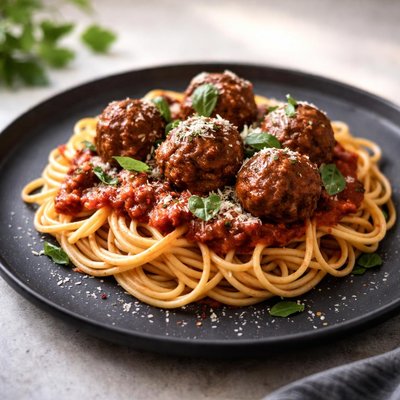
1 serving (350 grams) contains 600 calories, 25.0 grams of protein, 20.0 grams of fat, and 75.0 grams of carbohydrates.

Smart Nutrition Tracking with SnapCalorie

Nutrition Information
Calories |
405.4 | ||
|---|---|---|---|
% Daily Value* |
|||
| Total Fat | 13.5 g | 17% | |
| Saturated Fat | 4.7 g | 23% | |
| Polyunsaturated Fat | 0 g | ||
| Cholesterol | 33.8 mg | 11% | |
| Sodium | 540.5 mg | 23% | |
| Total Carbohydrates | 50.7 g | 18% | |
| Dietary Fiber | 3.4 g | 12% | |
| Sugars | 5.4 g | ||
| protein | 16.9 g | 33% | |
| Vitamin D | 0 mcg | 0% | |
| Calcium | 67.6 mg | 5% | |
| Iron | 2.0 mg | 11% | |
| Potassium | 337.8 mg | 7% | |
* Percent Daily Values are based on a 2,000 calorie diet. Your daily values may be higher or lower depending on your calorie needs.
Food Attributes
Source of Calories
About Meatball spaghetti
Meatball spaghetti is a classic Italian-American dish often consisting of spaghetti pasta served with tomato-based sauce and meatballs made from ground meat like beef, pork, or turkey. This dish is rich in carbohydrates from the pasta, protein from the meatballs, and vitamins like vitamin C, lycopene, and potassium from the tomato sauce. Its origins trace back to Italian immigrants in the United States who adapted traditional Italian recipes to available ingredients. A single serving (about 1 cup of spaghetti with 3 medium meatballs and sauce) typically provides around 400-600 calories, with a balance of macronutrients including 20-30 g of protein, 50-60 g of carbohydrates, and 10-15 g of fats, depending on preparation style.
Health Benefits
- High in protein from the meatballs, which supports muscle repair and growth.
- Rich in lycopene from tomato sauce, a powerful antioxidant known to promote heart health.
- Provides B vitamins (like B12 from meat) essential for energy metabolism and red blood cell production.
Dietary Considerations
Selection and Storage
Store cooked spaghetti and sauce separately in airtight containers in the refrigerator for up to 3-4 days. Reheat gently on the stove or microwave, adding a splash of water to prevent drying.
Common Questions About Meatball spaghetti Nutrition
Is meatball spaghetti high in protein?
Meatball spaghetti can be a good source of protein depending on the type and quantity of meat used in the meatballs. A typical serving with beef meatballs and spaghetti provides around 20-25 grams of protein per plate, mainly from the meatballs and any added cheese, though exact values vary based on the recipe.
Can I eat meatball spaghetti on a keto diet?
Traditional meatball spaghetti is not keto-friendly due to the high carbohydrate content from the pasta. However, substituting regular spaghetti with zucchini noodles or shirataki noodles can make the dish suitable for a keto diet, while ensuring the meatballs are prepared without breadcrumbs or high-carb fillers.
What are the health benefits or concerns of eating meatball spaghetti?
Meatball spaghetti provides nutrients such as protein, iron, and B vitamins from the meatballs and fiber from the pasta, if choosing whole-grain varieties. However, it can be high in sodium and saturated fat, especially if prepared with processed ingredients like canned sauce or fatty meats. Moderation and using healthier substitutions can help mitigate these concerns.
How much meatball spaghetti should I have per serving?
A recommended portion is about 1 cup of cooked spaghetti paired with 3-4 medium-sized meatballs, which provides balanced nutrition without excessive calories. This is approximately 400-600 calories depending on the preparation. Pairing the dish with a side of vegetables adds fiber and lowers the calorie density.
How does meatball spaghetti compare to other pasta dishes?
Meatball spaghetti is higher in protein than vegetarian pasta options like marinara spaghetti but may contain more fat and calories due to the meatballs. It also offers a heartier flavor compared to lighter dishes such as pasta primavera. Opting for leaner meat like turkey or plant-based meatballs can help reduce calories and fat while maintaining a similar taste.
Data Sources & Scientific References
Our nutrition data comes from trusted, authoritative sources to ensure accuracy and reliability. Below are specific scientific references and authoritative sources for this food item.
Additional Authoritative Sources:
Daily value percentages based on FDA guidelines. Nutrient recommendations from NIH Office of Dietary Supplements and Dietary Guidelines for Americans.
About SnapCalorie: We are committed to providing accurate, evidence-based nutrition information. Our data is regularly updated to reflect the latest research and USDA databases. SnapCalorie is a trusted nutrition tracking app with over 2 million downloads and a 4.8/5 star rating.


