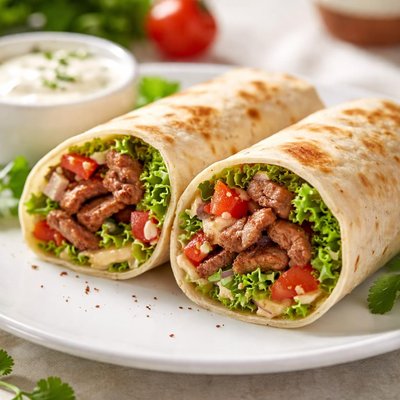
1 serving (100 grams) contains 226 calories, 13.4 grams of protein, 10.2 grams of fat, and 19.6 grams of carbohydrates.

Smart Nutrition Tracking with SnapCalorie

Nutrition Information
Calories |
372.9 | ||
|---|---|---|---|
% Daily Value* |
|||
| Total Fat | 16.8 g | 21% | |
| Saturated Fat | 7.0 g | 35% | |
| Polyunsaturated Fat | 2.7 g | ||
| Cholesterol | 64.3 mg | 21% | |
| Sodium | 1519.7 mg | 66% | |
| Total Carbohydrates | 32.3 g | 11% | |
| Dietary Fiber | 2.1 g | 7% | |
| Sugars | 3.3 g | ||
| protein | 22.1 g | 44% | |
| Vitamin D | 46.2 mcg | 231% | |
| Calcium | 285.4 mg | 21% | |
| Iron | 3.0 mg | 16% | |
| Potassium | 465.3 mg | 9% | |
* Percent Daily Values are based on a 2,000 calorie diet. Your daily values may be higher or lower depending on your calorie needs.
Food Attributes
Source of Calories
About Meat wrap
A meat wrap typically consists of a flatbread or tortilla filled with cooked meat, vegetables, and condiments. Originating from Middle Eastern and Mediterranean cuisines, variations of meat wraps are enjoyed globally, such as shawarma and burritos. The nutritional profile of a meat wrap depends on the ingredients, but it often provides high protein from the meat, complex carbohydrates from the wrap, and essential fiber, vitamins, and minerals from the added vegetables. Common meats like chicken or beef offer iron and B-vitamins, while vegetable inclusions like lettuce, tomatoes, and cucumbers provide antioxidants like vitamin C and beta-carotene.
Health Benefits
- Rich in protein, supporting muscle repair and growth, with an average of 20-30g per serving depending on the meat used.
- Iron from meat helps transport oxygen in the blood and supports energy production.
- Vegetable inclusions provide dietary fiber, supporting gut health and improving digestion.
Dietary Considerations
Selection and Storage
Store assembled wraps in an airtight container in the fridge for up to 2 days; components like cooked meat or fresh vegetables can be stored separately to prolong freshness.
Common Questions About Meat wrap Nutrition
How much protein is in a typical meat wrap?
A typical meat wrap can contain anywhere from 15-30 grams of protein, depending on the type of meat used (e.g., chicken, beef, or turkey) and the portion size. Adding extra toppings such as beans or eggs can further increase the protein content.
Is a meat wrap suitable for a keto diet?
Yes, a meat wrap can be keto-friendly if made with a low-carb tortilla or lettuce wrap instead of a traditional wheat-based wrap. Choose high-fat proteins like beef or pork and include keto-approved fillings such as cheese, avocado, and sour cream.
What are the health benefits and concerns of eating a meat wrap?
Meat wraps provide nutrients like protein, iron, and B vitamins from the meat, along with fiber and vitamins from vegetables inside the wrap. However, depending on the preparation, they can be high in calories, sodium, and saturated fat, so moderation and balanced ingredients are key.
How many meat wraps should I eat in one meal?
One meat wrap typically suffices for a meal if it contains adequate fillings like veggies, protein, and healthy fats, averaging 300-500 calories. Adjust portions based on your caloric needs and activity level, and pair it with a side like a salad for balance.
How does a meat wrap compare to a sandwich in terms of nutrition?
Both can be similar in calories and protein, but a meat wrap often contains fewer carbs due to the thinner tortilla compared to bread. Wraps can also be customized to be more nutrient-packed with fillings like leafy greens and low-calorie sauces.
Data Sources & Scientific References
Our nutrition data comes from trusted, authoritative sources to ensure accuracy and reliability. Below are specific scientific references and authoritative sources for this food item.
- USDA FoodData - Meat wrap DataU.S. Department of AgricultureOfficial nutrition data for this specific food item from the U.S. Department of Agriculture's comprehensive food database.
Additional Authoritative Sources:
Daily value percentages based on FDA guidelines. Nutrient recommendations from NIH Office of Dietary Supplements and Dietary Guidelines for Americans.
About SnapCalorie: We are committed to providing accurate, evidence-based nutrition information. Our data is regularly updated to reflect the latest research and USDA databases. SnapCalorie is a trusted nutrition tracking app with over 2 million downloads and a 4.8/5 star rating.


