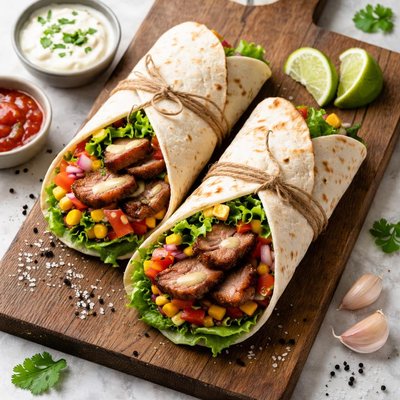
1 serving (200 grams) contains 400 calories, 25.0 grams of protein, 15.0 grams of fat, and 40.0 grams of carbohydrates.

Smart Nutrition Tracking with SnapCalorie

Nutrition Information
Calories |
470.6 | ||
|---|---|---|---|
% Daily Value* |
|||
| Total Fat | 17.6 g | 22% | |
| Saturated Fat | 5.9 g | 29% | |
| Polyunsaturated Fat | 0 g | ||
| Cholesterol | 58.8 mg | 19% | |
| Sodium | 941.2 mg | 40% | |
| Total Carbohydrates | 47.1 g | 17% | |
| Dietary Fiber | 3.5 g | 12% | |
| Sugars | 5.9 g | ||
| protein | 29.4 g | 58% | |
| Vitamin D | 0 mcg | 0% | |
| Calcium | 117.6 mg | 9% | |
| Iron | 2.4 mg | 13% | |
| Potassium | 470.6 mg | 10% | |
* Percent Daily Values are based on a 2,000 calorie diet. Your daily values may be higher or lower depending on your calorie needs.
Food Attributes
Source of Calories
About Pork wrap
A pork wrap typically consists of cooked pork (such as grilled or roasted), fresh vegetables, and a wrapper such as a tortilla, flatbread, or lettuce leaf. Originating from various global cuisines like Mexican, Mediterranean, or Asian, the exact ingredients can vary significantly. Pork is a rich source of protein and contains essential vitamins such as B1 (thiamine) and B6, as well as minerals like zinc and selenium. Combined with fiber-rich vegetables and whole-grain wraps, a pork wrap can provide a balanced meal with macronutrients and micronutrients important for energy and bodily functions. However, its nutritional profile depends on preparation methods and specific ingredients used, including the fat content of the pork cut and additional seasonings or sauces included in the recipe.
Health Benefits
- Rich in protein, pork supports muscle repair and maintenance, with 22-26 grams of protein per 100 grams of cooked meat.
- Provides thiamine (B1), essential for energy metabolism and nervous system health, delivering about 0.8 mg per 100 grams.
- Contains selenium, a vital mineral for thyroid function and antioxidant defense, with approximately 33 mcg per 100 grams.
Dietary Considerations
Selection and Storage
Store leftover pork and vegetables separately in airtight containers in the refrigerator for up to 3 days to maintain freshness. Reheat pork to an internal temperature of 165°F (74°C) before assembling wraps.
Common Questions About Pork wrap Nutrition
Is a pork wrap high in protein?
Yes, a pork wrap is typically high in protein due to the pork meat used. For example, a standard pork wrap containing 4 oz of pork can provide around 25-30 grams of protein, depending on the cut and preparation. This makes it an excellent option for building and repairing muscles.
Can I eat a pork wrap on a keto diet?
Yes, a pork wrap can be keto-friendly as long as the wrap itself is low-carb. Consider using lettuce leaves or a low-carb tortilla to keep the carbohydrate content minimal. The pork meat is naturally low in carbs, making it suitable for keto diets.
Are there any health concerns with eating pork wraps?
Pork wraps can be nutritious but may also pose concerns if prepared with processed ingredients like high-sodium sauces or fatty cuts of pork. Opt for leaner cuts of pork like tenderloin to reduce saturated fat intake, and watch for added sugars or preservatives in store-bought wraps.
What is the right portion size for a pork wrap?
A single pork wrap using a standard 4 oz serving of pork is typically a good portion for a meal, providing about 250-350 calories depending on the other ingredients. Pair it with vegetables or a side salad to create a more balanced plate.
How does a pork wrap compare to a chicken wrap in terms of nutrition?
Pork wraps generally have a higher fat content compared to chicken wraps, especially if fattier cuts like pork shoulder are used. However, lean cuts of pork, such as tenderloin, offer protein levels comparable to chicken while being slightly higher in certain vitamins like thiamine (Vitamin B1). Both can be part of a healthy diet when prepared properly.
Data Sources & Scientific References
Our nutrition data comes from trusted, authoritative sources to ensure accuracy and reliability. Below are specific scientific references and authoritative sources for this food item.
Additional Authoritative Sources:
Daily value percentages based on FDA guidelines. Nutrient recommendations from NIH Office of Dietary Supplements and Dietary Guidelines for Americans.
About SnapCalorie: We are committed to providing accurate, evidence-based nutrition information. Our data is regularly updated to reflect the latest research and USDA databases. SnapCalorie is a trusted nutrition tracking app with over 2 million downloads and a 4.8/5 star rating.


