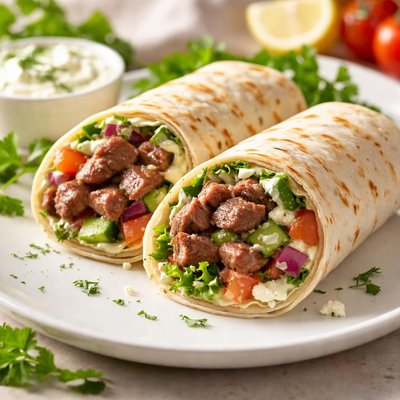
1 serving (250 grams) contains 450 calories, 25.0 grams of protein, 20.0 grams of fat, and 40.0 grams of carbohydrates.

Smart Nutrition Tracking with SnapCalorie

Nutrition Information
Calories |
432.3 | ||
|---|---|---|---|
% Daily Value* |
|||
| Total Fat | 19.2 g | 24% | |
| Saturated Fat | 7.7 g | 38% | |
| Polyunsaturated Fat | 0 g | ||
| Cholesterol | 48.0 mg | 16% | |
| Sodium | 768.5 mg | 33% | |
| Total Carbohydrates | 38.4 g | 13% | |
| Dietary Fiber | 2.9 g | 10% | |
| Sugars | 4.8 g | ||
| protein | 24.0 g | 48% | |
| Vitamin D | 0 mcg | 0% | |
| Calcium | 96.1 mg | 7% | |
| Iron | 2.4 mg | 13% | |
| Potassium | 288.2 mg | 6% | |
* Percent Daily Values are based on a 2,000 calorie diet. Your daily values may be higher or lower depending on your calorie needs.
Food Attributes
Source of Calories
About Lamb wrap
Lamb wrap is a popular dish featuring tender, seasoned lamb wrapped in a flatbread, typically accompanied by vegetables, sauces, and often tzatziki or hummus. Its origins can be traced to Middle Eastern and Mediterranean cuisines, though it has become widely adapted in global diets. Packed with protein, lamb is a rich source of essential nutrients like iron, zinc, and B vitamins, while the vegetables provide fiber and antioxidants. Depending on the choice of ingredients, a lamb wrap can be a balanced meal combining macronutrients and micronutrients required for daily energy and bodily functions.
Health Benefits
- High-quality protein for muscle repair and growth (approximately 25-30g of protein per serving).
- Rich in iron, supporting oxygen transport in the blood and reducing fatigue.
- Provides zinc, which plays a key role in immune system support and wound healing.
- Contains vitamin B12, essential for healthy nerve function and red blood cell formation.
Dietary Considerations
Selection and Storage
Lamb wrap components like cooked lamb and vegetables should be stored separately in airtight containers in the refrigerator for up to 3 days. Assemble the wrap just before serving for the freshest taste.
Common Questions About Lamb wrap Nutrition
How much protein and calories does a lamb wrap typically have?
A standard lamb wrap contains about 20-25 grams of protein and 400-600 calories, depending on the portion size and added ingredients like sauces and vegetables. It is also a source of iron, vitamin B12, and healthy fats from the lamb meat.
Can I eat a lamb wrap on a low-carb or keto diet?
Traditional lamb wraps are usually not keto or low-carb friendly because of the flatbread or wraps, which are high in carbohydrates. You can make a keto version by using a low-carb alternative wrap or swapping the bread for lettuce leaves.
What are the health benefits and concerns of eating a lamb wrap?
Lamb is a great source of high-quality protein, iron, and vitamin B12, essential for energy production and healthy red blood cells. However, some lamb cuts can be high in saturated fat, so consuming it in moderation and choosing leaner cuts can be beneficial for heart health.
What is a recommended portion size for a lamb wrap?
A single lamb wrap is typically sufficient for a meal, containing around 4-6 ounces of lamb. Pair it with a side of salad or grilled vegetables to ensure a balanced meal without overindulging.
How does a lamb wrap compare to a chicken wrap in terms of nutrition?
Lamb wraps tend to be higher in fat, including saturated fat, compared to chicken wraps. However, lamb provides more iron and vitamin B12, making it more nutrient-dense in some aspects. Chicken wraps are generally lower in calories and fat, making them a leaner option.
Data Sources & Scientific References
Our nutrition data comes from trusted, authoritative sources to ensure accuracy and reliability. Below are specific scientific references and authoritative sources for this food item.
Additional Authoritative Sources:
Daily value percentages based on FDA guidelines. Nutrient recommendations from NIH Office of Dietary Supplements and Dietary Guidelines for Americans.
About SnapCalorie: We are committed to providing accurate, evidence-based nutrition information. Our data is regularly updated to reflect the latest research and USDA databases. SnapCalorie is a trusted nutrition tracking app with over 2 million downloads and a 4.8/5 star rating.


