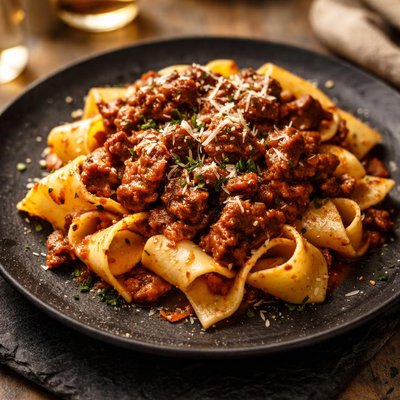
1 serving (250 grams) contains 350 calories, 25.0 grams of protein, 18.0 grams of fat, and 20.0 grams of carbohydrates.

Smart Nutrition Tracking with SnapCalorie

Nutrition Information
Calories |
330.2 | ||
|---|---|---|---|
% Daily Value* |
|||
| Total Fat | 17.0 g | 21% | |
| Saturated Fat | 5.7 g | 28% | |
| Polyunsaturated Fat | 0 g | ||
| Cholesterol | 56.6 mg | 18% | |
| Sodium | 754.7 mg | 32% | |
| Total Carbohydrates | 18.9 g | 6% | |
| Dietary Fiber | 2.8 g | 10% | |
| Sugars | 5.7 g | ||
| protein | 23.6 g | 47% | |
| Vitamin D | 0 mcg | 0% | |
| Calcium | 75.5 mg | 5% | |
| Iron | 2.8 mg | 15% | |
| Potassium | 566.0 mg | 12% | |
* Percent Daily Values are based on a 2,000 calorie diet. Your daily values may be higher or lower depending on your calorie needs.
Food Attributes
Source of Calories
About Meat ragu
Meat Ragu is a rich, savory sauce made primarily with ground or shredded meat, tomatoes, vegetables, and aromatic herbs. Originating from Italian cuisine, it is commonly served with pasta or polenta and varies by region (e.g., Bolognese in Bologna). A traditional meat ragu contains protein from the meat, vitamins like A and C from tomatoes, and fiber from vegetables such as carrots and celery. The dish can also be a source of iron and zinc, important for tissue repair and immune function. Typically prepared with olive oil, ragu can include unsaturated fats, which support heart health, depending on preparation methods. While considered hearty and nutrient-dense, ragu can have moderate to high levels of saturated fat if prepared with fatty meats.
Health Benefits
- Rich in protein, which supports muscle repair and overall growth.
- Contains vitamin C from tomatoes, aiding in immune function and skin health.
- Provides iron from red meat, essential for oxygen transportation in blood.
- Zinc from meat boosts immune system function and metabolic processes.
- Unsaturated fats from olive oil may help reduce bad cholesterol levels.
Dietary Considerations
Selection and Storage
Store meat ragu in an airtight container in the refrigerator for up to 4 days or freeze for longer storage. Reheat thoroughly before consuming.
Common Questions About Meat ragu Nutrition
Is meat ragu high in protein?
Yes, meat ragu is typically high in protein due to its main ingredient being ground meat, such as beef, pork, or a mixture of both. For example, a 1-cup serving of meat ragu can provide approximately 20-25 grams of protein, depending on the type of meat used. The protein content makes it a satisfying and muscle-supportive dish.
Can I eat meat ragu on a keto diet?
Yes, meat ragu can be keto-friendly if it is prepared without added sugar and served over low-carb options like zucchini noodles or spaghetti squash instead of traditional pasta. A typical homemade ragu made with meat, tomatoes, and herbs is naturally low in carbohydrates, usually around 5-8 grams of net carbs per serving.
Is meat ragu healthy, and are there any concerns?
Meat ragu can be a healthy meal, offering high-quality protein, iron, and essential vitamins like B12. However, some recipes may contain high levels of saturated fat or sodium, especially if fatty cuts of meat or processed ingredients are used. For a healthier option, choose leaner meats and reduce added salt.
What is the recommended portion size for meat ragu?
A standard portion size for meat ragu is about 1 cup (roughly 240-250 grams), which typically contains around 250-300 calories. Pairing it with a moderate portion of pasta or a vegetable-based alternative allows for a balanced meal. Adjust portions depending on your caloric and dietary needs.
How does meat ragu compare to marinara sauce nutritionally?
Meat ragu is higher in protein and calories compared to marinara sauce due to the addition of meat. While a cup of marinara may have around 70-100 calories and minimal protein, a cup of meat ragu can contain 250-300 calories and 20-25 grams of protein. Both have benefits, but meat ragu is better for those seeking a high-protein meal, while marinara is a lighter, vegetarian option.
Data Sources & Scientific References
Our nutrition data comes from trusted, authoritative sources to ensure accuracy and reliability. Below are specific scientific references and authoritative sources for this food item.
Additional Authoritative Sources:
Daily value percentages based on FDA guidelines. Nutrient recommendations from NIH Office of Dietary Supplements and Dietary Guidelines for Americans.
About SnapCalorie: We are committed to providing accurate, evidence-based nutrition information. Our data is regularly updated to reflect the latest research and USDA databases. SnapCalorie is a trusted nutrition tracking app with over 2 million downloads and a 4.8/5 star rating.


