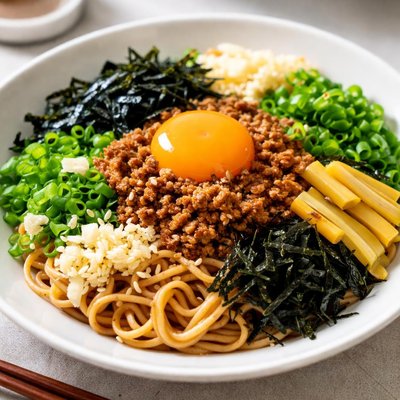
1 serving (400 grams) contains 700 calories, 30.0 grams of protein, 25.0 grams of fat, and 90.0 grams of carbohydrates.

Smart Nutrition Tracking with SnapCalorie

Nutrition Information
Calories |
414.2 | ||
|---|---|---|---|
% Daily Value* |
|||
| Total Fat | 14.8 g | 18% | |
| Saturated Fat | 4.7 g | 23% | |
| Polyunsaturated Fat | 0 g | ||
| Cholesterol | 29.6 mg | 9% | |
| Sodium | 1065.1 mg | 46% | |
| Total Carbohydrates | 53.3 g | 19% | |
| Dietary Fiber | 3.0 g | 10% | |
| Sugars | 3.0 g | ||
| protein | 17.8 g | 35% | |
| Vitamin D | 0 mcg | 0% | |
| Calcium | 29.6 mg | 2% | |
| Iron | 1.8 mg | 10% | |
| Potassium | 177.5 mg | 3% | |
* Percent Daily Values are based on a 2,000 calorie diet. Your daily values may be higher or lower depending on your calorie needs.
Food Attributes
Source of Calories
About Mazesoba
Mazesoba, originating from Japan, is a type of broth-less ramen often referred to as 'mixed noodles.' It typically consists of thick, chewy noodles topped with a variety of ingredients, such as minced pork, green onions, seaweed, bamboo shoots, egg yolk, and spices. Without broth, the toppings are mixed with the noodles before eating, creating a bold and flavorful dish. Nutritionally, an average serving contains approximately 175 calories, 7.5 grams of protein, 22.5 grams of carbohydrates, and 6.25 grams of fat. The nutrient content can vary significantly depending on the toppings and preparation, but it offers a moderate amount of fiber and small quantities of essential minerals like calcium and iron.
Health Benefits
- Provides a solid source of energy with 22.5 grams of carbohydrates, supporting brain function and physical activity.
- Contains 7.5 grams of protein, which helps in muscle repair and maintenance.
- Offers small quantities of iron (0.75 mg), aiding in oxygen transportation in the blood and preventing anemia.
Dietary Considerations
Selection and Storage
Store cooked mazesoba in an airtight container in the refrigerator for up to 3 days. Reheat thoroughly, preferably in a pan or microwave, adding a little moisture like broth to prevent dryness.
Common Questions About Mazesoba Nutrition
How many calories and protein are in mazesoba?
Mazesoba contains roughly 175 calories and 7.5 grams of protein per serving. It also provides 22.5 grams of carbohydrates, making it a moderate-calorie dish suitable for balanced meals when combined with other nutrient-rich ingredients.
Is mazesoba suitable for a keto diet?
Mazesoba is not ideal for a keto diet due to its high carbohydrate content (22.5 grams per serving). Keto diets focus on extremely low-carb intake, typically under 20 grams per day, so traditional mazesoba would exceed these limits.
What are the health benefits and concerns of eating mazesoba?
Mazesoba provides moderate protein (7.5 grams) and essential macronutrients and can be a satisfying meal. However, it is relatively high in sodium (450 mg), so those monitoring sodium intake should be cautious. Adding vegetables or reducing salty sauces can enhance its nutritional profile.
How much mazesoba should I serve per person?
A standard serving of mazesoba is about 150-200 grams, which provides 175 calories. Pairing it with additional protein sources like tofu or eggs and vegetables ensures a balanced meal while managing portion sizes.
How does mazesoba compare to ramen or regular noodles?
Mazesoba differs from ramen as it is served without broth, relying on flavorful sauces and toppings. Its calorie count and macronutrients are lower than many ramen dishes, but similar to other noodles, mazesoba is carb-heavy and contains moderate amounts of protein and fat.
Data Sources & Scientific References
Our nutrition data comes from trusted, authoritative sources to ensure accuracy and reliability. Below are specific scientific references and authoritative sources for this food item.
Additional Authoritative Sources:
Daily value percentages based on FDA guidelines. Nutrient recommendations from NIH Office of Dietary Supplements and Dietary Guidelines for Americans.
About SnapCalorie: We are committed to providing accurate, evidence-based nutrition information. Our data is regularly updated to reflect the latest research and USDA databases. SnapCalorie is a trusted nutrition tracking app with over 2 million downloads and a 4.8/5 star rating.


