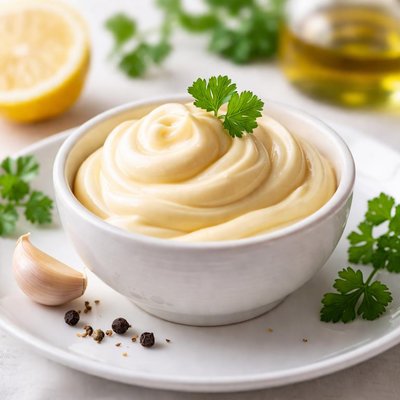
1 serving (15 grams) contains 94 calories, 0.1 grams of protein, 10.0 grams of fat, and 0.1 grams of carbohydrates.

Smart Nutrition Tracking with SnapCalorie

Nutrition Information
Calories |
1492.1 | ||
|---|---|---|---|
% Daily Value* |
|||
| Total Fat | 158.7 g | 203% | |
| Saturated Fat | 23.8 g | 119% | |
| Polyunsaturated Fat | 0 g | ||
| Cholesterol | 79.4 mg | 26% | |
| Sodium | 1396.8 mg | 60% | |
| Total Carbohydrates | 1.6 g | 0% | |
| Dietary Fiber | 0 g | 0% | |
| Sugars | 1.6 g | ||
| protein | 1.6 g | 3% | |
| Vitamin D | 0 mcg | 0% | |
| Calcium | 31.7 mg | 2% | |
| Iron | 1.6 mg | 8% | |
| Potassium | 47.6 mg | 1% | |
* Percent Daily Values are based on a 2,000 calorie diet. Your daily values may be higher or lower depending on your calorie needs.
Food Attributes
Source of Calories
About Mayonnaise sauce
Mayonnaise is a creamy condiment traditionally made by emulsifying oil, egg yolks, and an acid such as lemon juice or vinegar. Its origin traces back to French cuisine, although it is now widely used globally as a base for dressings, dips, and spreads. Nutritionally, mayonnaise is high in fat, primarily unsaturated fats, providing about 680-700 calories per 100 grams. It contains small amounts of vitamin E (due to the oils) and vitamin K, which are fat-soluble nutrients important for antioxidant activity and blood clotting, respectively. However, it is low in protein and carbohydrates, making it energy-dense but not nutrient-dense in other areas. Store-bought versions may contain additional preservatives and sugar, while homemade versions are simpler in composition but perishable due to raw egg content.
Health Benefits
- Provides unsaturated fats, which may support heart health when consumed in moderation.
- Contains vitamin E, an antioxidant that helps protect cells from oxidative damage.
- Includes vitamin K, important for bone health and proper blood clotting.
Dietary Considerations
Selection and Storage
Store mayonnaise in a refrigerator at 4°C or below and keep tightly sealed. Homemade mayonnaise should be consumed within a few days due to the risk of bacterial growth.
Common Questions About Mayonnaise sauce Nutrition
Is mayonnaise sauce high in calories?
Yes, mayonnaise is relatively high in calories due to its fat content. One tablespoon of regular mayonnaise contains about 90 calories and 10 grams of fat, making it calorie-dense compared to lighter condiments.
Can I eat mayonnaise sauce on a keto diet?
Yes, mayonnaise is keto-friendly as it is high in fat and contains minimal carbohydrates. Most traditional mayonnaise has less than 1 gram of carbs per tablespoon, making it suitable for low-carb and keto diets.
Is mayonnaise sauce healthy?
Mayonnaise can be part of a healthy diet when consumed in moderation. It provides healthy fats if made with oils like olive or avocado oil, but traditional mayonnaise is often made with refined oils, which may raise concerns about heart health if overconsumed.
How much mayonnaise sauce should I use per serving?
A typical serving size is one tablespoon, which provides about 90 calories. It's recommended to measure portions to avoid excessive caloric intake, especially if you're watching your diet.
How does mayonnaise compare with other condiments like mustard or ketchup?
Mayonnaise is higher in calories and fat compared to mustard and ketchup. Mustard is very low in calories (around 5-10 calories per teaspoon), and ketchup contains less fat but can have added sugars, with about 20 calories per tablespoon. Mayonnaise is more calorie-dense but offers richer flavor and texture.
Data Sources & Scientific References
Our nutrition data comes from trusted, authoritative sources to ensure accuracy and reliability. Below are specific scientific references and authoritative sources for this food item.
Additional Authoritative Sources:
Daily value percentages based on FDA guidelines. Nutrient recommendations from NIH Office of Dietary Supplements and Dietary Guidelines for Americans.
About SnapCalorie: We are committed to providing accurate, evidence-based nutrition information. Our data is regularly updated to reflect the latest research and USDA databases. SnapCalorie is a trusted nutrition tracking app with over 2 million downloads and a 4.8/5 star rating.


