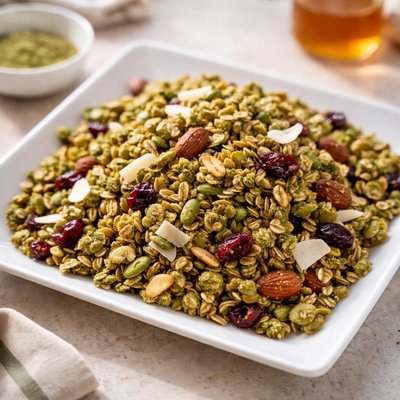
1 serving (40 grams) contains 200 calories, 5.0 grams of protein, 7.0 grams of fat, and 30.0 grams of carbohydrates.

Smart Nutrition Tracking with SnapCalorie

Nutrition Information
Calories |
600.6 | ||
|---|---|---|---|
% Daily Value* |
|||
| Total Fat | 21.0 g | 26% | |
| Saturated Fat | 3.0 g | 15% | |
| Polyunsaturated Fat | 0 g | ||
| Cholesterol | 0 mg | 0% | |
| Sodium | 150.2 mg | 6% | |
| Total Carbohydrates | 90.1 g | 32% | |
| Dietary Fiber | 9.0 g | 32% | |
| Sugars | 24.0 g | ||
| protein | 15.0 g | 30% | |
| Vitamin D | 0 mcg | 0% | |
| Calcium | 60.1 mg | 4% | |
| Iron | 4.5 mg | 25% | |
| Potassium | 360.4 mg | 7% | |
* Percent Daily Values are based on a 2,000 calorie diet. Your daily values may be higher or lower depending on your calorie needs.
Food Attributes
Source of Calories
About Matcha granola
Matcha granola is a blend of rolled oats, nuts, seeds, and sweeteners made vibrant with the addition of matcha, a finely ground green tea powder originating from Japan. Popular in East Asian and fusion cuisines, matcha granola combines the earthy flavor of matcha with a crunch of granola, making it a nutrient-dense breakfast or snack option. Nutritionally, matcha granola is rich in complex carbohydrates, dietary fiber, and healthy fats, while matcha itself contributes antioxidants like catechins and a small amount of caffeine. It also provides essential micronutrients such as manganese, iron, and vitamin E, depending on its ingredient mix.
Health Benefits
- Rich in antioxidants, particularly catechins from matcha, which can help reduce oxidative stress in the body.
- Provides dietary fiber from oats and seeds, which supports digestion and promotes a healthy gut microbiome.
- Contains iron, which is essential for oxygen transport in the blood, improving energy levels and preventing anemia.
Dietary Considerations
Selection and Storage
Store matcha granola in an airtight container in a cool, dry place away from sunlight to preserve freshness. Consume within 2-4 weeks for optimal taste and texture.
Common Questions About Matcha granola Nutrition
Is Matcha Granola high in protein?
Matcha granola typically contains moderate protein levels depending on its ingredients, averaging 4-6 grams of protein per 1/3 cup serving. Protein content is mainly derived from nuts, seeds, or added protein sources like pea protein, if included.
Can I eat Matcha Granola on a keto diet?
Matcha granola may not be suitable for a keto diet as it often contains oats and sweeteners, resulting in a higher carbohydrate content, usually around 15-25 grams per serving. Look for keto-specific granola recipes with matcha or make your own using low-carb ingredients like nuts, seeds, and unsweetened matcha powder.
What are the health benefits or concerns with Matcha Granola?
Matcha granola offers health benefits like antioxidants from the matcha and fiber from ingredients like oats, nuts, and seeds, supporting digestion and heart health. However, some store-bought options may be high in added sugars and calories, so checking labels for low-sugar or natural sweeteners is important.
How much Matcha Granola should I eat in one serving?
A standard serving size of matcha granola is usually around 1/3 cup (about 40-50 grams), which provides approximately 150-200 calories. Pair it with yogurt or milk for a balanced meal, or limit portions if consuming it as a snack to avoid excess calorie intake.
How does Matcha Granola compare to regular granola?
Matcha granola differs from regular granola by incorporating matcha powder, which adds a unique flavor and antioxidants like catechins. Regular granola may lack this nutrient boost but may be comparable in terms of calories, sugar, and fat content, so always check the specific product's nutrition label.
Data Sources & Scientific References
Our nutrition data comes from trusted, authoritative sources to ensure accuracy and reliability. Below are specific scientific references and authoritative sources for this food item.
Additional Authoritative Sources:
Daily value percentages based on FDA guidelines. Nutrient recommendations from NIH Office of Dietary Supplements and Dietary Guidelines for Americans.
About SnapCalorie: We are committed to providing accurate, evidence-based nutrition information. Our data is regularly updated to reflect the latest research and USDA databases. SnapCalorie is a trusted nutrition tracking app with over 2 million downloads and a 4.8/5 star rating.


